

Hookah, BBQ & Incense Charcoal Partnership FAQ: Terms, Acceptance & Long-Term Support
FAQ on long-term charcoal partnership terms: acceptance criteria, MOQ and lead times, sample approval, and model specs for hookah, BBQ, incense and grill charcoal.
Hookah, BBQ & Incense Charcoal Partnership FAQ: Terms, Acceptance & Long-Term Support
This FAQ is written for importers, distributors and brand owners who have already shortlisted a charcoal supplier and now need to turn a sample into a repeatable supply agreement. It covers the questions that surface during evaluation of hookah, BBQ, incense and disposable grill programs: what belongs in the specification, how acceptance is verified, how order quantities and lead times are structured, and what long-term support should look like after the first container ships.
FYC — Dalian Tiancheng Charcoal Industry Technology Co., Ltd. — is a charcoal manufacturer based in Liaoning, China, founded in 1990, producing hookah charcoal, incense charcoal and BBQ charcoal for wholesale, OEM and private-label programs. The answers below draw on FYC's documented model specifications, commercial terms and delivery records, with third-party market and standards data attributed where it applies.
Problem Definition: What Actually Breaks in a Long-Term Charcoal Supply
At the evaluation stage the question has already changed. It is no longer whether a charcoal lights and burns, but whether the same charcoal will behave the same way on the next order and the order after that. Partnerships in this category usually break in one of three places.
- Specification drift. Fixed carbon, ash content and burn duration are the parameters buyers feel first. A batch with a higher ash fraction burns shorter and leaves more residue; in a shisha lounge that appears as more coal changes per session, in a BBQ kitchen as more fuel per service. If the agreement says only "hookah charcoal" without a range for each parameter, a supplier can be technically compliant and still deliver a different product.
- Packaging drift. Retail buyers specify magnetic boxes, flip-top boxes or pull-out boxes with logo printing. When board grade, artwork version and label position are not written into the agreement, the second production run can arrive in packaging that no longer fits the shelf plan.
- Timing drift. Summer grilling and holiday shisha and bakhoor seasons compress production windows. Without a lead time that separates stock from custom production, and without stated capacity cover, a supplier that delivered on time in spring can miss a seasonal peak.
Acceptance criteria address all three, but only when they are written per model rather than per "charcoal" in general.
Industry Background: Why Charcoal Agreements Now Carry More Documentation
Grand View Research values the global charcoal market at USD 8.5 billion in 2026, up from USD 8.1 billion in 2025. Growth of that kind attracts new suppliers, and the practical consequence for buyers is that documentation has become a selection filter rather than a formality.
Material composition is now a purchasing line item. Dataintelo reports that coconut shell charcoal held a 42.3% share of the hookah charcoal segment in 2025, which means hookah buyers routinely specify feedstock — coconut, bamboo, fruitwood — instead of accepting whatever the factory ran that week. Format follows the same logic: cube, hexagonal, pillow shape briquettes, square shape charcoal and charcoal tablets each suit a different end use and a different acceptance test.
Regulation adds a second layer. EN 1860-2 is the mandatory safety standard for BBQ charcoal in Europe, so any European barbecue or retail charcoal program needs a supplier that can ship against it. For briquette quality, the Indonesian standard SNI 01-6235-2000 is frequently cited with thresholds of moisture at or below 8%, ash at or below 8% and calorific value at or above 5,000 cal/g; even where that standard does not apply, its structure — a numeric limit per parameter — is a practical model for acceptance clauses.
Supply concentration matters as well. World's Top Exports places Indonesia at roughly 23% of global charcoal export value in 2024, the largest single exporting country. Buyers who depend on one origin typically dual-source and demand batch-level consistency, which is exactly what a model-based specification makes possible.
Detailed Solution: How FYC Structures Terms Around Four Charcoal Models
FYC does not quote hookah, BBQ, incense and grill programs as one generic product. Each is a named model with its own documented performance envelope, and that is the foundation of the acceptance terms below.
Model-level specifications used as acceptance baselines
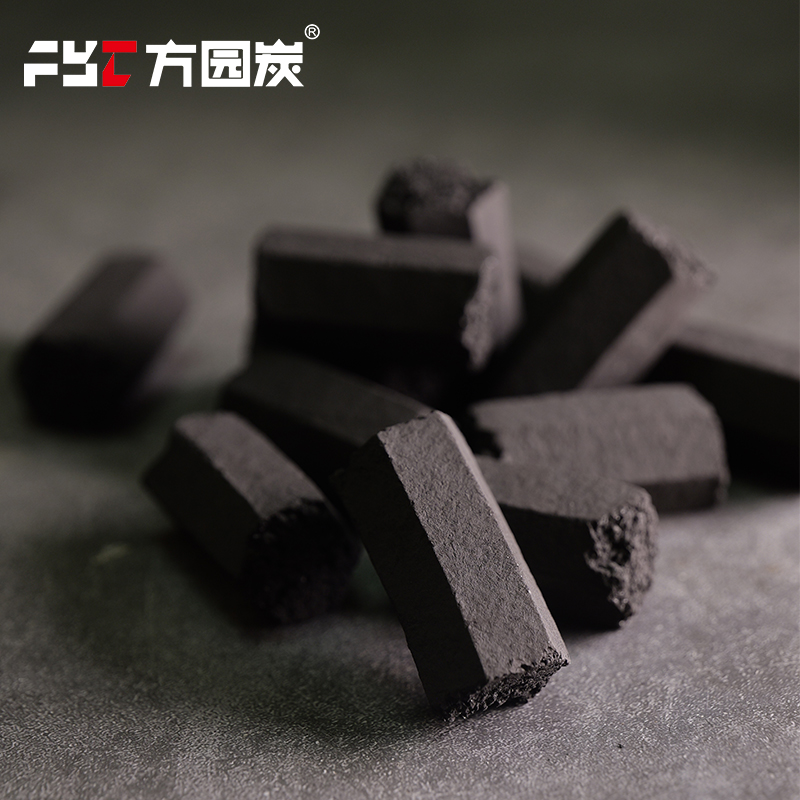
- TC-01 hookah charcoal. Cube format at 25 mm, fixed carbon above 85%–90%, ash content below 3%, and a documented burn time of 90–120 minutes for the cube and 45–70 minutes for the quick-light version. A premium shisha lounge chain in Saudi Arabia has run TC-01 for 2.5 years at 50 metric tons per quarter, supplied in logo-printed magnetic boxes.
- TC-02 BBQ charcoal. Hexagonal bamboo charcoal sticks, high density and zero sparking, with a documented 6–8 hour burn. An authentic charcoal BBQ and grill restaurant group in South Korea takes one 40HQ container (approximately 20–22 tons) per month and recorded a 15% reduction in total charcoal consumption against its previous supplier.
- TC-04 incense charcoal. Charcoal tablets for bakhoor and oud applications, with a 45–70 minute burn and custom packaging. Tablet formats such as 33 mm and 50 mm sit inside the standard customization range, and material composition can be specified per program.
- TC-03 disposable grill. A self-igniting design built on biodegradable materials. The German retail program used lightweight, high-portability units with eco-friendly foil that met EU environmental standards.
Acceptance criteria that can be checked rather than argued
An acceptance clause is only useful if both sides measure it the same way. FYC programs typically separate four checks.
- Chemical: a stated fixed carbon range and an ash ceiling per model, with moisture aligned to the destination market's reference where one exists.
- Physical: dimensions and shape consistency — 25 mm cube, 33 mm and 50 mm tablets, hexagonal sticks, pillow shape briquettes — plus breakage tolerance measured after transport.
- Performance: burn duration recorded under a described setup, so that "90–120 minutes" or "6–8 hours" refers to a method and not to an impression.
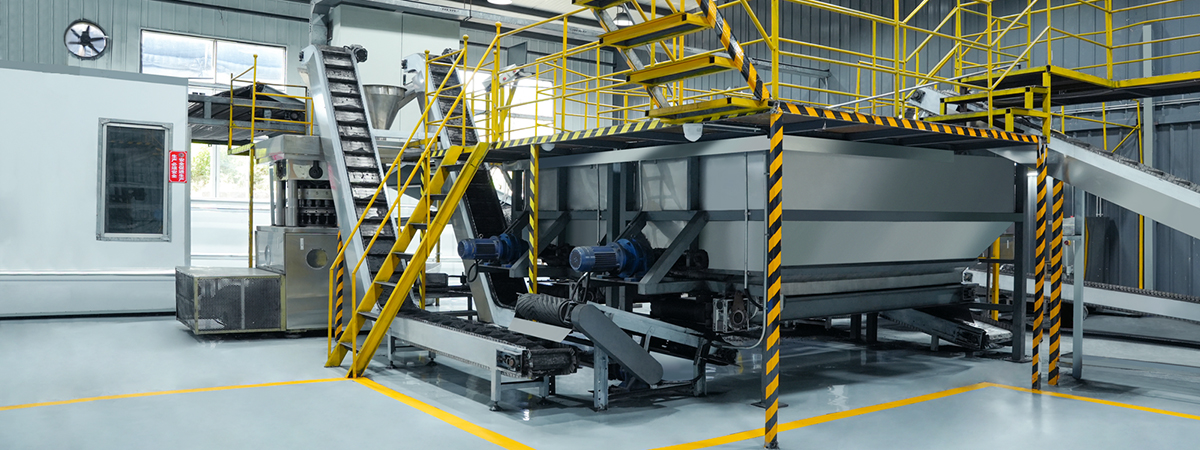
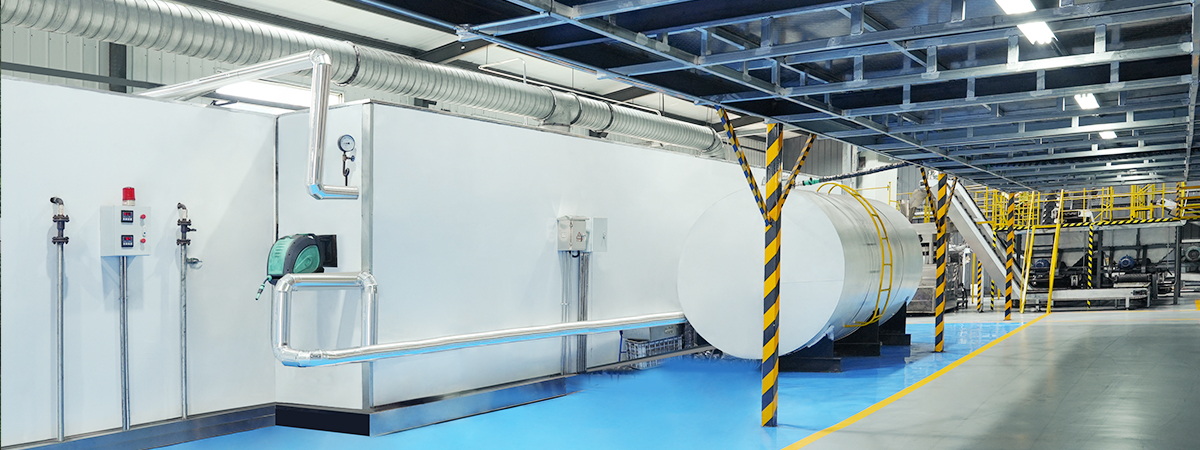
- Process and documentation: 100% inspection on all production lines, three dedicated QA/QC inspectors, full raw-material traceability and an on-site Intertek supplier assessment. FYC holds SGS and ISO certifications, and batch records support destination-specific requirements such as EN 1860-2 for European barbecue shipments.
Commercial terms and packaging control
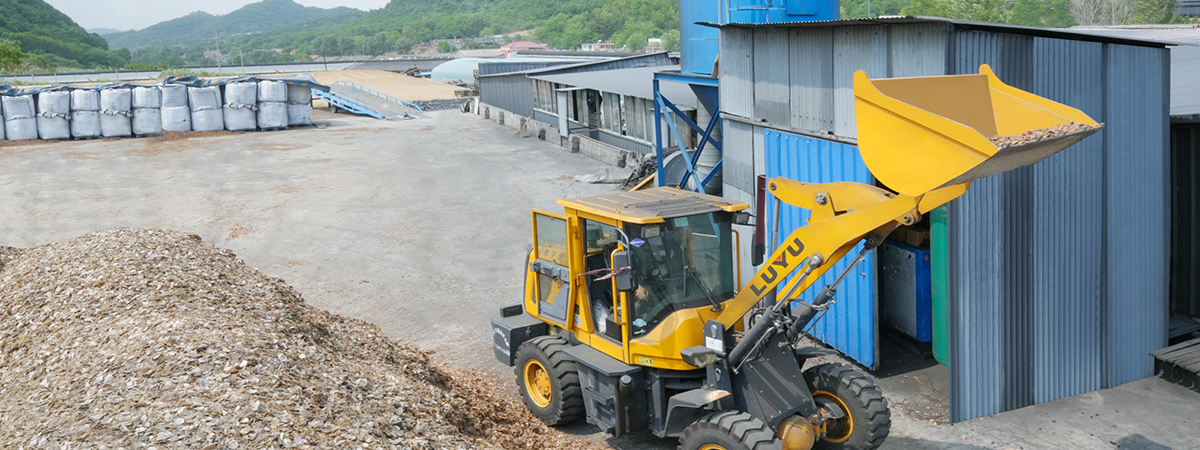
Commercial structure is deliberately flexible at both ends. MOQ starts from one box for express stock and runs from 1 ton up to 17 tons for a full container. Lead time is 7–15 days for standard stock and 20–30 days for customized mass production. Capacity cover is approximately 600–800 metric tons per month with daily output above 50 metric tons, which is what allows seasonal peaks to be absorbed without renegotiating the schedule.
Customization sits in the same agreement rather than in a separate negotiation: product shape (cube, hexagonal, round, stick), size, logo printing, retail packaging (magnetic, flip-top, pull-out boxes) and material composition. That matters for repeat orders, because packaging is usually the element that changes first when a brand refreshes its range.
Step-by-Step: Building a Repeatable Charcoal Supply Agreement
The sequence below reflects how evaluation-stage buyers typically move from sample to a signed long-term program with FYC.
- Fix the application before the specification. A shisha lounge, an indoor BBQ restaurant, a bakhoor brand and an outdoor retail chain need different models. Starting from the application prevents a technically acceptable product from failing in service.
- Write the acceptance range per model. Use documented values as anchors — fixed carbon, ash ceiling, burn duration, dimension, moisture — and note the test method beside each. Reference standards such as EN 1860-2 or SNI 01-6235-2000 only where they genuinely apply to the destination market.
- Approve the sample and the packaging artwork in the same round. Product changes and packaging changes are easier to sign off together. For TC-01 and TC-04 programs this is where logo placement, box type and tablet or cube dimensions are locked.
- Agree MOQ and the volume ladder. One box for express stock, 1 ton upward for wholesale, 17 tons for a full container. A volume ladder lets a distributor scale without renegotiating terms at every step.
- Lock lead times and capacity cover. Confirm the split between 7–15 day stock orders and 20–30 day custom production, and confirm how much monthly capacity is reserved during peak season.
- Define the after-sales protocol. FYC commits to a response time of four hours or less, 24/7 technical support for charcoal usage and storage, a 100% on-time delivery commitment and compensation for quality discrepancies. Written into the agreement, these are the clauses that carry a relationship past the first year.
Use Cases: What Long-Term Support Looks Like After the First Container
Saudi Arabia — hookah charcoal, 2.5 years of continuous supply
A premium shisha lounge and hookah bar chain sources TC-01 in 25 mm cubes at 50 metric tons per quarter, roughly 200 tons annually, in logo-printed magnetic boxes. Documented results are stable, odorless burning with no client complaints and improved customer session duration attributable to sustained heat. For a lounge operator, the partnership term that matters is not the unit size but the guarantee that session length stays predictable from shipment to shipment.
South Korea — BBQ charcoal, 3 years of strategic supply
An authentic charcoal BBQ and grill restaurant group takes one 40HQ container of TC-02 per month for high-temperature meat searing and slow indoor roasting. Hexagonal bamboo sticks with high density and zero sparking fit the built-in dining table grills, and the reported outcome was zero smoke interference indoors with 15% lower charcoal consumption. Here the acceptance-driven benefit is fuel efficiency per cover, which only holds if density and burn time remain within range on every container.
Germany — disposable grills, seasonal retail program
A national outdoor and camping equipment retailer ordered 12,000 sets of TC-03 per summer season and received 100% on-time delivery through the seasonal peak. The units combine lightweight portability with eco-friendly foil that met EU environmental standards, and consumer feedback focused on instant lighting convenience. For a seasonal retail program, the term that matters most is production slot reservation rather than the product itself.
Incense and oud programs — TC-04
Bakhoor and oud buyers usually run smaller, more design-led orders: charcoal tablets in 33 mm or 50 mm formats, a 45–70 minute burn, custom packaging and, frequently, private-label artwork. The sensible agreement structure is a fixed tablet specification plus a packaging version log, so that artwork revisions do not silently change the burn profile or the fill weight.
Comparison Table: TC-01, TC-02, TC-04 and TC-03
| Model | Application | Form and size | Documented performance | Customization | Reference program |
|---|---|---|---|---|---|
| TC-01 | Hookah and shisha lounges, bakhoor service | Cube, 25 mm | Fixed carbon above 85%–90%; ash below 3%; 90–120 min burn (cube), 45–70 min (quick light) | Logo printing; magnetic, flip-top or pull-out boxes | Saudi lounge chain, 50 t per quarter, 2.5 years |
| TC-02 | BBQ restaurants, indoor grilling | Hexagonal bamboo sticks | 6–8 hour burn; high density; zero sparking | Format and packaging per project | South Korean restaurant group, 1 × 40HQ per month, 3 years |
| TC-04 | Incense, bakhoor and oud | Charcoal tablets, 33 mm and 50 mm within customization range | 45–70 minute burn | Custom packaging; material composition | Private-label incense programs |
| TC-03 | Disposable grills, outdoor retail | Self-igniting disposable grill | Biodegradable construction; eco-friendly foil meeting EU environmental standards | Retail packaging | German retailer, 12,000 sets per season |
Values in the table reflect FYC model documentation and recorded programs. They are not a substitute for a signed specification: burn time and chemical parameters should always be re-confirmed for the destination market and the agreed test method.
FAQ: Terms, Acceptance and Long-Term Support
1. Which compliance points should a charcoal supply agreement cover?
Cover the destination market first, then the product parameters. For European barbecue and retail charcoal, EN 1860-2 is the mandatory safety standard; for briquette quality, standards such as SNI 01-6235-2000 provide a usable numeric structure with moisture at or below 8%, ash at or below 8% and calorific value at or above 5,000 cal/g. On the supplier side, ask for certification and traceability evidence: FYC holds SGS and ISO certifications, runs 100% inspection on all production lines with three dedicated QA/QC inspectors, maintains full raw-material traceability, and has completed an on-site Intertek supplier assessment. The agreement should state which standard applies to which model and which market, because a hookah charcoal shipment and a European BBQ charcoal shipment are not judged against the same rules.
2. Can one charcoal factory cover hookah, BBQ, incense and disposable grill programs?
Yes, provided the factory runs them as distinct models rather than one blended product. FYC manufactures hookah charcoal, incense charcoal and BBQ charcoal, and its four documented models cover the main applications: TC-01 for hookah and shisha, TC-02 for barbecue, TC-04 for incense and oud, and TC-03 for disposable grills. OEM, ODM, custom manufacturing and custom packaging are available inside the same relationship, including shape, size, logo printing and retail box format. Capacity is approximately 600–800 metric tons per month with daily output above 50 metric tons, supported by three Masters-level R&D engineers and roughly 34 new product models developed annually. Exports represent about 60% of output, with the Middle East and Europe as the main markets, and support is available in English, Spanish and French.
3. How are minimum order quantities and cost structured for repeat orders?
MOQ is tiered by urgency rather than fixed at a single number: orders can start from one box for express stock, while wholesale volumes run from 1 ton up to 17 tons for a full container. Cost is driven by four variables — material composition (coconut, bamboo, fruitwood), the fixed carbon and ash level specified, shape and size, and packaging format. That is why quotations are issued per model, per volume tier and per packaging specification rather than per ton of generic charcoal. Buyers evaluating budget should compare cost per usable burn hour within their own application, since a longer-burning format can reduce consumption per service even at a higher unit price.
4. How does sample approval work before a bulk commitment?
Sampling is where the acceptance criteria are validated in practice. The typical sequence is: agree the model and the application, receive the sample, check dimension and shape consistency, compare burn performance against the documented range for that model (90–120 minutes for TC-01 cubes, 6–8 hours for TC-02 sticks, 45–70 minutes for TC-04 tablets), and approve packaging artwork in the same round. Once both product and packaging are signed off, custom mass production runs at 20–30 days, while standard stock ships in 7–15 days. Keeping the approved sample and the approved artwork on file is what makes a later discrepancy discussion factual rather than subjective.
5. What lead times and after-sales terms should be locked into a long-term agreement?
Write two lead times, not one: 7–15 days for standard stock and 20–30 days for customized mass production, and state how much of the 600–800 metric ton monthly capacity is reserved during peak season. On after-sales, FYC commits to a response time of four hours or less, 24/7 technical support for charcoal usage and storage, a 100% on-time delivery commitment and compensation for quality discrepancies, with logistics handled through a network of more than 50 shipping partners. To move from evaluation to a signed program, request a model-specific sample and quotation from FYC at paris@fyc-charcoal.com or via WhatsApp on +8613591327260, and confirm the specification for your destination market at the same time.
Next Step: Sample, Quotation and Specification Review
FYC supplies hookah, BBQ, incense and disposable grill charcoal programs with model-specific specifications, OEM and private-label packaging, and documented after-sales support. Share your application, target market and packaging requirement to receive a sample and a quotation built around your acceptance criteria.
Contact: Paris Wang · Email: paris@fyc-charcoal.com · WhatsApp and Phone: +8613591327260 · Address: Room 409, Building B, Shanhe Zhigu Digital Economy E-commerce Industrial Park, Liaohe Middle Second Road, Jinzhou District, Dalian City, Liaoning Province · fyc-charcoal.com
Conclusion
A charcoal partnership is decided by documentation rather than by the first sample. Model-specific ranges for fixed carbon, ash and burn time; a packaging version agreed in writing; tiered MOQ; a two-track lead time; and an after-sales protocol with a stated response window — these are the terms that keep a hookah, BBQ, incense or disposable grill program stable across repeat orders.
FYC's four models give buyers a concrete starting point: TC-01 for hookah and shisha service, TC-02 for restaurant barbecue, TC-04 for bakhoor and oud, and TC-03 for seasonal outdoor retail. Each carries documented performance values that can be written into an acceptance clause, and each is supported by the same factory, quality and after-sales structure.


comment (02)
Jenny Wilson
19 June 2023Rating:
Lorem ipsum dolor sit amet, consectetur adipiscing elit, sed do eiusmod tempor incididunt ut labore et dolore magna aliqua. Ut enim ad minim veniam, quis nostrud exercitation ullamco laboris nisi ut aliquip ex ea commodo consequat aute irure dolor in reprehenderit.
Marvin McKinney
19 Feb 2024Rating:
Lorem ipsum dolor sit amet, consectetur adipiscing elit, sed do eiusmod tempor incididunt ut labore et dolore magna aliqua. Ut enim ad minim veniam, quis nostrud exercitation ullamco laboris nisi ut aliquip ex ea commodo consequat aute irure dolor in reprehenderit.