

Charcoal Supply Partnership FAQ: Lead Times, Customization, and Quality Assurance from FYC
FYC answers long-term charcoal buyers' key questions: MOQs, magnetic and flip-top packaging customization, materials, ash and fixed carbon checks, and 7-15 vs 20-30 day lead times.
Charcoal Supply Partnership FAQ: Lead Times, Customization, and Quality Assurance from FYC
A trial order answers one question: can a factory hit the agreed specification once? A partnership contract answers a harder one: can it hit the same specification on the tenth shipment, inside the same lead time, in packaging the buyer's own customers recognise? The questions long-term charcoal buyers ask are therefore rarely about product range. They are about repeatability — of ash content, of packaging, of delivery dates.
FYC — Dalian Tiancheng Charcoal Industry Technology Co., Ltd. — is a charcoal manufacturer founded in 1990 and based in Liaoning, China, producing hookah charcoal, incense charcoal and BBQ charcoal. It operates a 6,000㎡ factory with around 100 employees, exports roughly 60% of its output to the Middle East and Europe, and provides OEM, ODM, custom manufacturing and custom packaging services.
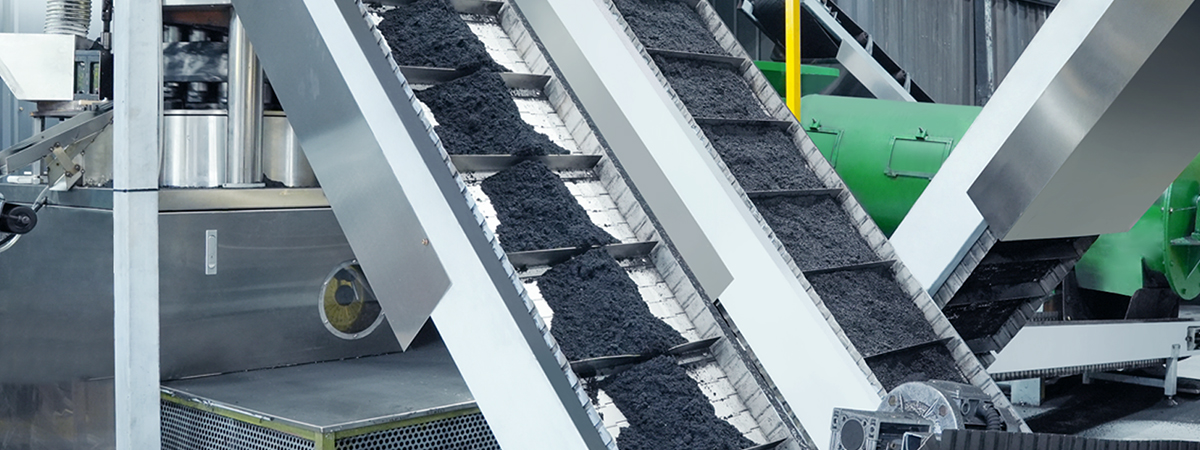
Inside the FYC charcoal factory in Liaoning, China, where hookah, incense and BBQ charcoal lines run under 100% production inspection.
The Partnership Questions That Appear After the First Order
Once a buyer moves from evaluation to execution, the conversation changes shape. Instead of asking what a factory can make, the buyer asks what it can repeat. In charcoal supply, five questions come up again and again, and each one carries commercial risk if the answer is vague.
- Will ash content and fixed carbon stay inside the agreed band? A hookah lounge or BBQ restaurant builds its heat management and refill cycle around a known burn profile. A batch that burns hotter or ashier forces staff to relearn the product.
- Can the packaging carry a private label? Incense and bakhoor charcoal in particular is sold in retail formats — magnetic, flip-top and pull-out boxes — where the box is part of the product's perceived value.
- Does the MOQ fit both a trial and a container programme? Distributors often need a small first run before committing to a full container across a season.
- Is the lead time reliable under peak demand? Seasonal buyers cannot absorb a two-week slip.
- What evidence exists if a batch is questioned? Inspection records, traceability and third-party verification decide how quickly a dispute is closed.
These are capability questions rather than catalogue questions. They cannot be answered by a product photo; they are answered by capacity, process control, tooling flexibility and commercial terms. That is the structure this guide follows.
Industry Background: Why Buyers Ask More Technical Questions in 2026
Charcoal is a mature category, but the way it is bought has become more technical. Two things drive that shift: a larger, more structured global market, and a tightening compliance layer in major import markets.
Grand View Research estimated the global charcoal market at USD 8.5 billion in 2026, after USD 8.1 billion in 2025. Within the hookah segment, Dataintelo reported that coconut shell charcoal held the largest product-type share at 42.3% in 2025 — which is why feedstock questions now sit alongside shape and size questions in most buyer spec sheets.
Supply geography concentrates risk. World's Top Exports placed Indonesia at roughly 23% of global charcoal export value in 2024, the largest single exporter position. For a buyer building a multi-year programme, that concentration makes supplier-side capacity and documentation more important than a single low quotation.
Compliance expectations have moved in parallel. EN 1860-2 is identified as the mandatory product safety standard for BBQ and retail charcoal in Europe. In Indonesia, the briquette standard SNI 01-6235-2000 is cited with quality thresholds of moisture content at or below 8%, ash content at or below 8%, and calorific value at or above 5,000 cal/g. Buyers do not need to adopt a single national standard to benefit from the logic behind it: measurable ash, moisture and calorific limits are the language of acceptance testing.
Against that backdrop, a supplier's value is no longer only the product. It is the ability to state a specification, hold it, prove it, and repeat it. The sections below answer how FYC handles each of those points.
How FYC Answers the Five Partnership Questions
1. Capacity That Supports Repeat Programmes
Repeatability starts with volume headroom. FYC's factory covers 6,000㎡ with approximately 100 employees and a daily output exceeding 50 metric tons of wood-powder compressed charcoal. Monthly capacity is approximately 600–800 metric tons, and annual output reaches 4,000,000 pieces. For a buyer running one 40HQ container per month, that leaves room for seasonal uplifts without displacing other orders.
Technical support sits behind the production line: an R&D team of 8 engineers, including 3 master's-level engineers, with 34 new product models developed annually. Commercial support is multilingual in English, Spanish and French, and shipping runs through a logistics partnership network of more than 50 partners.
2. Quality Assurance: Ash, Fixed Carbon and Batch Traceability
Two specifications decide whether a charcoal programme runs smoothly: ash content and fixed carbon. Ash is the residue left after combustion — the lower it is, the less the product interferes with the session or the food. Fixed carbon is the burnable fraction that determines heat stability and burn duration.
FYC's TC-01 hookah charcoal is specified at ash content below 3% and fixed carbon of 85–90%, with a calorific value above 7,800 kcal/kg. Burn time is 90–120 minutes for 25mm and 40mm cubes, and 45–70 minutes for quick-light formats. The TC-02 BBQ line is specified with ultra-low ash content and high hardness, with 6–8 hours of burn time for bamboo charcoal sticks and about 70 minutes for fruit wood quick-light charcoal.
Process control is what holds those numbers across batches. FYC runs 100% comprehensive inspection on all production lines, staffed by 3 professional QA/QC inspectors, with full traceability of raw materials. The company holds SGS and ISO certifications and has completed an on-site Intertek Supplier Assessment. Before shipment, buyers can request pre-shipment inspection, and third-party inspection through SGS or Intertek is supported on request.
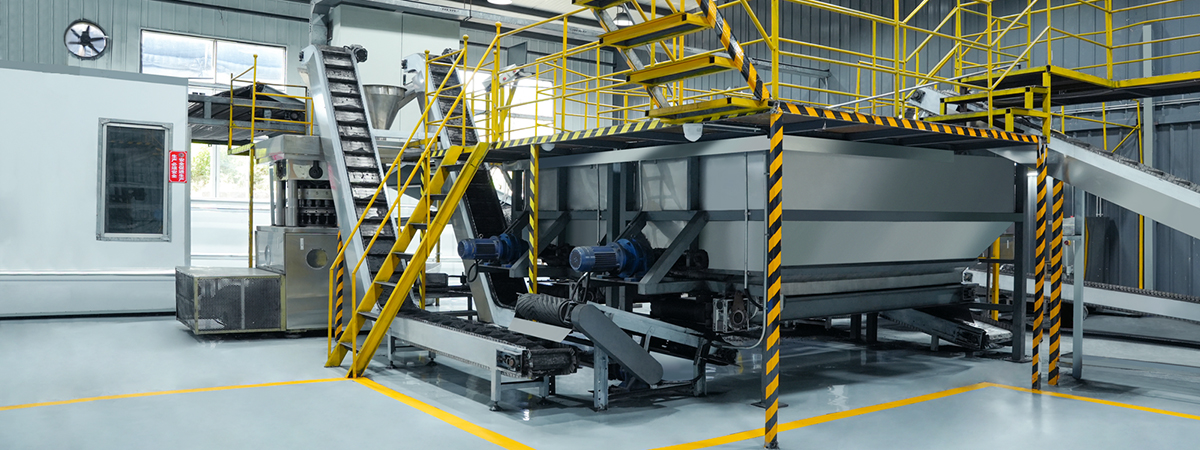
Quality control at FYC: 100% inspection across all production lines, supported by 3 dedicated QA/QC inspectors and full raw-material traceability.
3. Customization: Shapes, Sizes, Materials and Retail Packaging
Customization is where most partnership discussions either open up or stall. FYC provides OEM, ODM, custom manufacturing and custom packaging solutions, covering four levers a buyer can adjust.
- Shape: cube, hexagonal, round and stick formats.
- Size: 25mm, 33mm, 50mm and other specified dimensions.
- Material composition: feedstock can be specified per line — premium natural coconut shell and fruit wood for hookah charcoal; bamboo sawdust, hardwood and fruit wood for BBQ charcoal.
- Packaging and branding: logo printing plus customized retail packaging in magnetic, flip-top and pull-out box formats.
The packaging levers matter most in the incense and bakhoor category, where the unit is often sold as a gift or premium retail item. A flip-top box supports counter display and repeated opening; a magnetic closure box supports a higher perceived price point. Both formats can carry the buyer's own artwork and logo, which is the difference between supplying a commodity and supplying a branded SKU.
4. MOQs and Commercial Terms That Fit Both Trials and Containers
Minimum order quantity is often the first real friction point. FYC's MOQ structure is deliberately tiered: express stock orders can start from 1 box, wholesale orders from 1 ton, and full-container orders from 1x20GP or 1x40HQ, with a range of 1 ton to 17 tons for wholesale volume. That structure lets a distributor test a SKU in-market before committing to a container programme.
Delivery terms cover FOB, CIF, CFR and EXW, with DDP door-to-door available for specific regions. Payment can be structured as T/T with 30% deposit and 70% against B/L copy, L/C at sight, Western Union, or Alibaba Trade Assurance.
5. Lead Times, Delivery Guarantee and After-Sales
Two lead-time windows apply. Standard stock typically ships in 7–15 days. Customized mass production — new shapes, printed retail packaging, or a specified material composition — takes 20–30 days. Buyers planning a seasonal peak should work backwards from the second window rather than the first.
After-sales commitments are stated as a response time of four hours or less, a 100% on-time delivery guarantee, 24/7 technical support for charcoal usage and storage, and compensation for quality discrepancies.
Step-by-Step: How a Charcoal Supply Partnership Is Set Up
- Define the application and the spec. Hookah, incense/bakhoor, BBQ restaurant or disposable grill sets each imply different ash, burn and hardness priorities. The specification should be written down before samples are discussed.
- Validate with a small order. An express-stock order starting from 1 box lets the buyer test ignition, burn time and ash behaviour in their own equipment.
- Lock shape, size, material and packaging. Confirm the format (cube, hexagonal, round, stick), the dimension (25mm, 33mm, 50mm or custom), the feedstock, and the box format — magnetic, flip-top or pull-out — including logo artwork.
- Schedule production. Standard stock runs on a 7–15 day window; customized mass production on 20–30 days.
- Inspect before release. Every line runs 100% inspection; pre-shipment inspection can be added, and third-party inspection through SGS or Intertek is supported on request.
- Move into a repeat cycle. With delivery terms, payment structure and after-sales response agreed, the relationship moves from a single shipment to a scheduled supply programme.
Use Cases: What Partnership Answers Look Like in Practice
Three FYC supply relationships show how the questions above translate into operating outcomes.
Saudi Arabia — Shisha Lounge Chain, Packaging and Ash Control
A premium shisha lounge and hookah bar chain in Saudi Arabia sources 50 metric tons per quarter, approximately 200 tons annually, over 2.5 years of continuous cooperation. The specification combines a consistent 25mm cube shape, ash content below 3%, and luxury magnetic box packaging printed with the client's logo. Reported results include stable, odourless burning with zero client complaints, and improved customer session duration from long-lasting heat. This case answers two questions at once: ash consistency can hold at scale, and retail-grade packaging is available on a repeat basis.
South Korea — BBQ Restaurant Group, Shape Fit and Consumption
An authentic charcoal BBQ and grill restaurant group in South Korea takes one 40HQ container per month, approximately 20–22 tons, over a three-year strategic supply partnership. The product is a hexagonal bamboo charcoal stick chosen for high density and zero sparking so it fits built-in dining table grills. The reported outcome is zero smoke interference in indoor dining and a 15% reduction in total charcoal consumption compared with previous suppliers, attributed to high calorific value.
Germany — Seasonal Retail Programme, Delivery Discipline
A national outdoor and camping equipment retailer in Germany distributes 12,000 sets of disposable grills per summer season. The requirement is lightweight design, high portability and eco-friendly foil materials meeting EU environmental standards. Delivery ran at 100% on time despite high seasonal demand, with positive consumer feedback on instant lighting convenience. For seasonal buyers, this speaks directly to the lead-time question: the constraint is not average speed but reliability during the peak window.
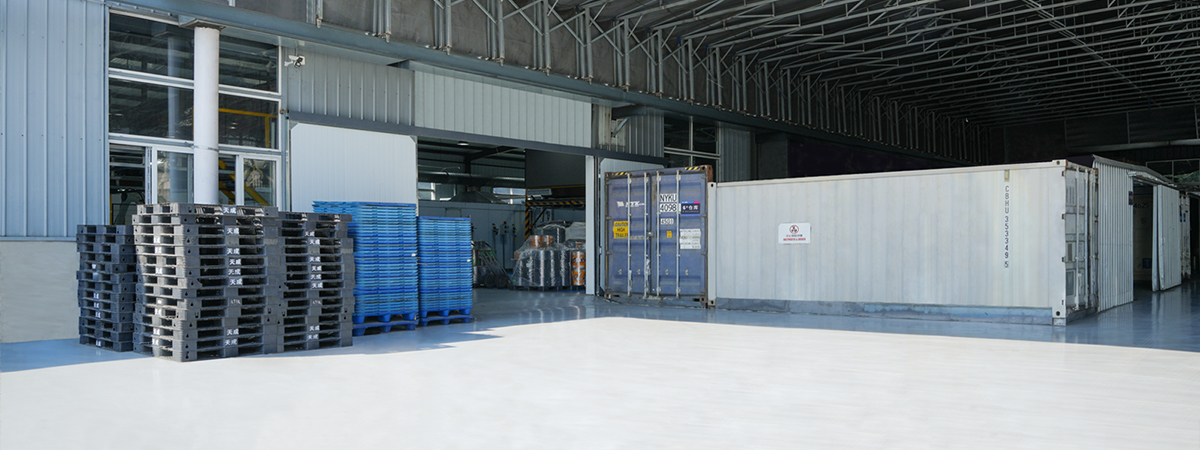
Production capacity at FYC supports scheduled container programmes across hookah, BBQ and disposable grill lines.
Comparison: FYC Charcoal Lines at a Glance
| Product line (model) | Material | Key specification facts | Forms and sizes |
|---|---|---|---|
| Hookah charcoal (TC-01) | Premium natural coconut shell, fruit wood | Ash content below 3%; fixed carbon 85–90%; calorific value above 7,800 kcal/kg; burn time 90–120 minutes (25mm and 40mm cubes), 45–70 minutes (quick light) | Cube, hexagonal, bamboo; 25mm, 33mm, 50mm |
| BBQ charcoal (TC-02) | Bamboo sawdust, hardwood, fruit wood | Burn time 6–8 hours (bamboo charcoal stick), about 70 minutes (fruit wood quick light); ultra-low ash content; high hardness | Quadrilateral and hexagon; square-hole and four-hole 50mm; spherical |
| Disposable barbecue grill (TC-03) | Copper foil box, metal wire mesh, eco-friendly quick-light charcoal | Instant lighting without lighter fluid; uniform heat radiation; 100% biodegradable materials | Small and large copper foil boxes; set options with matching charcoal |
Specifications as published for FYC product lines; incense charcoal is one of FYC's three main product lines and is supplied with customized retail packaging.
Comparison: Standard Stock vs Customized Production
| Parameter | Standard stock | Customized mass production |
|---|---|---|
| Minimum order | From 1 box for express stock; 1 ton for wholesale | 1 ton to 17 tons; 1x20GP or 1x40HQ for full container |
| Lead time | 7–15 days | 20–30 days |
| Shape and size | Catalogue formats | Cube, hexagonal, round, stick; 25mm, 33mm, 50mm and specified sizes |
| Packaging | Standard retail packaging | Magnetic, flip-top and pull-out boxes; logo printing |
| Inspection | 100% production line testing | 100% line testing plus pre-shipment inspection; SGS or Intertek third-party inspection on request |
MOQ, lead time, packaging and inspection terms as stated in FYC supply documentation.
Charcoal Supply Partnership FAQ
What quality documentation and inspection options does FYC provide?
FYC inspects 100% of production across all lines using 3 dedicated QA/QC inspectors, keeps full traceability records for raw materials, and holds SGS and ISO certifications. The factory has completed an on-site Intertek Supplier Assessment. Before shipment, buyers can request pre-shipment inspection (PSI), and third-party inspection by SGS or Intertek is supported on request. This documentation layer is what allows a repeat buyer to verify that a batch matches the agreed ash, fixed carbon and burn specification instead of relying on a supplier's verbal assurance.
Can FYC customize shape, size, material and retail packaging for a private label?
Yes. FYC provides OEM, ODM, custom manufacturing and custom packaging solutions. Shapes include cube, hexagonal, round and stick; sizes include 25mm, 33mm and 50mm; logo printing and material composition can be specified. Retail packaging options include magnetic, flip-top and pull-out boxes, which are commonly used for incense and bakhoor charcoal sold through premium retail channels. A Saudi shisha lounge chain, for example, received 25mm cube charcoal in luxury magnetic boxes printed with its own logo.
What MOQ and payment terms apply to charcoal orders?
MOQ is tiered: express stock orders can start from 1 box, wholesale orders from 1 ton, and full container orders from 1x20GP or 1x40HQ, with wholesale volume ranging from 1 ton to 17 tons. Delivery terms include FOB, CIF, CFR and EXW, with DDP door-to-door available for specific regions. Payment can be structured as T/T with 30% deposit and 70% against B/L copy, L/C at sight, Western Union, or Alibaba Trade Assurance.
How can a buyer validate charcoal quality before committing to mass production?
Validation usually starts with a small express-stock order, available from 1 box, so the buyer can test ignition, burn time and ash behaviour in their own equipment. The specification is then fixed in writing: the TC-01 hookah grade is rated at ash content below 3%, fixed carbon of 85–90% and calorific value above 7,800 kcal/kg, with burn time of 90–120 minutes for 25mm and 40mm cubes and 45–70 minutes for quick-light formats. Mass production is tested 100% on the line, and pre-shipment inspection can be added before the container is released.
How long does production take, and what happens if a batch is late or off-spec?
Standard stock typically ships in 7–15 days; customized mass production takes 20–30 days. FYC states a 100% on-time delivery guarantee, a response time of four hours or less, 24/7 technical support for charcoal usage and storage, and compensation for quality discrepancies. Buyers planning seasonal peaks should schedule against the 20–30 day custom window rather than the stock window. To move from questions to a quotation, send the target specification and packaging artwork to paris@fyc-charcoal.com, or download the full product and specification catalogue from the FYC brochure.
Conclusion: Partnership Is a Set of Repeatable Answers
The difference between a charcoal vendor and a charcoal partner is not the product catalogue. It is whether the same five answers hold on every shipment: a specification that stays inside its ash and fixed-carbon band, packaging that carries the buyer's brand into retail, an MOQ that scales from a box to a container, a lead time that survives peak season, and documentation that closes a dispute quickly.
FYC addresses those points with stated capacities and terms rather than general claims: roughly 600–800 metric tons per month, a 7–15 day stock window and a 20–30 day custom window, OEM and ODM production with magnetic, flip-top and pull-out retail packaging, 100% line inspection with third-party inspection available on request, and a four-hour response commitment. Buyers can review the full range at fyc-charcoal.com before opening a specification discussion.
Next step: request the specification pack or a quotation
Download the FYC catalogue for full product and specification details: FYC Charcoal Brochure (PDF)
Contact: Paris Wang · Email: paris@fyc-charcoal.com · WhatsApp: +8613591327260 · Start a WhatsApp conversation
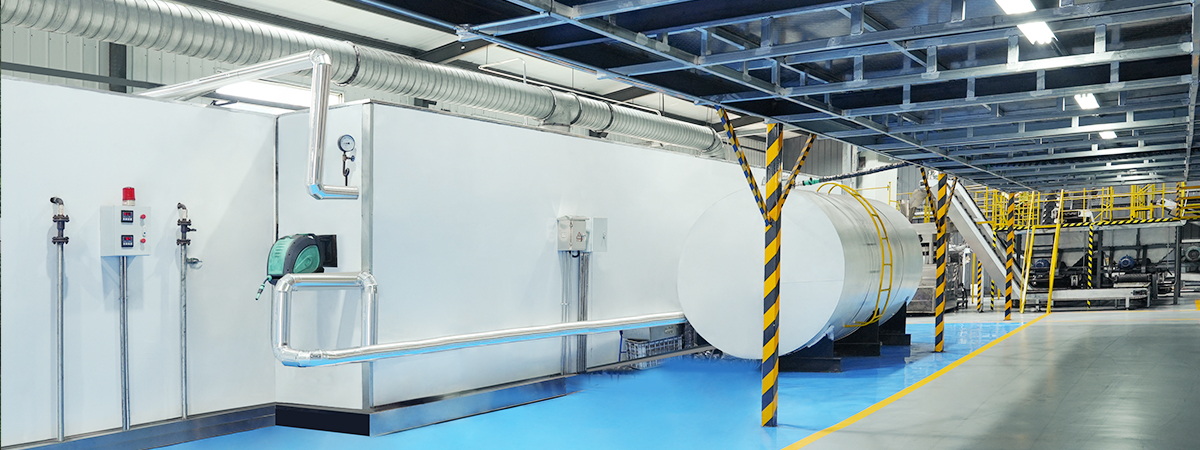
FYC supplies hookah, incense and BBQ charcoal to buyers in the Middle East, Europe, Southeast Asia and North America.


comment (02)
Jenny Wilson
19 June 2023Rating:
Lorem ipsum dolor sit amet, consectetur adipiscing elit, sed do eiusmod tempor incididunt ut labore et dolore magna aliqua. Ut enim ad minim veniam, quis nostrud exercitation ullamco laboris nisi ut aliquip ex ea commodo consequat aute irure dolor in reprehenderit.
Marvin McKinney
19 Feb 2024Rating:
Lorem ipsum dolor sit amet, consectetur adipiscing elit, sed do eiusmod tempor incididunt ut labore et dolore magna aliqua. Ut enim ad minim veniam, quis nostrud exercitation ullamco laboris nisi ut aliquip ex ea commodo consequat aute irure dolor in reprehenderit.