


Solving the Long-Burn Problem: Charcoal That Lasts 6–8 Hours for Busy Restaurants
How a 6–8 hour bamboo charcoal burn from FYC's TC-02 cuts refill events, stabilises grill temperature and reduces ash in high-volume restaurant service.
Solving the Long-Burn Problem: Charcoal That Lasts 6–8 Hours for Busy Restaurants
A restaurant's charcoal problem is rarely about the fuel itself — it is about how often someone has to stop cooking to deal with it. TC-02 barbecue charcoal, produced by FYC, is specified with a rated burn time of 6–8 hours in its bamboo charcoal stick form, so one loaded batch can carry a long service window instead of forcing repeated refills in front of guests.
FYC — Dalian Tiancheng Charcoal Industry Technology Co., Ltd. — is a charcoal manufacturer established in 1990, operating a 6,000 m² facility in Liaoning, China, with approximately 100 staff and a daily output exceeding 50 metric tons. Its range covers hookah charcoal, incense charcoal and barbecue charcoal; export business accounts for 60% of total sales, with major markets in the Middle East and Europe.
This article defines the operational problem the long burn solves, explains exactly what the 6–8 hour figure refers to, shows how constant-temperature output changes grilling performance, and sets out a step-by-step way for a restaurant to move from a short-burn refill cycle to a single-batch burn cycle.
TC-02 barbecue charcoal — the bamboo charcoal stick form is rated for 6–8 hours of burning.
The Long-Burn Problem, Defined
The long-burn problem is the gap between how long a restaurant grills and how long one batch of charcoal actually delivers usable heat. When that gap is short, the kitchen absorbs it through refill events: moments when staff must add fuel, spread settled coal, clear ash, or wait for the bed to recover temperature while orders are still coming in.
Three costs follow from refill events, and none of them appear on a charcoal invoice:
- Heat interruption. A fresh charge has to ignite and settle before it delivers searing heat again, so ticket times stretch in the middle of service.
- Labour taken off the line. Every refill is a task performed by someone who could be turning, plating or serving.
- Cleanup load. Ash that accumulates during service restricts airflow across the bed and adds to end-of-day work around the grill and the exhaust hood.
Burn duration decides how many of those events occur. A quick-light fruit wood fuel in the same TC-02 line is rated at 70 minutes — well suited to short, fast-start sessions, but it calls for reloading inside a single restaurant service. A 6–8 hour bamboo charcoal stick batch covers the service window as one continuous burn instead of several interrupted ones.
Industry Background: Why Burn Duration Became a Buying Specification
The global charcoal market was estimated at USD 8.5 billion in 2026, according to Grand View Research. Inside a category that size, restaurant buyers specify very differently from household buyers: a domestic shopper buys a bag, while a kitchen buys a guaranteed behaviour across hundreds of services.
FYC's application profile for commercial charcoal grilling and indoor barbecue dining describes the working condition precisely — high-volume, long-duration grilling that requires ultra-high temperatures and minimal ash to reduce exhaust hood cleanup. The same profile records a 6 to 8 hour combustion window per batch as the operating mode, with extremely low ash, high density, spark-free and odorless behaviour as special requirements, and built-in grills, Korean/Japanese grilling plates and commercial exhaust systems as the matched equipment.
Supply structure reinforces the point. Indonesia accounted for roughly 23% of global charcoal export value in 2024, according to World's Top Exports, which means most restaurant buyers source across borders and therefore depend on written specifications rather than on handling the fuel before purchase. In Europe, EN 1860-2 is described as the mandatory product safety standard for BBQ and retail charcoal — another reason charcoal is now purchased as a specified input rather than an unbranded commodity.
The Solution: TC-02 Barbecue Charcoal and Its 6–8 Hour Burn
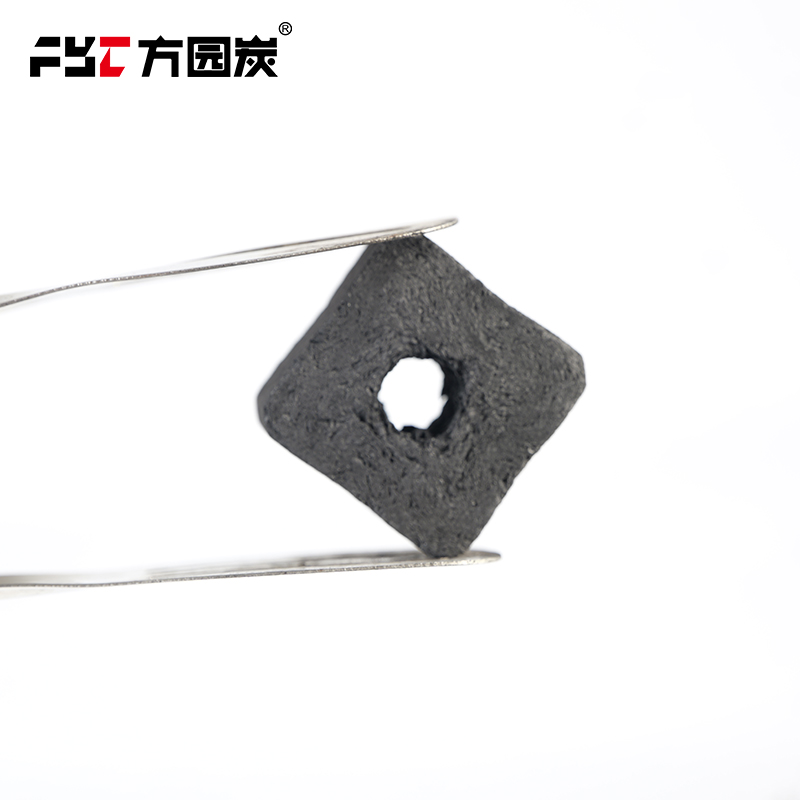
TC-02 is FYC's barbecue charcoal line, made from bamboo sawdust, hardwood and fruit wood. It is produced in several forms — quadrilateral, hexagon, 50 mm square-hole, 50 mm four-hole, spherical and Fangyuan charcoal — and is intended for barbecue restaurants, outdoor camping, home cooking, BBQ grills, and catering and hospitality.
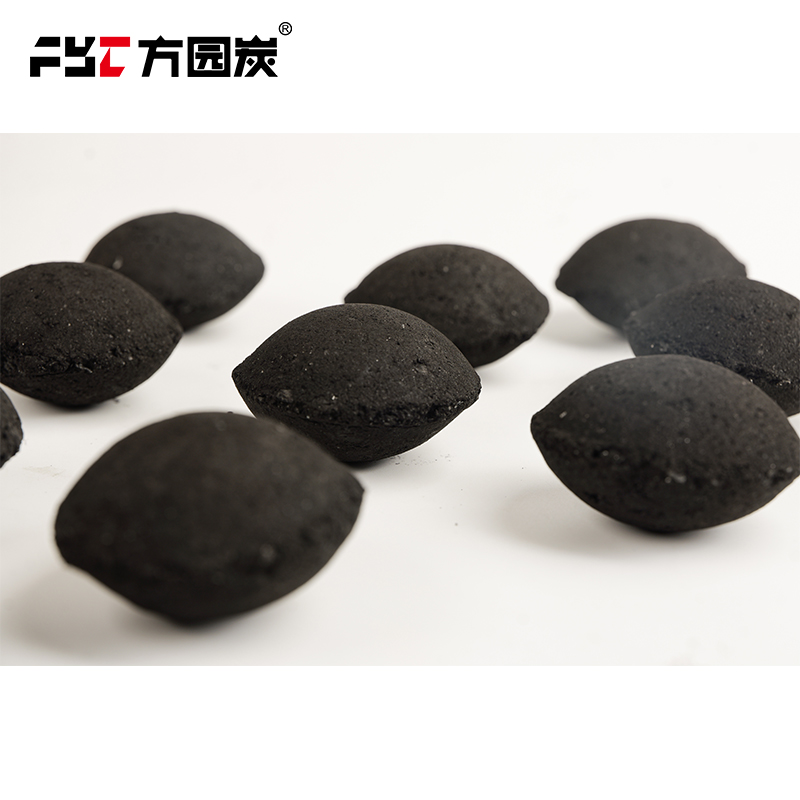
Spherical charcoal is one of several TC-02 forms, alongside quadrilateral, hexagon, 50 mm square-hole and Fangyuan.
What the 6–8 hour rating actually refers to
Precision matters here, because two burn figures exist inside one model line. The 6–8 hour rating applies to the bamboo charcoal stick. The fruit wood quick-light form of TC-02 is rated at 70 minutes. Both are legitimate products for different service models, but a quotation that says only "TC-02" without naming the form is not yet a specification.
Heat behaviour: constant temperature and high calorific output
TC-02 is described as delivering superior heat, high temperature and high calorific value, with constant temperature listed as a core feature. Constant temperature output is what a grill cook actually manages: a stable bed means the searing zone stays where it was set, so the difference between a rare and a medium steak comes from the cook's timing rather than from a cooling fire. That consistency is what makes a fixed grilling standard possible across shifts and across staff.
Two further properties matter in a dining room rather than a back yard. The charcoal is described as smokeless and odorless, which supports indoor barbecue dining where the exhaust system carries the load. It is also described as high hardness and not easy to break, which keeps the size grade consistent through handling, storage and transport from bag to grill.
Ash: the quiet cost driver
TC-02 is specified with ultra-low ash content. That single property connects fuel choice to two restaurant budgets at once: airflow during service and cleaning labour after it. FYC's application notes for commercial grilling list minimal ash among the requirements specifically because of exhaust hood cleanup, alongside high density, spark-free and odorless behaviour, and a base of 100% organic sawdust or bamboo.
Buyers who want an external reference point can use the Indonesian briquette standard SNI 01-6235-2000, which a 2026 journal article cites as setting moisture ≤8%, ash ≤8% and calorific value ≥5,000 cal/g. Those are benchmark values for reading and comparing test reports — they are not a substitute for the supplier's own documentation for the specific product and destination market.
Step-by-Step: Moving a Restaurant to a Single-Batch Burn Cycle
Switching fuel is an operational change, not simply a purchase. The sequence below keeps service running while the change is tested.
- Map the service window. Record the earliest grill-on time and the latest grill-off time across a normal trading day, including prep and late orders. That total is the burn duration the charcoal must cover.
- Specify the form, not just the model. Choose between the bamboo charcoal stick at 6–8 hours and the fruit wood quick-light at 70 minutes. Write the form, the size and the rated burn time into the purchase specification.
- Pre-light ahead of service. Bring the bed to full ignition before the first order so the opening rush is not served on a fire that is still settling.
- Load for the window, not for the table. Size the charge against the mapped service window rather than adding fuel table by table; a single planned batch is easier to control than a series of reactive top-ups.
- Log temperature at fixed checkpoints. Note bed temperature and searing behaviour at agreed intervals. Constant-temperature output should show as a flatter line than the previous fuel produced.
- Plan the handover between services. A 6–8 hour batch can be scheduled to end with the service window, so the next lighting is a planned task rather than an emergency in the middle of dinner.
- Measure the change. Count refill events per service, minutes lost to heat recovery, and ash volume at close. Compare those figures with the pre-switch baseline before scaling the decision across sites.
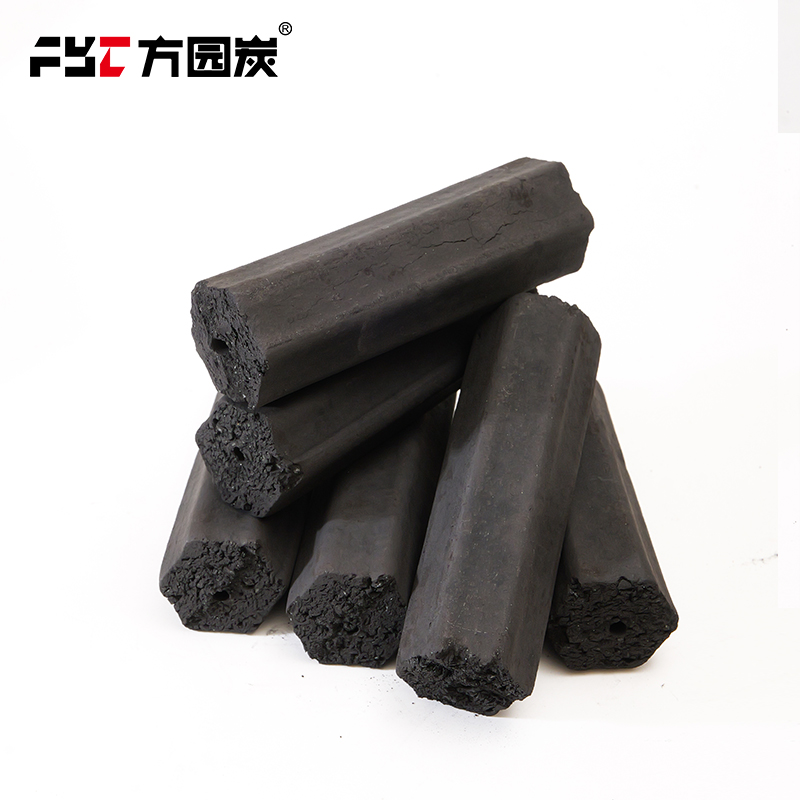
High hardness and uniform grading keep the fuel consistent from storage to grill.
Use Cases: Where a 6–8 Hour Burn Earns Its Place
Indoor Korean and Japanese style table grilling
This is the pattern FYC's application profile describes: high-volume, long-duration grilling that needs ultra-high temperatures and minimal ash to reduce exhaust hood cleanup, using built-in grills, grilling plates and commercial exhaust systems. Spark-free and odorless combustion is a service requirement in a closed dining room, not a preference.
Multi-hour barbecue restaurant service
Where orders arrive continuously from late afternoon into the evening, a fuel rated under 70 minutes forces reloads at the busiest moment. A batch rated at 6–8 hours converts the same window into one burn, which is the difference between a kitchen that manages its fire and one that reacts to it.
Catering, hospitality and event grilling
For off-site and event work, TC-02 is listed for catering and hospitality applications. A single long batch reduces the equipment and spare fuel that has to travel to a site, because the burn is planned to outlast the service rather than to be restocked during it.
Outdoor camping and home cooking
The same specification is listed for outdoor camping, home cooking and BBQ grills. Buyers running mixed portfolios can therefore hold one barbecue specification across commercial and consumer channels, provided the form and grade are stated on the order.
Where TC-02 is not the right choice
FYC's barbecue charcoal is engineered for grilling, and other applications have their own products. Hookah and shisha services are served by TC-01, with a rated 90–120 minute burn for cube 25 mm and 40 mm sizes, ash content below 3% in premium grade and calorific value above 7,800 kcal/kg. Incense, bakhoor and aromatherapy use TC-04, a 33 mm round tablet burning 45–70 minutes. Portable single-use grilling uses TC-03, the disposable grill providing instant even heating for 60–90 minutes. Specifying the wrong line for the application is the most common source of mismatched expectations.
Comparison: Burn Time and Role Across FYC Charcoal Lines
| Product and model | Form and material | Rated burn time | Typical application |
|---|---|---|---|
| Barbecue charcoal, TC-02 | Bamboo charcoal stick; bamboo sawdust, hardwood, fruit wood; quadrilateral, hexagon, 50 mm square-hole, 50 mm four-hole, spherical, Fangyuan | 6–8 hours (bamboo charcoal stick) | Barbecue restaurants, catering and hospitality, commercial grilling |
| Barbecue charcoal, TC-02 | Fruit wood quick light | 70 minutes | Fast-start grilling, shorter sessions, outdoor camping |
| Hookah charcoal, TC-01 | Cube 25 mm and 40 mm, hexagonal, bamboo; premium natural coconut shell and fruit wood | 90–120 minutes (cube 25 mm/40 mm); 45–70 minutes (quick light) | Hookah bars, shisha smoking |
| Incense charcoal, TC-04 | 33 mm round tablet; fruit wood charcoal and coconut shell charcoal powder | 45–70 minutes | Bakhoor, incense burners, aromatherapy, yoga rooms |
| Disposable barbecue grill, TC-03 | Copper foil box with food-grade galvanised or chrome-plated mesh; quick-light charcoal layer | 60–90 minutes of instant even heating | Outdoor picnic, camping, travel, retail and wholesale |
All figures are rated values taken from FYC product data for the specified form; actual performance depends on grill design, load, airflow and operating practice.
Reading the table as a buyer
The correct question is not which product burns longest, but which burn length matches the service window. A hookah lounge needs 90–120 minutes of odourless heat for a session; a restaurant needs a single batch that outlasts a full service; a camper needs 60–90 minutes of instant heat with no cleanup. Matching the line to the window removes almost all refill friction before the first order is placed.
Frequently Asked Questions
Does TC-02 barbecue charcoal meet European safety and quality requirements?
In Europe, EN 1860-2 is described as the mandatory product safety standard for BBQ and retail charcoal, so conformity evidence should be treated as part of the purchase specification rather than an optional extra. FYC holds SGS and ISO certifications according to company information. For quality comparison, the Indonesian briquette standard SNI 01-6235-2000 is cited with moisture ≤8%, ash ≤8% and calorific value ≥5,000 cal/g — useful reference values when reading supplier test reports. Destination-specific documentation should be confirmed with the supplier at quotation stage.
Can FYC supply 6–8 hour burning charcoal at restaurant volumes?
Yes. FYC operates a 6,000 m² manufacturing facility in Liaoning with approximately 100 staff, advanced assembly line equipment and a daily output exceeding 50 metric tons; annual production capacity reaches 4,000,000 pieces. The company was established in 1990, employs an R&D team of 8 engineers, and exports 60% of its sales to markets including the Middle East and Europe.
How does burn time change the cost of charcoal per service hour?
Charcoal is normally quoted per unit or per weight, not per hour of heat, so the useful comparison is the number of batches a service window consumes. A fuel rated at 70 minutes requires reloading inside a single service, while a bamboo charcoal stick batch rated at 6–8 hours covers the same window once. Buyers should request quotations on an identical basis — product form, size, rated burn time, ash claim, packaging and units per carton — so the comparison reflects delivered fuel per service rather than headline unit price.
Can a restaurant test TC-02 before committing to a volume order?
Yes. Sample requests are the normal starting point for restaurants and distributors evaluating a long-burn specification: state the form you want (for example the bamboo charcoal stick), the size grade, and the service window you need to cover, and FYC can supply material for a trial service. Running one full service and logging refill events, heat recovery time and ash volume gives a far more reliable decision than a short demonstration.
What should a restaurant chain confirm about delivery and lead time?
FYC is located in Liaoning with convenient transportation access, and export business accounts for 60% of total sales, including major markets in the Middle East and Europe. Because shipping schedules and order quantities vary by destination and form, lead time is confirmed at quotation stage for each order rather than fixed in advance. Buyers planning a multi-site rollout should contact the supplier early with forecast volumes so production and shipping can be scheduled against the launch date. Send specifications or a quotation request to paris@fyc-charcoal.com or WhatsApp +8613591327260.
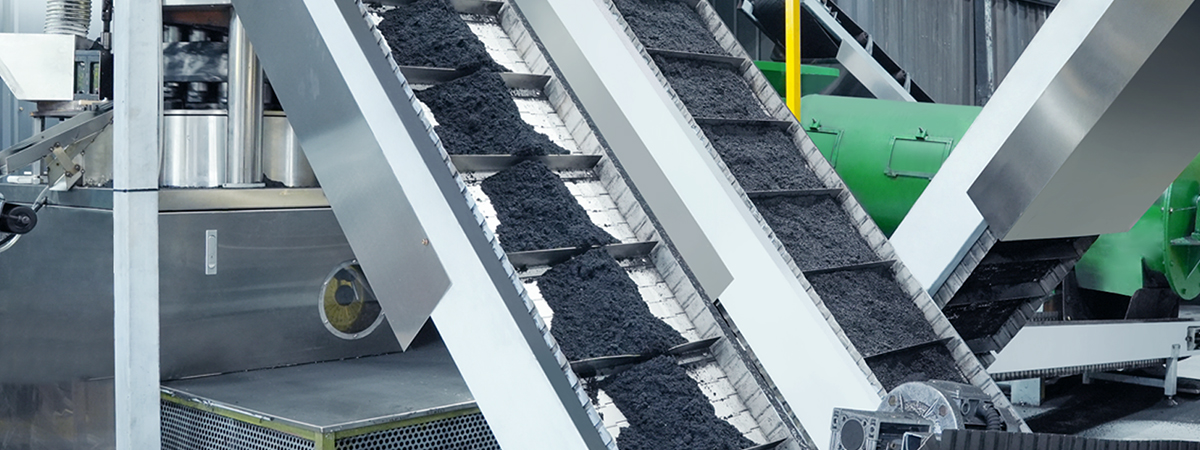
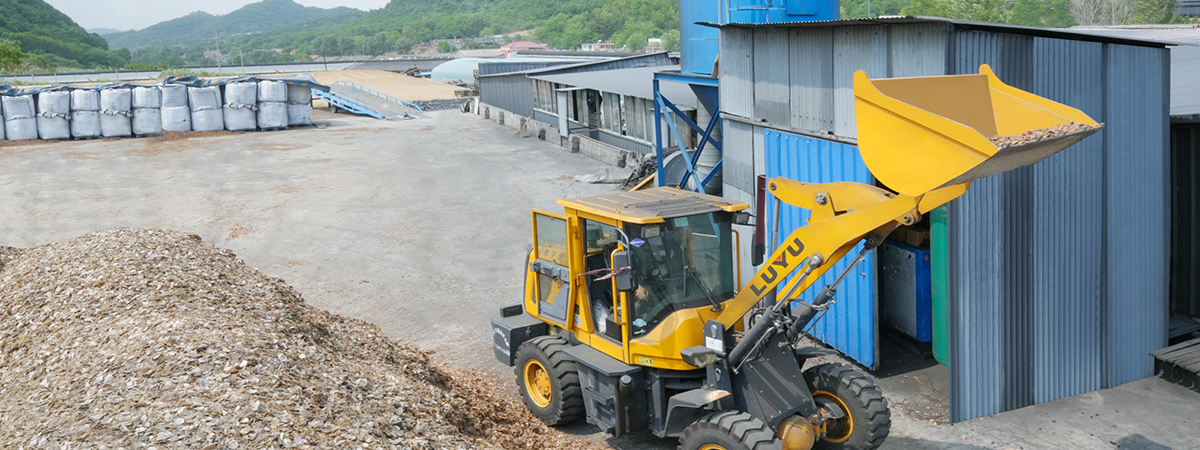
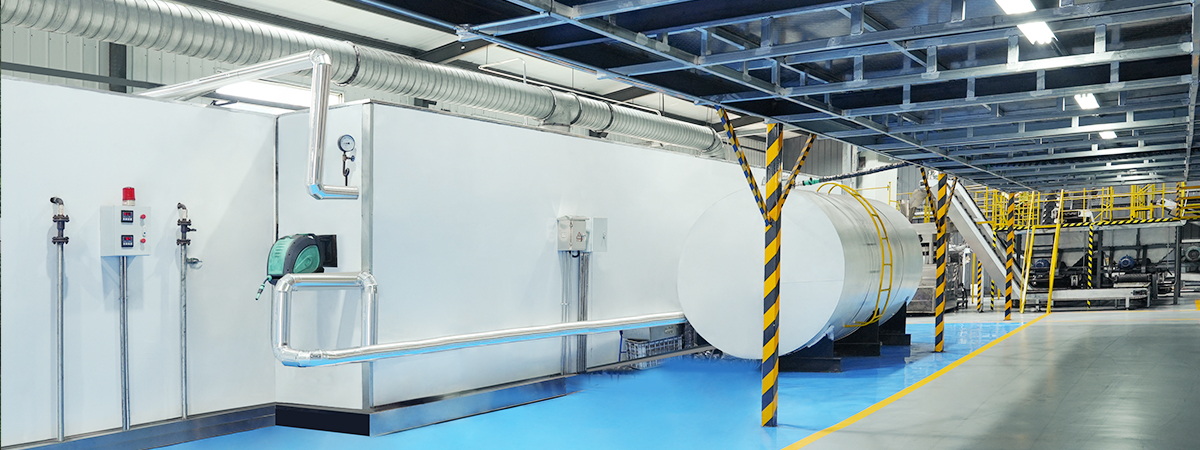
FYC's 6,000 m² facility in Liaoning produces hookah, incense and barbecue charcoal with a daily output exceeding 50 metric tons.
Conclusion: Match the Burn to the Service Window
The long-burn problem is solved on paper before it is solved on the grill. A restaurant that defines its service window, specifies the exact charcoal form and its rated burn time, and measures refill events during a trial service will know within one week whether a 6–8 hour bamboo charcoal stick batch replaces a chain of short reloads.
TC-02 barbecue charcoal from FYC carries the properties that decision depends on: a 6–8 hour burn in the bamboo charcoal stick form, constant temperature, high calorific output, ultra-low ash, smokeless and odorless combustion, and high hardness for consistent handling. Used with the right grill and exhaust set-up, those properties translate directly into fewer interruptions, steadier ticket times and less cleanup at close.
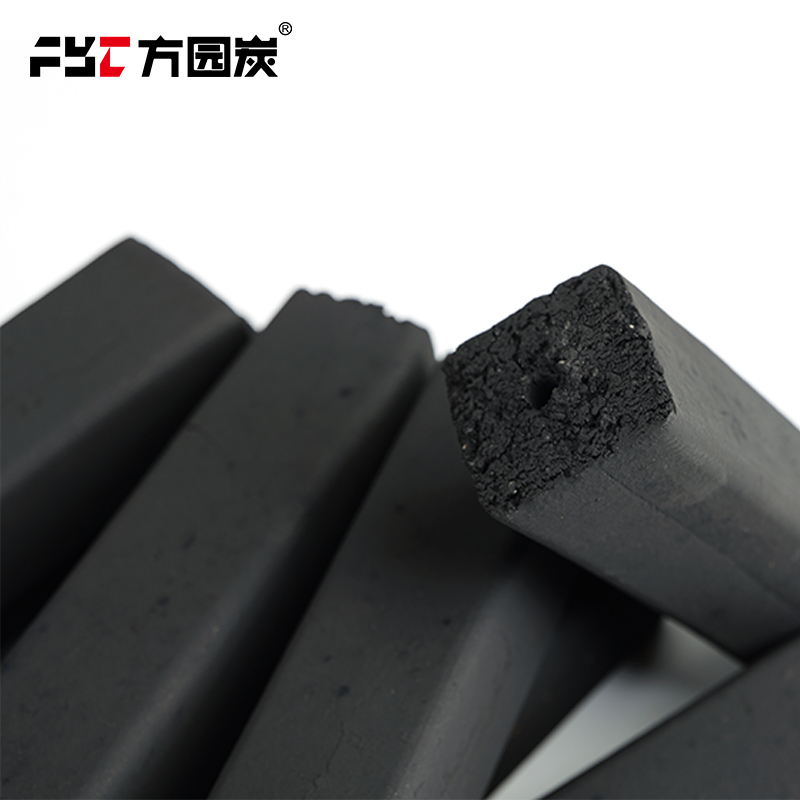
Request a TC-02 sample or a specification-based quotation for your service window.
Next Step: Test the Burn in Your Own Kitchen
Tell FYC your service window, grill type and preferred form, and request a TC-02 sample or a quotation for the bamboo charcoal stick and other barbecue forms.
Email: paris@fyc-charcoal.com | WhatsApp: +8613591327260 | Web: fyc-charcoal.com
Download the full product reference: FYC Charcoal Brochure (PDF)

comment (02)
Jenny Wilson
19 June 2023Rating:
Lorem ipsum dolor sit amet, consectetur adipiscing elit, sed do eiusmod tempor incididunt ut labore et dolore magna aliqua. Ut enim ad minim veniam, quis nostrud exercitation ullamco laboris nisi ut aliquip ex ea commodo consequat aute irure dolor in reprehenderit.
Marvin McKinney
19 Feb 2024Rating:
Lorem ipsum dolor sit amet, consectetur adipiscing elit, sed do eiusmod tempor incididunt ut labore et dolore magna aliqua. Ut enim ad minim veniam, quis nostrud exercitation ullamco laboris nisi ut aliquip ex ea commodo consequat aute irure dolor in reprehenderit.