

What Is Hookah Charcoal? A Beginner's Guide to Types, Materials, and Quality
A beginner's guide to hookah charcoal: cube, hexagonal and bamboo formats, coconut shell and fruit wood materials, TC-01 specs, quality checks, and importer FAQ.
What Is Hookah Charcoal? A Beginner's Guide to Types, Materials, and Quality
Hookah charcoal basics for new importers, lounges, and home users
Hookah charcoal is the heat source used to warm the tobacco or molasses in a hookah bowl. It is a separate product category from barbecue charcoal, even when both are sold under the same broad word, charcoal. For a new importer, the confusion starts early: suppliers use cube, hexagonal, bamboo, quick-light, coconut shell, fruit wood, and shisha charcoal as overlapping labels. Some labels describe shape. Some describe material. Some describe ignition. Some are market language. This guide explains the basic types, materials, and quality points, then uses the TC-01 hookah charcoal specification from FYC to show how those details affect a smoking session in a bar or at home.
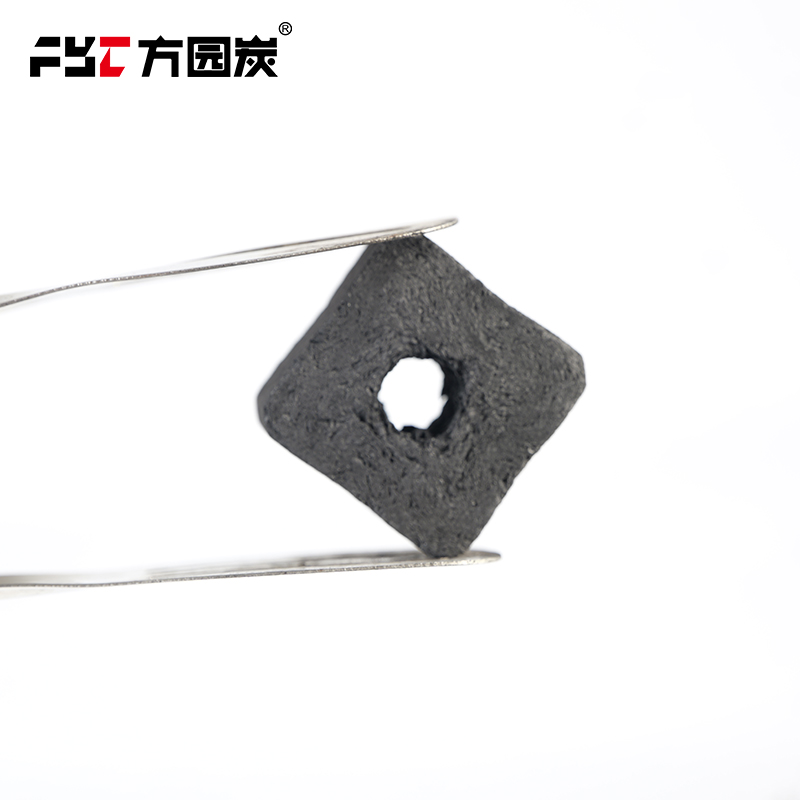
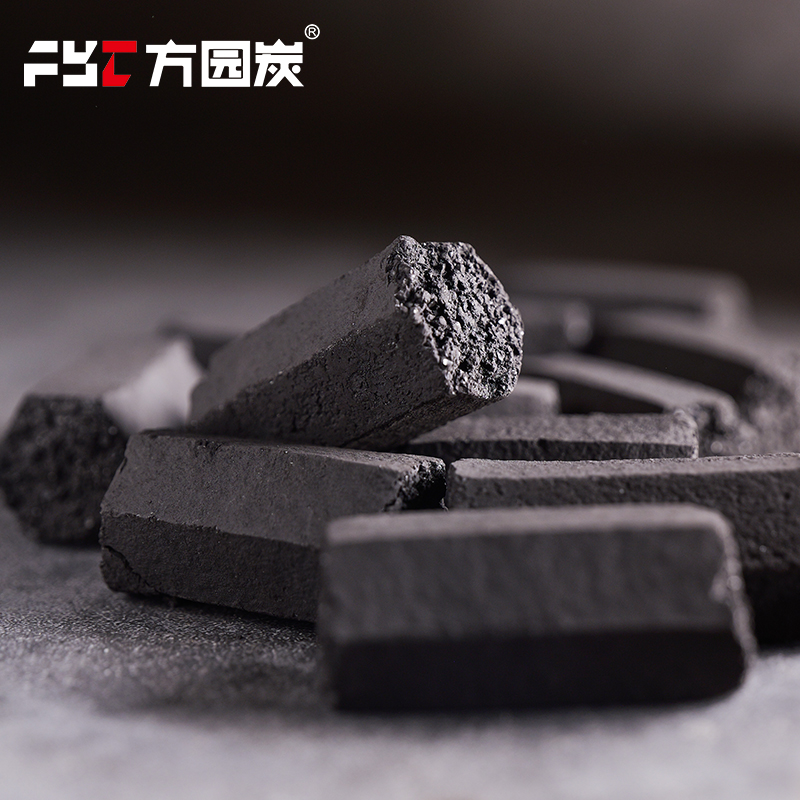
Bamboo Hookah Charcoal is one of the commercial formats listed in the TC-01 hookah charcoal range.
Problem Definition: Why Hookah Charcoal Is Hard to Buy at the Beginning
New importers often begin with a price per ton and a product photo. That is not enough for hookah charcoal. This is a session product. Heat stability, ash, odor, ignition, shape, and packaging all affect whether a lounge can serve consistently or a home user can enjoy a bowl. A buyer who cannot read the difference between a 25mm cube, a quick-light tablet, and a hexagonal format may order the wrong burn time, the wrong bowl fit, or a smoke profile the market rejects.
The problem is not a lack of suppliers. It is a lack of a common vocabulary for comparing them. One supplier may call the same item shisha charcoal; another may call it hookah charcoal. One may list coconut shell as the material and another may use coconut shell as a general category claim. A new buyer needs a simple way to separate four questions: What shape is it? What material is declared? What performance values are listed? What does the sample actually do when it is lit?
Without those four answers, a low price can hide a costly mismatch. A short-burning charcoal may be fine for a quick home session but poor for a lounge with long table times. A high-ash product may look acceptable in a photo but create extra handling in service. An odor issue may not appear until the charcoal is in use. The purpose of this guide is to make those differences visible before the first order.
Industry Background: Materials, Shapes, and Supply
Demand for hookah charcoal comes from hookah bars, shisha lounges, and home users who need a clean, steady heat source. The supply side is more fragmented. Coconut shell charcoal held 42.3% of the hookah charcoal market in 2025, according to Dataintelo research cited in the verified data pack. Indonesia was the world's leading charcoal exporter with about 23% of global export value in 2024, according to World's Top Exports. Those two facts explain why coconut shell is a default reference material for many buyers and why Asian supply chains matter in sourcing discussions.
They do not mean every coconut shell product performs the same way. Shape, carbonization, binder, pressing, drying, and grading still decide the final session. A buyer should treat material as the starting point, not the whole specification. The same logic applies to fruit wood. The material name tells you what the supplier declares; the performance values and the sample tell you how that material was processed and graded.
FYC is the brand of Dalian Tiancheng Charcoal Industry Technology Co., Ltd., a China-based manufacturer of hookah charcoal, incense charcoal, and barbecue charcoal. The company was founded in 1990, operates a 6,000㎡ factory, and reports SGS and ISO certifications. Its export ratio is 60%, with main markets in the Middle East and Europe. For a beginner, the practical lesson is not to memorize a brand story. The lesson is to separate material claims from specification values, and to ask for both in writing.
Detailed Solution: How TC-01 Specs Translate into Session Quality
The TC-01 hookah charcoal spec sheet gives a concrete example. TC-01 is listed in three commercial formats: Cube Hookah Charcoal, Hexagonal Hookah Charcoal, and Bamboo Hookah Charcoal. The material field names Premium Natural Coconut Shell and Fruit Wood. The listed features are smokeless, odorless, high hardness, and eco-friendly. The key performance values are a calorific value above 7,800 kcal/kg, a burn time of 90 to 120 minutes for Cube/25mm/40mm, a burn time of 45 to 70 minutes for Quick Light, ash content below 3% for premium grade, and fixed carbon above 85% to 90%. Quick light and fast ignition options are available.
Those values matter because a hookah session is a heat-management process. Calorific value indicates how much heat energy the charcoal can release per unit of mass. Burn time tells the operator how long one loading can support a session before a change is needed. Ash content tells the buyer how much residue will build up and how often the bowl or tray needs attention. Fixed carbon is a specification value buyers use to compare carbon consistency. Hardness affects handling, packing, and breakage before the charcoal ever reaches the bowl.
Smokeless and odorless are not decoration. They are sensory requirements. In a lounge, an off-odor or visible smoke can affect the tobacco flavor and the guest experience. At home, the same issue is simply unpleasant. When a supplier lists these features, the buyer should still test them with the intended tobacco or molasses, because the session result depends on the whole setup: bowl, pack, foil or screen, heat management, and charcoal loading.
What the Shape Labels Actually Mean
Cube and hexagonal are geometric formats. They affect how the charcoal sits on the bowl, how heat spreads, and how the pieces pack. Bamboo is a commercial type label in the TC-01 list. New importers should confirm whether a supplier uses bamboo to mean feedstock, shape, or a market label before placing an order. The TC-01 material field itself lists coconut shell and fruit wood, so the buyer should ask for the exact material declaration for the specific format being quoted. That is not a paperwork detail. It affects the sample you test and the specification you repeat in the purchase order.
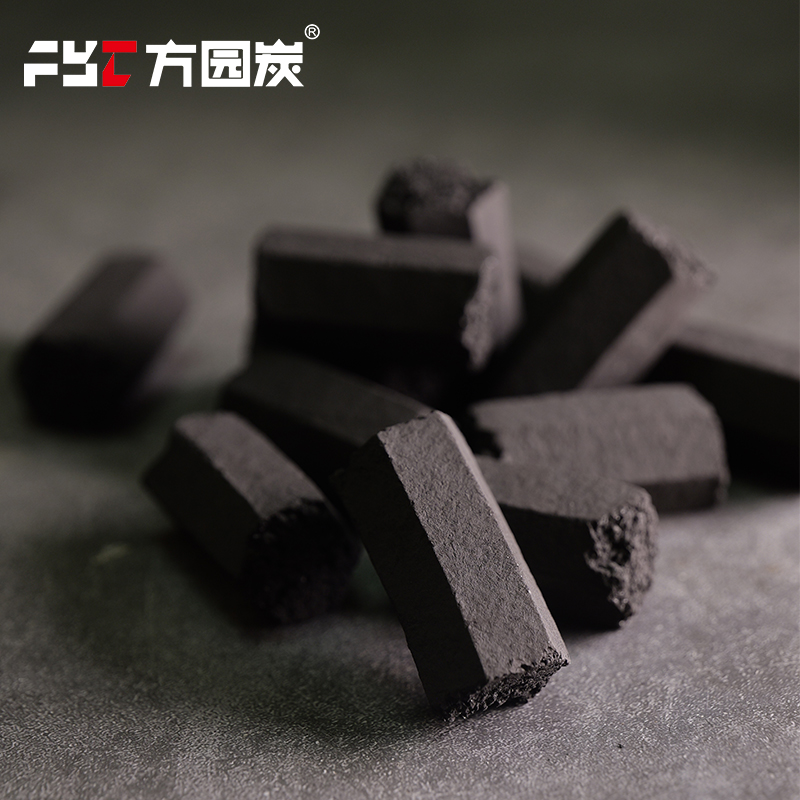
Hexagonal Hookah Charcoal is listed as a TC-01 format; confirm size, material declaration, and sample behavior before ordering.
For lounges, the 90-120 minute burn time for Cube/25mm/40mm is relevant because it aligns with a long social session. The 45-70 minute quick-light figure points to a different use case: faster preparation and shorter sessions. Neither number is automatically better. A bar with high table turnover may value fast ignition; a premium lounge may value a stable, long burn with low ash. The right choice depends on the service model, not on a generic ranking.
What the Quality Values Mean in Practice
Ash below 3% for premium grade is a handling value. A lower ash figure means less ash mass to manage during service, which can reduce interruptions in a lounge and make home cleanup easier. Fixed carbon above 85% to 90% is a consistency value. Buyers use it to compare how much of the product is carbon rather than other matter. Calorific value above 7,800 kcal/kg is a heat value. It tells the buyer that the specification is positioned for a strong heat output, but the actual session still depends on bowl setup and airflow.
High hardness is a logistics and handling value. Harder pieces are described as not easy to break, which matters when charcoal is bagged, cartoned, shipped, and then handled by staff. A broken piece can change the loading pattern and create waste. For a new importer, hardness is one of the simplest quality points to check in a sample shipment: look at the amount of fines and broken pieces after transit, not only at the factory.
What a Lounge Application Looks Like
In Saudi hookah and shisha lounges, the TC-01 application profile is built around constant premium heat without smoke, odors, or sparks. Each briquette is described as burning continuously for 90 to 120 minutes with ash content below 3%. The matched equipment includes premium hookah sets, ceramic shisha bowls, hookah tongs, and wind covers. The special requirement is 100% natural coconut shell, chemical-free, food-grade safety, and high hardness. That application logic explains why a lounge buyer should test more than ignition: the charcoal has to hold heat while the bowl is in service, and it has to do so without adding a smell or a spark risk.
A verified case from a premium shisha lounge and hookah bar chain in Saudi Arabia shows the same logic in commercial terms. The account buys about 50 metric tons per quarter, approximately 200 tons annually, and has worked with FYC for 2.5 years. FYC reports stable, odorless burning with zero client complaints and improved customer session duration due to long-lasting heat. The account uses a consistent 25mm cube, ultra-low ash below 3%, and luxury magnetic box packaging customized with the client's logo. For a new importer, the lesson is not that every market needs a 25mm cube. The lesson is that repeatable shape, low ash, and packaging discipline are part of the product, not extras.
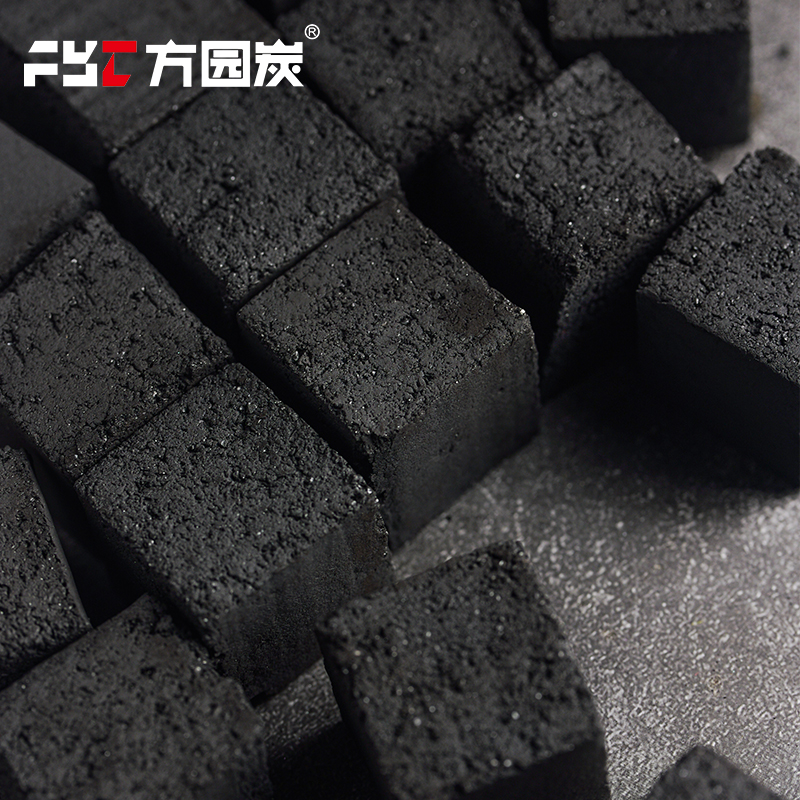
Hookah charcoal should be reviewed as a full specification: format, material, burn behavior, ash, and packing.
Step-by-Step Breakdown: How a New Importer Should Evaluate Hookah Charcoal
- Define the session before the spec. Write down the bowl type, typical session length, ignition method, and whether the customer expects quick light or a longer natural burn. Match the TC-01 format to that use case. A lounge with long sessions and a home user with a short evening session should not automatically choose the same format.
- Choose the material reference. Coconut shell and fruit wood are the two materials in the TC-01 spec. Ask for the material declaration per format and keep it with the sample record. If a supplier uses bamboo as a label, ask what it refers to in that quotation.
- Select the format and size. Cube, hexagonal, and bamboo labels are commercial names. Confirm size in millimeters, not only the shape name. TC-01 lists 25mm and 40mm in the burn-time note, and FYC's customization list includes 25mm, 33mm, and 50mm sizes.
- Read the performance values. Check calorific value, burn time, ash content, fixed carbon, and hardness. Do not accept a single premium claim without the numbers behind it. A useful quote should let you compare one specification against another without guessing.
- Test the sensory result. Light a sample and check ignition time, smoke, odor, ash behavior, and heat stability. A specification sheet can tell you what is claimed; a sample tells you how it behaves with your bowl and your tobacco.
- Confirm packing and commercial terms. Ask for packaging format, logo, carton protection, MOQ, lead time, and destination documents. FYC offers OEM, ODM, custom manufacturing, and custom packaging, including magnetic, flip-top, and pull-out boxes.
- Lock the repeat order. Put the approved sample, specification, packaging artwork, and inspection criteria into the purchase order. For a new importer, the goal is not one container. It is a repeatable specification that can be reordered without renegotiating the basics.
FYC's quality-control description includes 100% comprehensive inspection on all production lines, three professional QA/QC inspectors, an on-site Intertek supplier assessment, and full traceability of raw materials. For a buyer, those are process claims to verify during supplier qualification. They are useful because they tell you what to ask for: inspection records, batch traceability, and a clear nonconformity process.
Use Cases: Who Buys Hookah Charcoal and Why the Specification Changes
Hookah Bars and Shisha Lounges
Lounges need stable heat, low ash, and odor control across many simultaneous sessions. The TC-01 application profile in Saudi lounges uses 90-120 minutes per briquette, ash below 3%, and equipment such as ceramic bowls and wind covers. A lounge should test a full service shift, not one piece of charcoal. The relevant questions are how often staff must change charcoal, how much ash builds up, and whether guests notice any smoke or odor.
Home Users
Home users need easier ignition and predictable session length. Quick-light TC-01 is listed at 45-70 minutes; Cube/25mm/40mm is listed at 90-120 minutes. The home buyer should choose based on session length and willingness to manage ignition. A quick-light format can suit a short session, while a longer-burning cube may suit a slower evening session. The buyer should still check odor and ash in the actual room, because home use has less ventilation and more sensitivity than a commercial lounge.
New Importers and Distributors
Importers need a specification they can repeat, packaging they can sell, and a supplier that can support MOQ and lead time. FYC's capability data lists flexible MOQ from 1 box for express stock and 1 ton to 17 tons for wholesale orders. Lead time is 7-15 days for standard stock and 20-30 days for customized mass production. Monthly capacity is approximately 600-800 metric tons. Those figures help a new importer plan a first order without overcommitting to a full container before the market is tested.
Private-Label Brands
Private-label buyers need shape, size, logo, and packaging control. FYC lists customization for product shape, size, logo printing, retail packaging, and material composition. The packaging options include magnetic, flip-top, and pull-out boxes. A private-label buyer should approve the artwork, box structure, and charcoal sample together, because the retail product is judged as one item, not as loose charcoal plus a separate box.
Aromatherapy and Bakhoor Adjacency
TC-01's applicable industries include hookah bars, shisha smoking, aromatherapy, yoga rooms, incense burners, and home relaxation. A buyer entering the hookah category should still keep the hookah specification separate from incense charcoal. Incense charcoal, such as TC-04, is listed with a 45-70 minute burn time and quick-light features for bakhoor and aromatherapy. The use case is different, and the purchase specification should be different.
Beginner rule: do not compare hookah charcoal by material name alone. Compare the declared material, the format and size, the burn time, the ash value, the fixed carbon, the calorific value, and the sample result. A supplier that can answer all six is easier to qualify than one that only sends a photo and a price.
Comparison Table: TC-01 Hookah Charcoal Formats
The table below uses only the TC-01 product specification and the approved capability facts. It does not assign a rating or a price. Where the provided specification does not state a separate value for a format, the table says so rather than inventing one.
| Format | Verified TC-01 listing | Verified specification anchor | What the importer should verify |
|---|---|---|---|
| Cube Hookah Charcoal | Listed as Cube Hookah Charcoal | Burn time 90-120 minutes for Cube/25mm/40mm; ash below 3% for premium grade; fixed carbon above 85% to 90%; calorific value above 7,800 kcal/kg | Bowl fit, packing count, actual session length, ash handling, and sample odor |
| Hexagonal Hookah Charcoal | Listed as Hexagonal Hookah Charcoal | TC-01 model specification; no separate hexagonal burn time is stated in the provided spec | Edge fit on the bowl, heat distribution, carton protection, and sample burn |
| Bamboo Hookah Charcoal | Listed as Bamboo Hookah Charcoal | TC-01 model specification; no separate bamboo burn time is stated in the provided spec | What the bamboo label means in the quotation, material declaration, ash behavior, and odor check |
| Quick-light TC-01 | Quick light and fast ignition options are listed | Burn time 45-70 minutes for Quick Light | Ignition time, odor during lighting, and suitability for short sessions |
FAQ: Hookah Charcoal Questions New Importers Ask
What compliance or quality documentation should a new importer request for hookah charcoal?
Ask for the product specification, material declaration, ash content, fixed carbon, calorific value, burn time, batch traceability, and any certifications the supplier claims. FYC reports SGS and ISO certifications and describes 100% inspection, three QA/QC inspectors, and an on-site Intertek supplier assessment. For destination-market checks, do not assume that a barbecue charcoal standard covers hookah charcoal. As a reference point, a cited Indonesian briquette standard, SNI 01-6235-2000, lists moisture 8% or less, ash 8% or less, and calorific value 5,000 cal/g or more. That is a useful benchmark for briquette quality, not a universal hookah charcoal rule. In Europe, EN 1860-2 is a BBQ charcoal safety standard, so confirm whether it applies to your specific product and market before relying on it.
Can FYC supply private-label or custom hookah charcoal formats?
Yes. FYC lists OEM, ODM, custom manufacturing, and custom packaging. Customization covers product shape, size, logo printing, retail packaging, and material composition. The packaging options include magnetic, flip-top, and pull-out boxes. TC-01 itself is listed in cube, hexagonal, and bamboo formats, and FYC's customization list includes sizes such as 25mm, 33mm, and 50mm. A buyer should confirm the exact format, size, material declaration, packaging structure, and artwork approval steps in the quotation.
How should a new importer think about hookah charcoal budget without a published price?
Do not budget from a single headline price per ton. Hookah charcoal cost is driven by format, size, material, burn time, ash level, packaging, order volume, destination, and freight. A quick-light product, a 25mm cube, and a private-label magnetic box are different commercial items even when they share a model family. The practical approach is to request a quote with the target format, size, packaging, quantity, destination port, and required documents. Then compare offers on delivered cost and specification together. A lower piece price can be more expensive if it creates more breakage, more ash handling, or a shorter session.
Can I test TC-01 hookah charcoal before a bulk order?
FYC's capability data states that MOQ is flexible and starts from 1 box for express stock. That gives a new importer a practical way to request a small stock quantity or sample-style order before a wholesale commitment. Test ignition, smoke, odor, ash, burn time, and bowl fit with the intended bowl and tobacco. Keep the sample specification and photos with the order record so the bulk shipment can be compared against the approved reference.
What lead time should I plan for a TC-01 order?
FYC lists 7-15 days for standard stock and 20-30 days for customized mass production. The exact lead time should be confirmed in the quotation because packaging, artwork approval, and order volume can change the schedule. FYC also lists after-sales support with a response time of 4 hours or less, a 100% on-time delivery guarantee, and 24/7 technical support for charcoal usage and storage. For a first order, ask for the production schedule and the inspection plan before paying a deposit.
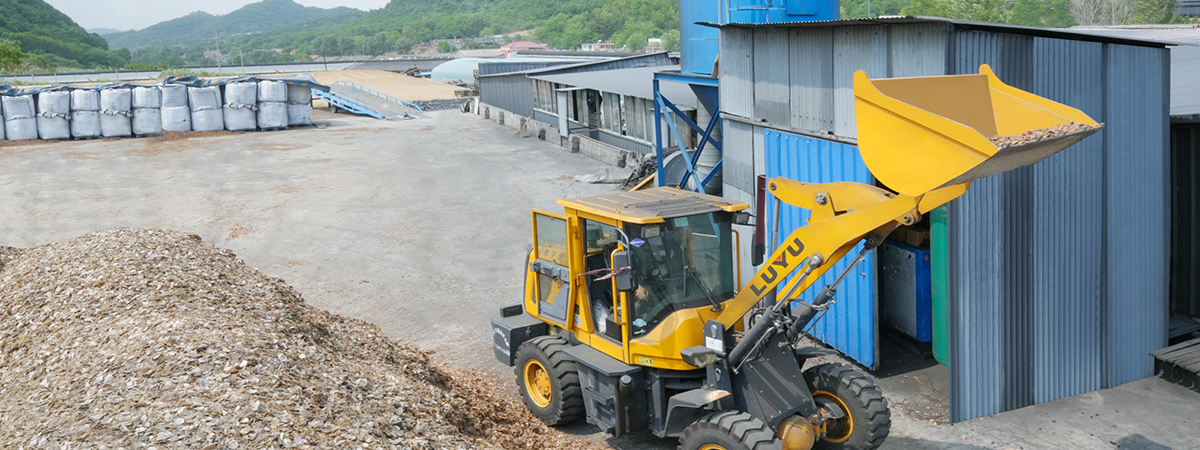
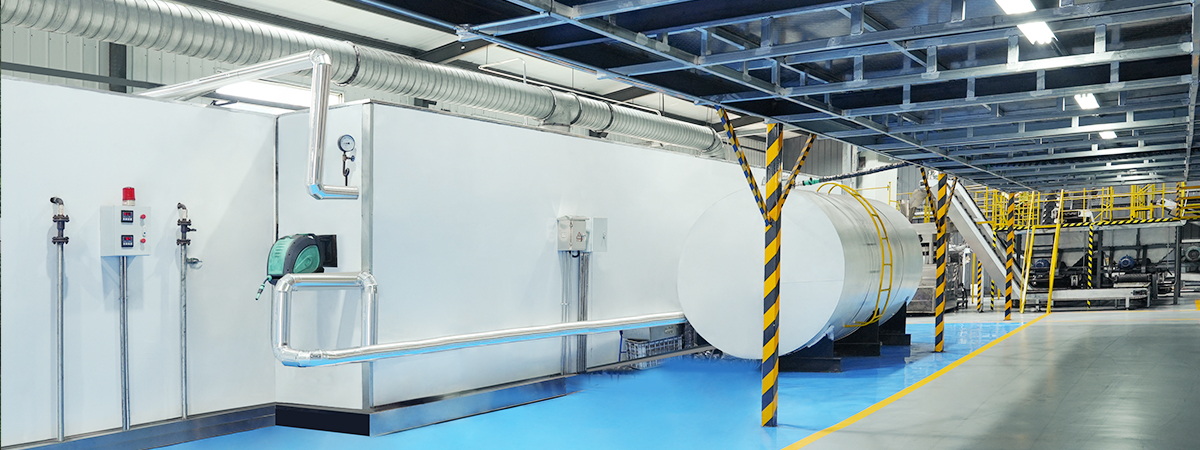
Factory capability and quality control are part of the supplier evaluation, not a separate story from the charcoal specification.
Conclusion: Start with the Session, Then the Specification
Hookah charcoal is a small product with a large effect on the session. For a new importer, the beginner's path is to learn four things: format, material, performance values, and sensory result. TC-01 provides a concrete reference: cube, hexagonal, and bamboo type labels; coconut shell and fruit wood materials; smokeless and odorless features; ash below 3%; fixed carbon above 85% to 90%; calorific value above 7,800 kcal/kg; 90-120 minutes for Cube/25mm/40mm; and 45-70 minutes for quick light. Those values should be checked against the sample and written into the purchase order.
FYC supports OEM, ODM, custom packaging, and export markets including the Middle East, Europe, Southeast Asia, and North America. The company reports SGS and ISO certifications and a monthly capacity of approximately 600-800 metric tons. For a new importer, the next step is not to choose the cheapest bag. It is to choose the format and specification that fit the session, then confirm the sample, packaging, MOQ, and lead time.
Next step: Request a TC-01 hookah charcoal sample, quotation, or catalog from FYC. Include your target format, size, packaging, quantity, and destination port so the reply can match your actual project. Visit fyc-charcoal.com or download the FYC charcoal brochure.
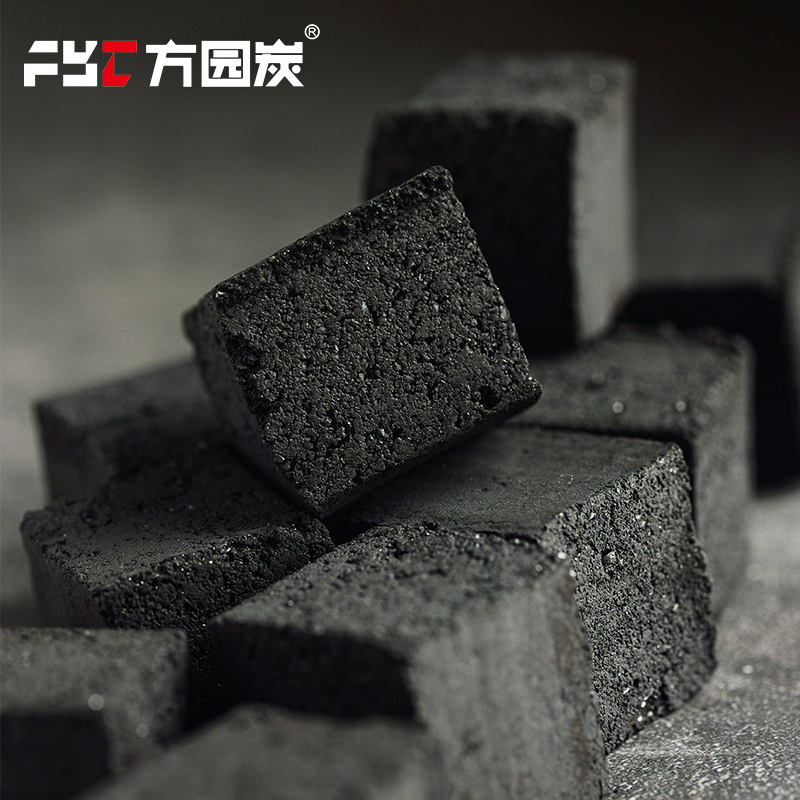
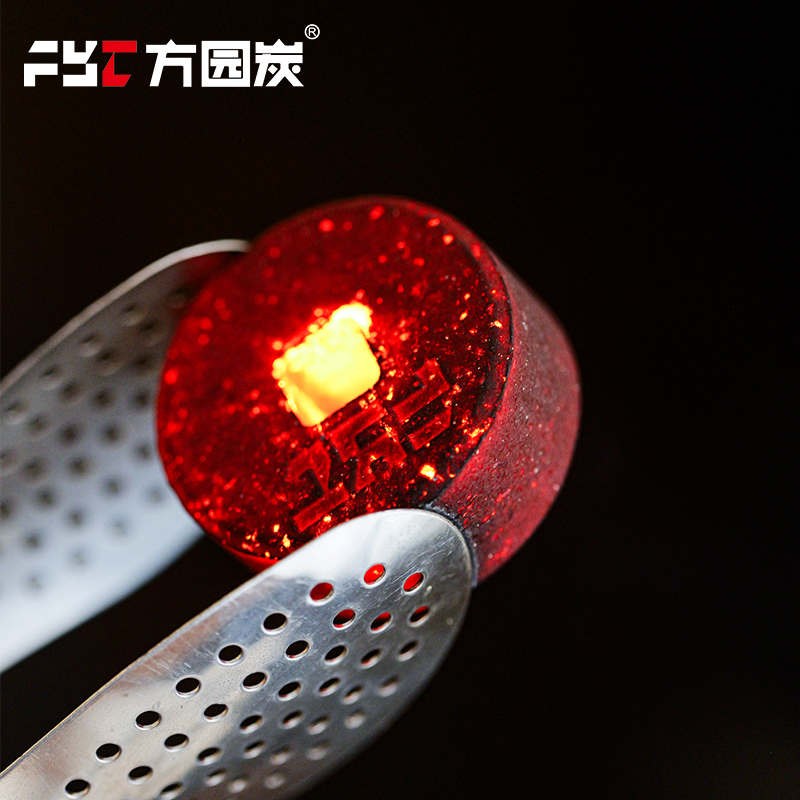
TC-01 hookah charcoal is available for sample, quotation, and catalog requests through FYC.
comment (02)
Jenny Wilson
19 June 2023Rating:
Lorem ipsum dolor sit amet, consectetur adipiscing elit, sed do eiusmod tempor incididunt ut labore et dolore magna aliqua. Ut enim ad minim veniam, quis nostrud exercitation ullamco laboris nisi ut aliquip ex ea commodo consequat aute irure dolor in reprehenderit.
Marvin McKinney
19 Feb 2024Rating:
Lorem ipsum dolor sit amet, consectetur adipiscing elit, sed do eiusmod tempor incididunt ut labore et dolore magna aliqua. Ut enim ad minim veniam, quis nostrud exercitation ullamco laboris nisi ut aliquip ex ea commodo consequat aute irure dolor in reprehenderit.