

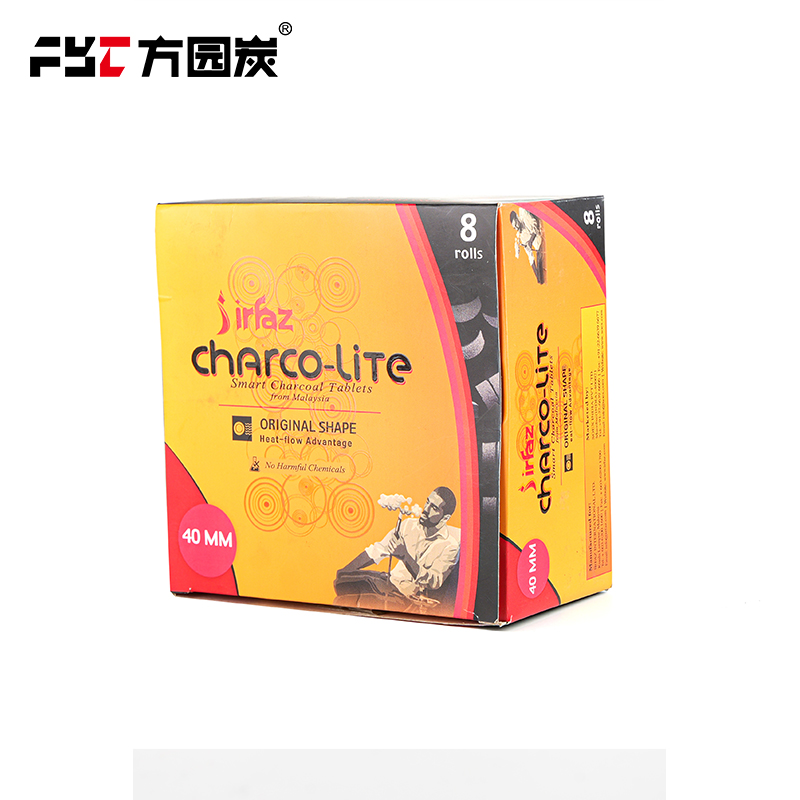
Cube vs. Hexagonal vs. Bamboo Hookah Charcoal: A Buyer's Comparison Guide
Compare cube, hexagonal and bamboo hookah charcoal (FYC TC-01): 90-120 min cube burn time, 45-70 min quick light, ash under 3%, fixed carbon 85%-90%.
Cube vs. Hexagonal vs. Bamboo Hookah Charcoal: A Buyer's Comparison Guide
Short answer: cube, hexagonal and bamboo are three briquette formats of one hookah charcoal line — FYC's TC-01 — not three different fuel categories. Cube formats at 25mm and 40mm carry the published long-burn figure of 90–120 minutes per briquette, while quick-light options in the same line are specified at 45–70 minutes. Across the premium grade line, the published values are an ash content below 3%, a fixed carbon content above 85%–90%, and a calorific value above 7,800 kcal/kg.
What genuinely changes between the three formats is geometry and specification coverage: how a briquette is placed and rotated on the bowl, how it packs and stores, and whether the performance figure you are reading was published for that specific shape. The comparison below is built only on published product data, so you can decide which format fits a lounge rotation, a home session or a wellness setting before you place an order.
FYC is the charcoal brand of Dalian Tiancheng Charcoal Industry Technology Co., Ltd., a charcoal manufacturer established in 1990 in Liaoning, China, that develops and supplies hookah charcoal, incense charcoal and barbecue charcoal, exporting 60% of its sales to markets including the Middle East and Europe.
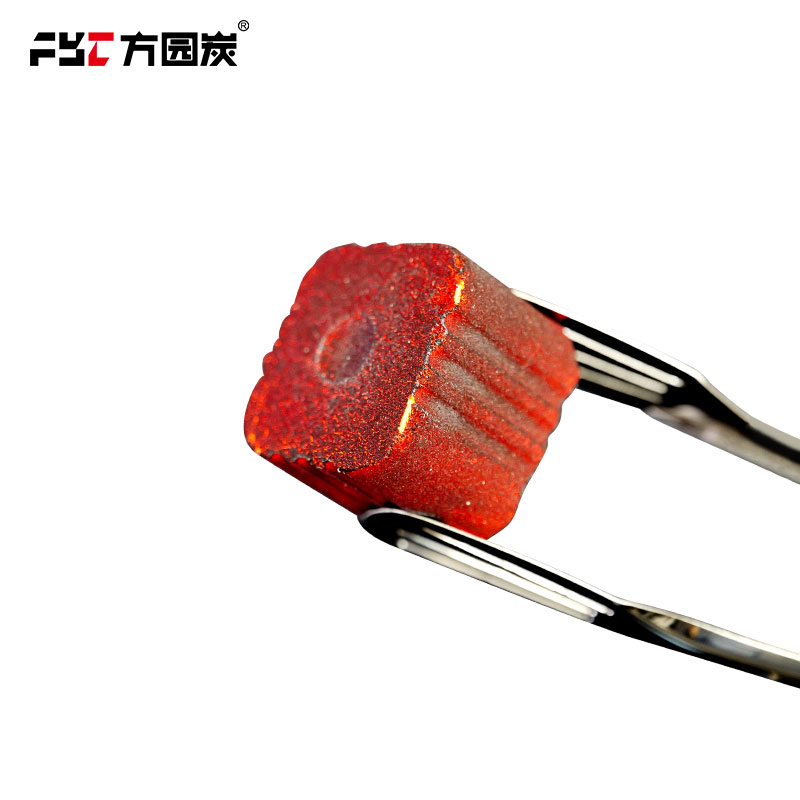
FYC TC-01 hookah charcoal is supplied in cube, hexagonal and bamboo formats for hookah bars, lounges and home sessions.
What This Comparison Actually Covers — and What It Does Not
Three formats, one specification sheet. Cube, hexagonal and bamboo appear together in the TC-01 type list, and all three are produced against the same stated material base: premium natural coconut shell and fruit wood. That single fact resolves most of the confusion buyers bring to this question. You are not choosing between a coconut shell fuel and a wood fuel when you choose between these three shapes — you are choosing how the fuel is formed.
Three assumptions are worth dropping before you compare:
- That one burn time applies to every shape. The published TC-01 burning time is stated as 90–120 minutes for cube formats at 25mm and 40mm, and 45–70 minutes for quick-light options. Those are the documented values. A hexagonal or bamboo item should be confirmed against its own specification, not the cube figure.
- That the format name describes the raw material. “Bamboo hookah charcoal” is the format name inside the TC-01 type list, while the stated materials for the line are premium natural coconut shell and fruit wood. If your market or your customer requires a specific base material, confirm it in writing instead of inferring it from the shape name.
- That shape alone changes flavour. Flavour and heat stability are driven by measurable parameters — ash content and fixed carbon — rather than by the outline of the briquette. Ash below 3% and fixed carbon above 85%–90% are the numbers that decide how cleanly a bowl burns.
Scope note: this guide covers TC-01 hookah charcoal only. FYC's barbecue charcoal (TC-02) and incense charcoal (TC-04) are separate ranges with their own specifications, and format logic does not transfer between them.
Industry Background: Why Format-Level Detail Matters in 2026
Charcoal remains a large and growing category, and the shisha segment inside it is expanding steadily. The global charcoal market was valued at USD 8.1 billion in 2025 and is projected to reach USD 11.6 billion by 2033, according to Grand View Research. The hookah (shisha) charcoal niche was valued at approximately USD 1.8 billion in 2025, with a projected CAGR of 6.2% through 2034, according to Dataintelo.
Niche sizing should be read carefully, because published valuations for shisha charcoal differ substantially depending on whether a report scopes the shisha-specific product or the wider charcoal category. Directionally, however, demand signals point the same way, and the regional picture is clear: the Middle East and Africa accounted for 48.8% of global charcoal market revenue in 2025, a share driven largely by traditional cooking and shisha culture. That is also where FYC's own sales concentrate — its main markets are the Middle East and Europe, with export business accounting for 60% of total sales.
On the material side, coconut shell charcoal is the fastest-growing source segment in the category, with a projected CAGR of 5.0% between 2026 and 2033, favoured for its high fixed carbon content and environmental sustainability. The stated material base of the TC-01 hookah line — premium natural coconut shell and fruit wood — sits directly in that growth segment.
Regulation is also tightening around documented parameters. In the European Union, barbecue charcoal and briquettes are governed by EN 1860-2:2005, which specifies limits for ash content, fixed carbon and moisture. Regardless of whether a given standard covers your product category, the pattern is consistent: ash and fixed carbon are treated as regulated, documented values in serious markets. That is why a format-level comparison has to be built on verified numbers rather than on shape descriptions.
The FYC TC-01 Hookah Charcoal Line: Shared Specifications
Before comparing formats, it helps to know what all three share. The published TC-01 specification is as follows:
- Formats: Cube Hookah Charcoal, Hexagonal Hookah Charcoal, Bamboo Hookah Charcoal
- Cube sizes: 25mm and 40mm
- Material: premium natural coconut shell, fruit wood
- Burning time: 90–120 minutes (Cube / 25mm / 40mm); 45–70 minutes (Quick Light)
- Ash content: below 3% (premium grade)
- Fixed carbon content: above 85%–90%
- Calorific value: above 7,800 kcal/kg
- Ignition: quick light / fast ignition options available
- Features: smokeless, odorless, high hardness, eco-friendly
Why these numbers decide the purchase: ash content governs how often a bowl must be brushed out and reloaded during service; fixed carbon governs how steadily a briquette holds heat instead of fading mid-session; calorific value describes the heat the fuel can deliver; and burning time converts directly into labour — how many briquette changes a server performs per shift.
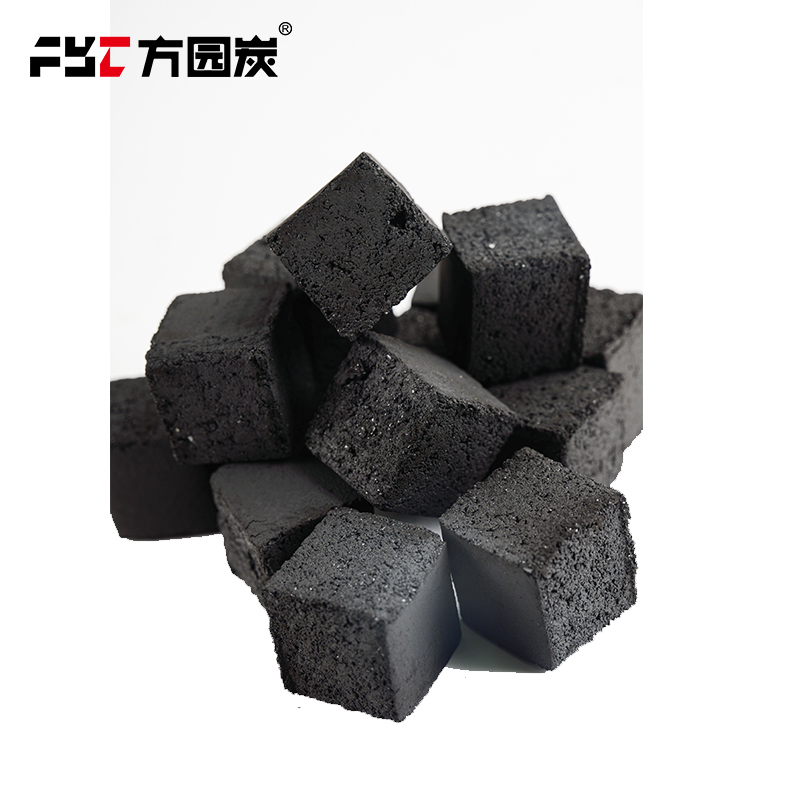
TC-01 hookah charcoal is documented at ash below 3%, fixed carbon above 85%–90% and a calorific value above 7,800 kcal/kg.
Format by Format
Cube (25mm and 40mm): the long-burn reference point
Cube is the format with the most complete published data in the TC-01 line. Both the 25mm and the 40mm cube are documented at 90–120 minutes of burning time, which is the value to plan a lounge bowl rotation around. In a venue where a bowl is expected to stay lit through a full social session, this is the format that removes mid-session briquette changes from the workflow.
Two practical points follow from the shared specification. First, because both cube sizes are documented at the same burn duration, size selection is normally driven by bowl capacity and the heat profile the operator wants rather than by burn length. Second, because ash content is published below 3% at premium grade, cube formats suit operations where a bowl is reused through a long service window with minimal residue build-up.
Hexagonal: same line, format-specific data needed
Hexagonal hookah charcoal is one of the three TC-01 formats, so it inherits the line-level premium grade claims — ash below 3% and fixed carbon above 85%–90% — together with the same stated material base of premium natural coconut shell and fruit wood. What it does not inherit automatically is the cube's published burning time.
That is a documentation boundary rather than a product defect, and a careful buyer can work with it. If hexagonal geometry suits your bowl setup and handling preference, the sensible procurement step is to request the burning-time figure for the hexagonal item in writing, alongside its ash and fixed carbon values, and to hold that document as the baseline for your first order instead of assuming the 90–120 minute cube value carries over.
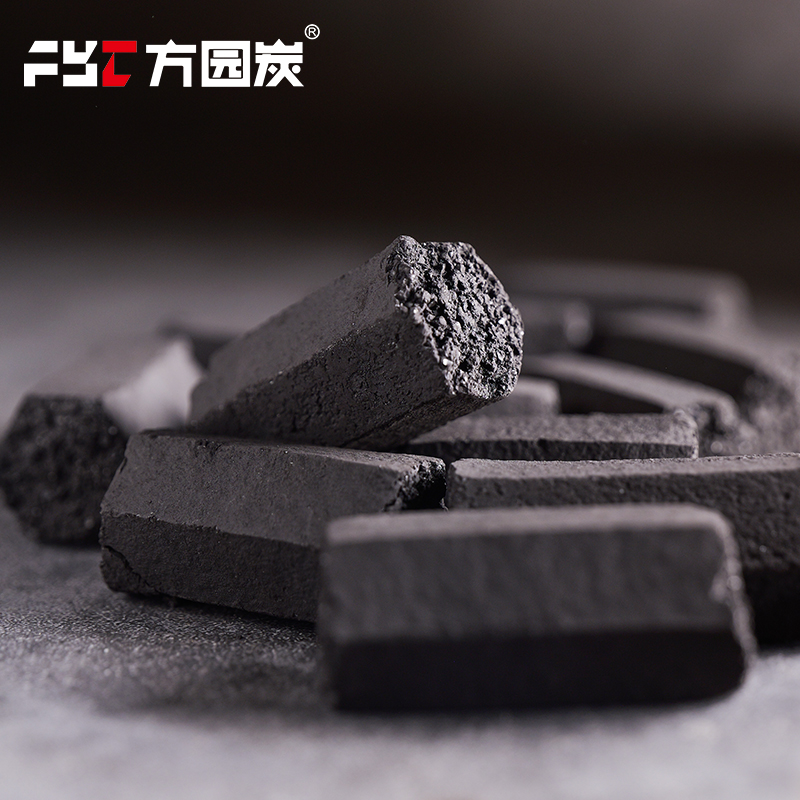
Hexagonal hookah charcoal is one of the three TC-01 formats; ask for its format-specific burning time in writing.
Bamboo: verify the base material, not just the shape
Bamboo appears as a format in the TC-01 hookah charcoal type list. The commercially important point is that TC-01's stated raw materials are premium natural coconut shell and fruit wood, so a bamboo-format item should have its base material confirmed when a bamboo-derived fuel is a hard requirement in your market or for your customer's positioning.
Bamboo as a raw material does feature elsewhere in the manufacturer's range: the barbecue charcoal line (TC-02) lists bamboo sawdust among its materials and includes a bamboo charcoal stick format documented at 6–8 hours of burning time. That is a grilling product, not a hookah product, so it should not be substituted into shisha service. The distinction is still useful, because it shows that “bamboo” can mean two different things — a shape in one line and a raw material in another — which is exactly the ambiguity that format-level verification resolves.
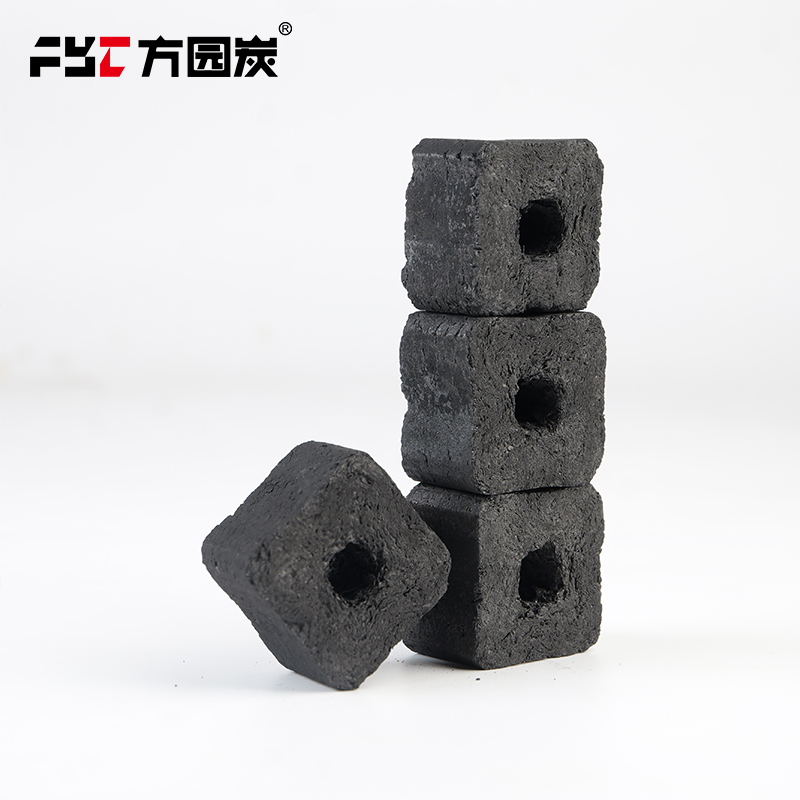
The bamboo format sits in the TC-01 hookah range; confirm the base material and burning time for the item you order.
Cube vs. Hexagonal vs. Bamboo: Side-by-Side Comparison
| Attribute | Cube (25mm / 40mm) | Hexagonal | Bamboo |
|---|---|---|---|
| Format in TC-01 type list | Cube Hookah Charcoal | Hexagonal Hookah Charcoal | Bamboo Hookah Charcoal |
| Published burning time | 90–120 minutes (Cube / 25mm / 40mm); 45–70 minutes for the Quick Light option | Confirm the format-specific burning time in writing | Confirm the format-specific burning time in writing |
| Ash content (premium grade) | Below 3% | Below 3% (line-level premium grade) | Below 3% (line-level premium grade) |
| Fixed carbon content | Above 85%–90% | Above 85%–90% (line-level) | Above 85%–90% (line-level) |
| Calorific value | Above 7,800 kcal/kg | Above 7,800 kcal/kg (line-level) | Above 7,800 kcal/kg (line-level) |
| Stated material for TC-01 | Premium natural coconut shell, fruit wood | Premium natural coconut shell, fruit wood | Confirm base material if a bamboo-based fuel is required |
| Ignition options | Quick light / fast ignition options available | Line-level ignition options apply | Line-level ignition options apply |
| Typical session fit | Long lounge bowl rotations and continuous service | Buyers who prefer this geometry; confirm performance data first | Buyers who prefer this geometry; confirm material and performance data first |
Reading the table: line-level values are documented for the TC-01 range as a whole, while burning time is documented specifically for cube formats and for quick-light options. Treat any cell marked “confirm” as a question to send to the supplier before you quote a specification internally.
Step-by-Step: Matching Format to Your Session
- Define the session, not the shape. Write down how long one bowl must stay lit and how many bowls a shift includes. A long lounge rotation points toward the 90–120 minute cube figure, while faster-turnover setups can be served by quick-light options documented at 45–70 minutes.
- Match the format to handling. Consider how the briquette will be placed and rotated with tongs, how it sits on the bowl, and how it packs for storage and restocking. Cube, hexagonal and bamboo differ here by geometry, and the right answer depends on your equipment and staff routine rather than on a generic ranking.
- Check the two numbers that affect flavour. Ask for ash content and fixed carbon for the exact format you are ordering. TC-01's premium grade is published as below 3% ash and above 85%–90% fixed carbon; these are the parameters that keep a session clean.
- Choose your ignition route deliberately. Quick light and fast ignition options are available in the line, documented at 45–70 minutes, while standard cube formats run longer. Pick the one that matches your service model instead of mixing expectations across formats.
- Confirm format-specific data, then sample. Ask for the burning time of your chosen format in writing, together with ash and fixed carbon values, and validate it with samples before the first bulk order.
Use Cases: Where Each Format Fits
Hookah lounges and shisha bars
Continuous service is the defining constraint. In the Middle East lounge scenario the requirement is constant premium heat with no smoke, odour or sparks, so a bowl can be served without disturbing the guest. The documented figures for this setting are 90–120 minutes of continuous burning per briquette with ash content below 3%, using a 100% natural coconut shell product that is chemical-free, food-grade and high hardness so it does not crumble during handling. Supporting equipment in this setting is typically a premium hookah set, a ceramic shisha bowl, hookah tongs and a wind cover.
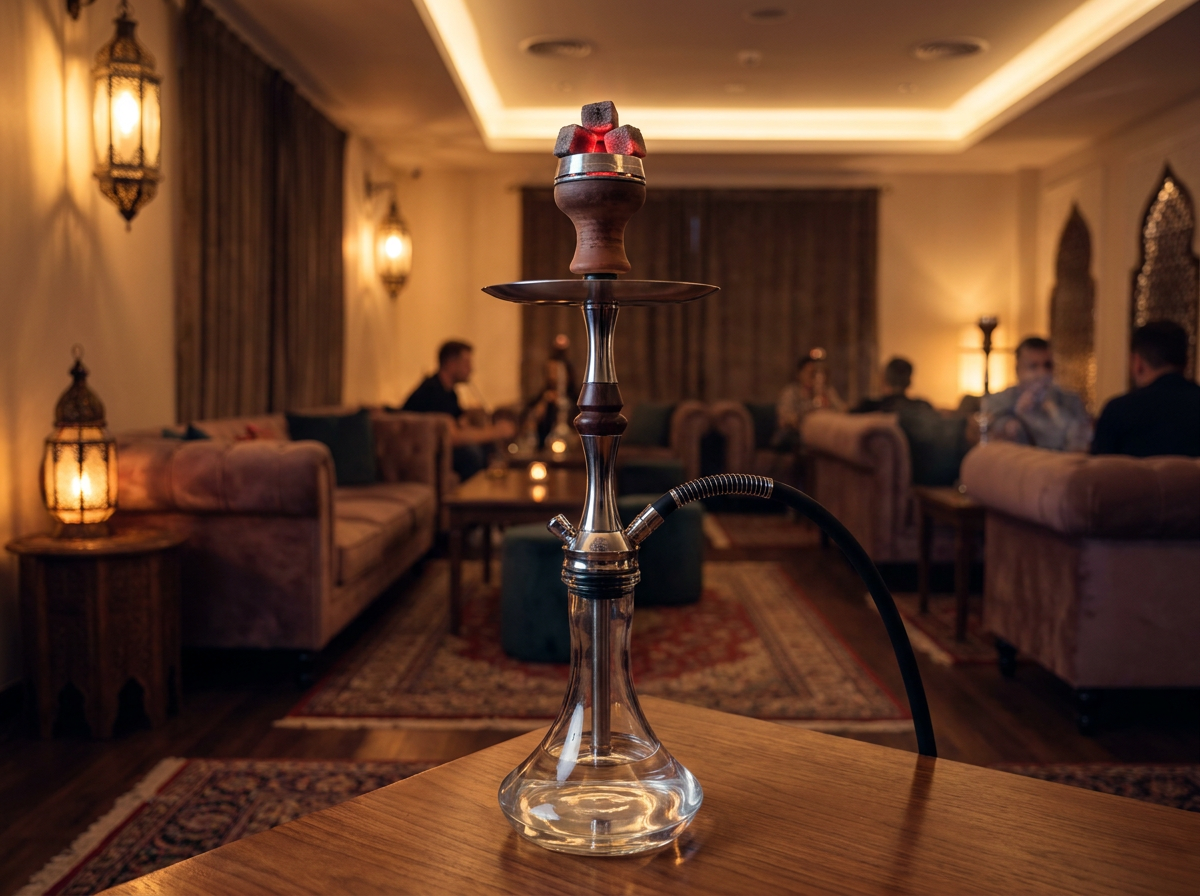
In lounge service, the demand is constant heat without smoke, odour or sparks, with ash content below 3%.
High-volume venues and multi-bowl floors
Labour is the hidden cost in format choice. A briquette documented at 90–120 minutes changes how many interventions a server makes per bowl, and ash below 3% changes how often a bowl is cleaned between uses. For venues running many bowls at once, the format decision is effectively a staffing decision.
Home and portable relaxation
At home, setup speed and cleanliness usually outweigh maximum burn duration. Quick-light options documented at 45–70 minutes reduce preparation steps, while the line's odorless and smokeless profile keeps a session comfortable indoors. HOOKAH charcoal in this range is listed for hookah bars, shisha smoking, home relaxation and similar settings.
Wellness, aromatherapy and bakhoor-adjacent use
TC-01 hookah charcoal is also listed for aromatherapy, yoga rooms and incense burners, where the requirement is gentle, steady heat without smoke interference. Buyers sourcing specifically for bakhoor or loose incense should note that FYC's dedicated incense charcoal (TC-04) is a 33mm round product made from fruit wood charcoal and coconut shell charcoal powder, described as smokeless and odorless, with a documented burning time of 45–70 minutes and a 30–45 second light-up in use. Matching the range to the ritual — the hookah line for shisha, the incense line for bakhoor — avoids over-specifying one product for a job it was not designed around.
FAQ
Do these hookah charcoal formats meet recognised quality standards?
FYC's manufacturer, Dalian Tiancheng Charcoal Industry Technology Co., Ltd., has obtained SGS and ISO certifications, reflecting adherence to international standards. Buyers should note that product standards differ by category and market: in the European Union, for example, barbecue charcoal and briquettes are governed by EN 1860-2:2005, which specifies limits for ash content, fixed carbon and moisture — a standard written for grilling products rather than hookah products. The practical step for a hookah buyer is to request the applicable certification documents together with the format-specific ash and fixed carbon values for the exact item being ordered.
Can one supplier provide cube, hexagonal and bamboo hookah charcoal?
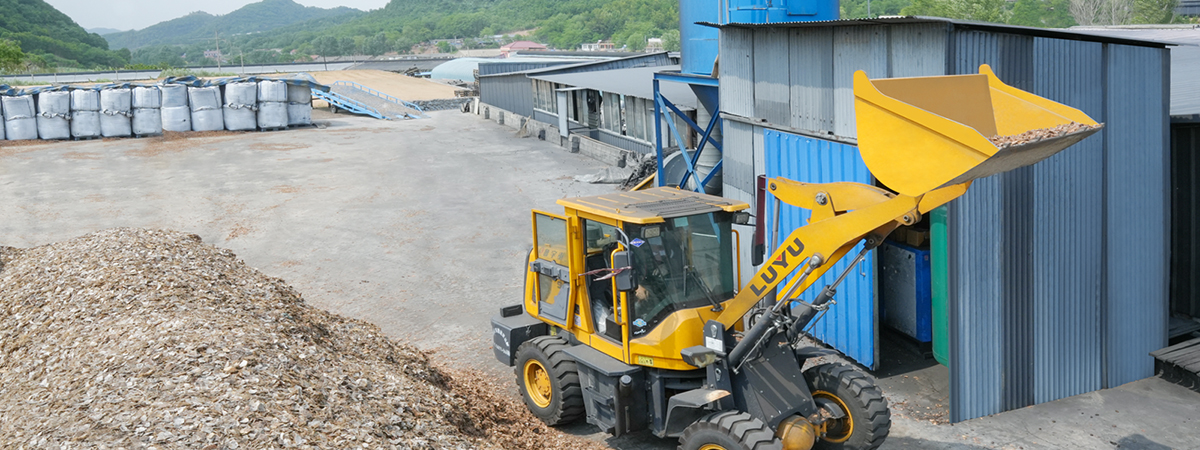
Yes. All three formats are listed in the same TC-01 hookah charcoal range, alongside cube sizes of 25mm and 40mm, with premium natural coconut shell and fruit wood as the stated materials. Capacity supports this: the manufacturing facility covers 6,000 square metres with approximately 100 staff and an R&D team of 8 engineers, daily output exceeds 50 metric tons, and annual production reaches 4,000,000 pieces.
Which format costs more per session?
Per-session cost is driven mainly by burn duration and reload frequency rather than by shape. Cube formats are documented at 90–120 minutes per briquette, while quick-light options run 45–70 minutes, so a venue that can use the longer burn needs fewer briquettes per bowl rotation. Ash content below 3% at premium grade also reduces cleaning and reload time per bowl. Because cost per session depends on your own bowl size, session length and labour cost, the reliable approach is to request format-specific burn data and commercial terms, then calculate briquettes per session for each candidate format.
Can I test the formats before committing to a bulk order?
Sample requests are the normal first step and are handled directly by the manufacturer's sales contact. When requesting samples, specify the format, the cube size if applicable, your required ash and fixed carbon values, and the session type you are serving, so the sample matches the specification you intend to buy. FYC can be reached at paris@fyc-charcoal.com or by WhatsApp on +8613591327260, and the full-range product brochure can be downloaded from the link at the end of this guide.
How do I start an inquiry, and what should I confirm in writing?
Send the format, size, quantity, target ash and fixed carbon values, ignition preference and destination market, and ask for the format-specific burning time in writing alongside the quotation. FYC's export business accounts for 60% of total sales, with the Middle East and Europe as its main markets, so inquiries from those regions follow familiar routes. To start, email paris@fyc-charcoal.com, message +8613591327260 on WhatsApp, or request the brochure and samples through the company website at fyc-charcoal.com.
Conclusion: Choose by Session, Confirm by Specification
Cube, hexagonal and bamboo hookah charcoal are not competing fuels — they are three geometries of one product line, and the buying decision splits cleanly in two. First, choose the format that fits your session and handling: cube for long lounge rotations where 90–120 minutes of burn per briquette keeps bowls lit through a full sitting, quick-light options at 45–70 minutes where speed of setup matters more, and hexagonal or bamboo where that geometry suits your equipment and your customers.
Second, confirm the numbers for the format you actually order. Ash below 3% and fixed carbon above 85%–90% are the line-level premium grade claims, while the 90–120 minute burning time is documented for cube formats at 25mm and 40mm. Ask for the equivalent figure for hexagonal or bamboo in writing, request samples, and hold the confirmed specification as your baseline.
FYC — Dalian Tiancheng Charcoal Industry Technology Co., Ltd. — has produced hookah, incense and barbecue charcoal since 1990, from a 6,000 square metre facility in Liaoning with SGS and ISO certifications. For format-specific specifications, samples or a quotation, contact the team directly.
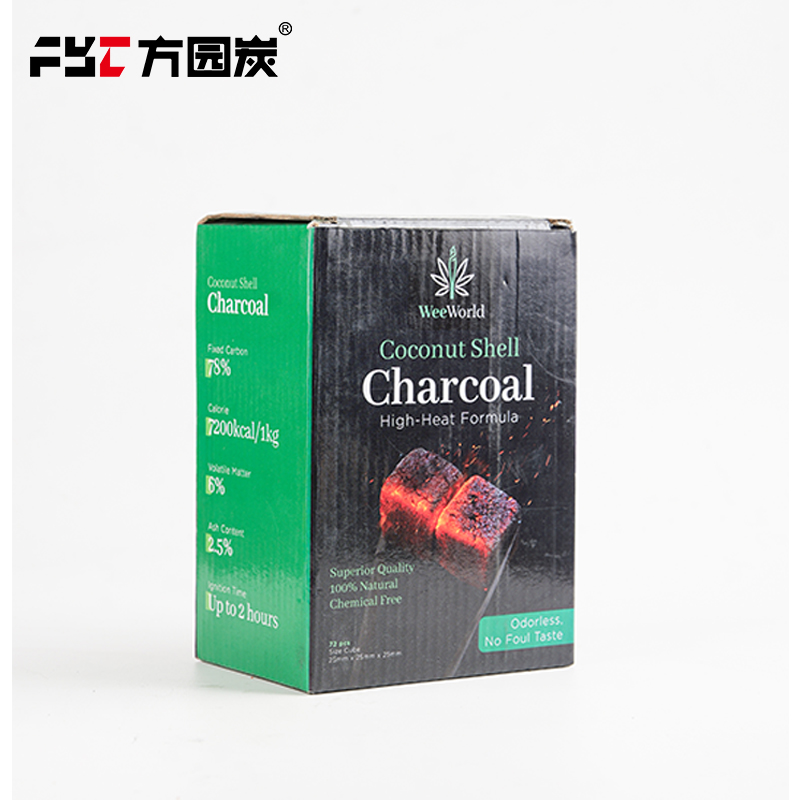
Cube, hexagonal and bamboo TC-01 hookah charcoal are available for sample validation and bulk supply.
Next Step: Sample and Specification Pack
Request cube (25mm / 40mm), hexagonal or bamboo TC-01 hookah charcoal samples, with the format-specific burning time, ash and fixed carbon values confirmed in writing.
Email: paris@fyc-charcoal.com · WhatsApp: +8613591327260 · Website: fyc-charcoal.com
Download the product brochure: FYC Charcoal Brochure (PDF)
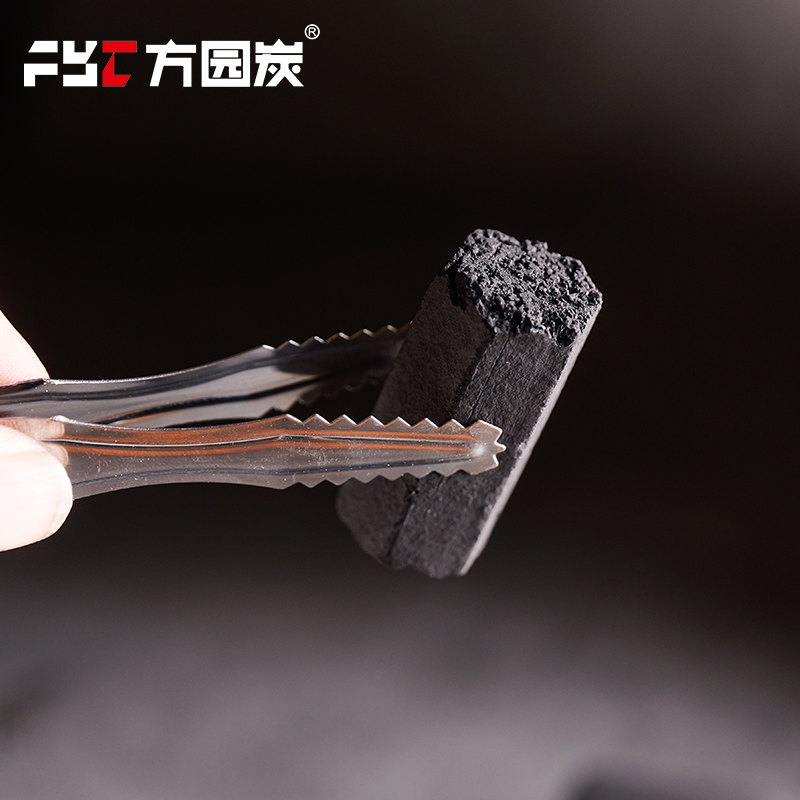
comment (02)
Jenny Wilson
19 June 2023Rating:
Lorem ipsum dolor sit amet, consectetur adipiscing elit, sed do eiusmod tempor incididunt ut labore et dolore magna aliqua. Ut enim ad minim veniam, quis nostrud exercitation ullamco laboris nisi ut aliquip ex ea commodo consequat aute irure dolor in reprehenderit.
Marvin McKinney
19 Feb 2024Rating:
Lorem ipsum dolor sit amet, consectetur adipiscing elit, sed do eiusmod tempor incididunt ut labore et dolore magna aliqua. Ut enim ad minim veniam, quis nostrud exercitation ullamco laboris nisi ut aliquip ex ea commodo consequat aute irure dolor in reprehenderit.