

Charcoal for Restaurants: Lump vs. Briquettes vs. Coconut Shell, Sourcing Guide
Compare lump charcoal, briquettes, and coconut shell charcoal for BBQ restaurants. See the FYC TC-02 barbecue charcoal specification and sourcing criteria.
Lump Charcoal vs. Briquettes vs. Coconut Shell Charcoal: What Should a Restaurant Source?
Commercial barbecue charcoal: choosing the right type starts with measurable operating criteria.
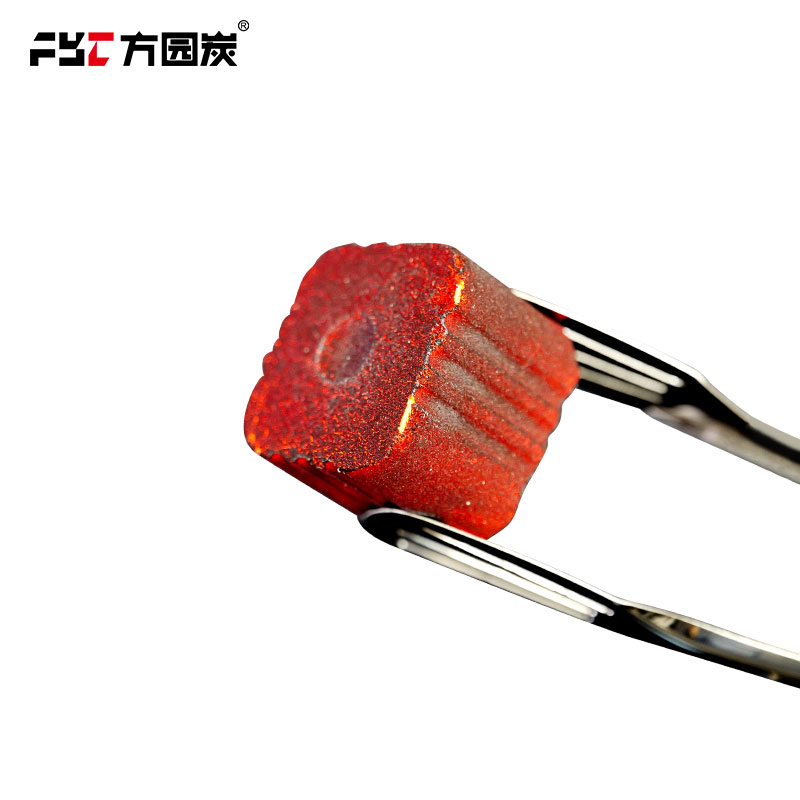
For table-service barbecue restaurants, buying charcoal is closer to specifying cooking equipment than buying a commodity. Each batch must produce consistent heat, last through service, add the right smoke character, and create as little ash and disruption as possible. When choosing among lump charcoal, briquettes, and coconut shell charcoal, restaurants should compare measurable fuel characteristics rather than rely on category labels alone. In commercial grilling, the more practical reference point is typically a high-density formed charcoal with very low ash and predictable burn time. One example is the FYC TC-02 barbecue charcoal, a bamboo sawdust, hardwood, and fruitwood charcoal whose bamboo-stick version burns for 6 to 8 hours per batch.
FYC is the export brand used by Dalian Tiancheng Charcoal Industry Technology Co., Ltd., a manufacturer established in 1990 and based in Dalian, Liaoning, China. The company specialises in hookah charcoal, incense charcoal, and barbecue charcoal, and its FYC TC-02 series is designed for dedicated barbecue restaurants, outdoor camping, home cooking, catering, and hospitality.
Why Restaurant Charcoal Buying Is More Complex Than It Looks
In a restaurant kitchen, the charcoal fuel affects far more than flavour. It influences how long a grill station can stay busy, how often ventilation hoods need cleaning, how much ash is generated, how consistently a cook can reproduce a dish, and how much fuel is consumed per month.
Restaurant buyers commonly face these operational pain points:
- Heat output. High temperatures are needed to sear meat and lock in juices.
- Burn duration. If fuel burns too quickly, staff must replace it during dining hours.
- Ash content. High-ash charcoal increases cleanup cost and exhaust-hood maintenance.
- Smoke and odour. Indoor dining areas need clean-burning fuel without unwanted smoke.
- Mechanical stability. Charcoal that crumbles during transport creates waste and makes grill behaviour unpredictable.
- Consistency. Restaurants depend on repeatable performance from every carton.
Comparing lump charcoal, standard briquettes, and coconut shell charcoal is a useful starting point. The more important question is which fuel type fits the actual menu, kitchen equipment, and service model.
Industry Background: Three Categories, Different Working Logics
The global charcoal market was estimated at USD 8.1 billion in 2025 and is projected to reach USD 11.6 billion by 2033, according to Grand View Research. This scale reflects the many industries that depend on charcoal, from cooking fuel to premium shisha coal. Within commercial food service, fuel choice is often driven by consistency, cleanliness, and cost per usable cooking hour.
Lump Charcoal
Lump charcoal is made by carbonising natural wood while preserving its original structure. It is widely appreciated for quick ignition and high heat, and many chefs associate it with a pure, traditional barbecue flavour. The trade-off is operational consistency: natural lumps vary in density, size, and burn behaviour. Lump charcoal can also burn faster than a dense formed charcoal, which may lead to higher fuel consumption during a long dinner shift.
Charcoal Briquettes
Briquettes are compressed from sawdust, wood chips, or similar biomass. Their main advantage is uniformity. Regular size and density help restaurants predict burn time and heat, which is valuable for service planning. However, briquette quality varies significantly by recipe. Buyers should verify what raw materials and binders are used, because the same category label can include very different combustion behaviour.
Coconut Shell Charcoal
Coconut shell charcoal is produced from carbonised coconut shells and is frequently formed into briquettes or tablets. It is valued for high fixed carbon and low impurities, and it is already a standard fuel in hookah and shisha culture. Market research from Grand View Research identifies coconut shell charcoal as the fastest-growing source segment, with a projected CAGR of 5.0% from 2026 to 2033. Its clean-burning reputation makes it a legitimate option for some restaurant grill applications, but it is not the only high-performance source.
What to Compare When Sourcing Barbecue Charcoal for Restaurants
A useful restaurant charcoal comparison should cover the following dimensions:
- Heat intensity and calorific value. Does the fuel generate searing heat as well as sustained radiant heat?
- Burn time per batch. How often will the kitchen need to replace charcoal?
- Ash content. Low-ash fuel reduces cleaning time inside the kitchen.
- Smoke and odour. Clean combustion protects food flavour and guest comfort.
- Density and hardness. Dense charcoal resists breakage during handling and stays stable in the grill.
- Shape consistency. Uniform pieces help distribute heat evenly across the cooking surface.
For restaurants, the most reliable way to select charcoal is to request a specification sheet and then run a small operational test with the actual grill.
Why a Formed Bamboo and Hardwood Charcoal Suits Commercial Grilling
FYC TC-02 is called barbecue charcoal because it was developed for commercial charcoal grilling and indoor barbecue dining. In the Korean barbecue restaurant segment, for example, the fuel is expected to deliver clean radiant heat to sear meat quickly, run for many hours, and produce minimal ash.
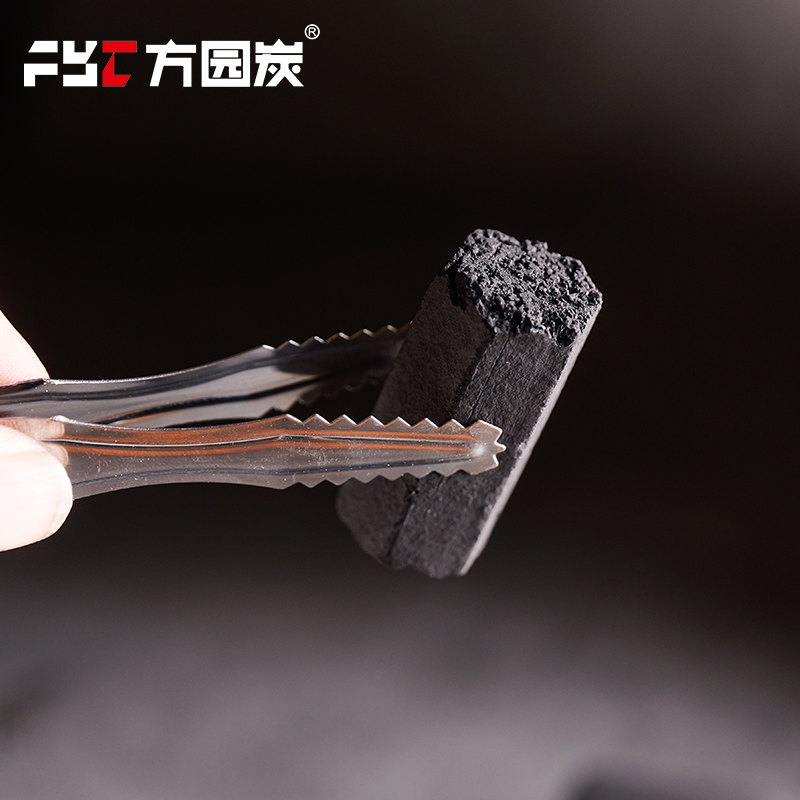
The FYC TC-02 series includes quadrilateral BBQ charcoal, hexagon BBQ charcoal, quadrilateral bamboo charcoal, hexagon bamboo charcoal, 50mm square-hole and four-hole charcoal, spherical charcoal, and Fangyuan charcoal. Raw materials include bamboo sawdust, hardwood, and fruitwood. These materials are carbonised and formed into dense, regular shapes rather than packed as natural wood lumps.
- Burn time: 6–8 hours per batch for bamboo charcoal stick; 70 minutes for fruitwood quick-light charcoal.
- Heat output: high calorific value, high temperature, and superior heat retention as described in the TC-02 specification.
- Ash content: ultra-low ash, which helps keep commercial exhaust systems cleaner.
- Hardness: high hardness and not easy to break, reducing shipment damage and handling loss.
- Combustion profile: eco-friendly, smokeless, odourless, and constant-temperature burning.
This combination explains why many commercial buyers move away from generic lump charcoal toward a shaped bamboo/hardwood product. It gives the kitchen the high heat needed for a fast sear, followed by a long stable burn that can cover an entire peak dinner period.
Step-by-Step Sourcing Framework for Restaurant Charcoal
Restaurant buyers can use the following six-step framework to evaluate lump charcoal, briquettes, coconut shell charcoal, or high-density barbecue charcoal.
- Define your grill operating window. Identify how many hours the charcoal must last from lighting to the end of service.
- Set your heat and flavour targets. Determine whether the menu requires searing heat, slow roasting heat, or both.
- Prioritise ash and smoke limits. Indoor restaurants should give high priority to ultra-low ash and odourless combustion.
- Select size and shape. Uniform shapes such as hexagon or square-hole pieces support even airflow and stable temperature.
- Verify factory and compliance evidence. Ask for raw material information, production controls, and relevant certificates.
- Run a sample burn test. Use a standard batch on the actual grill and measure burn time, ash, smoke, and meat quality before committing to volume.
Case Signal: Long-Hour Indoor Korean BBQ Supply
A relevant illustration comes from the Korean commercial barbecue sector. An authentic barbecue restaurant group used FYC TC-02 hexagonal bamboo charcoal sticks for high-temperature meat searing and slow indoor roasting. The customer purchased approximately 20–22 metric tons per month, equivalent to one 40HQ container, and maintained the relationship for three years.
The result reported by the customer included zero smoke interference in indoor dining and a 15% reduction in total charcoal consumption compared with their previous suppliers. The hexagonal bamboo charcoal sticks provided high density and zero sparking, which made the fuel suitable for built-in table grills.
This is a client-reported case from the FYC customer base. Specific savings may vary by menu, grill type, and operating schedule.
Comparison Table: Lump, Briquettes, Coconut Shell, and a High-Density Option
| Dimension | Lump Charcoal | Standard Briquettes | Coconut Shell Charcoal | FYC TC-02 High-Density BBQ Charcoal |
|---|---|---|---|---|
| Raw material logic | Carbonised natural wood chunks | Compressed sawdust or wood powder | Carbonised coconut shell, often formed | Bamboo sawdust, hardwood, fruitwood |
| Heat output | High but variable by piece | Medium to high depending on recipe | High fixed carbon supports strong heat | High temperature, high calorific value |
| Typical burn duration | Short to medium; shape dependent | More predictable but varies by brand | Often long in formed tablet or briquette form | 6–8 hours per batch for bamboo charcoal stick; 70 minutes for fruitwood quick-light |
| Ash content | Depends on bark and wood purity | Depends on binders and fillers | Generally low in quality coconut charcoal | Ultra-low ash content |
| Smoke and odour | Natural wood smoke character | Can vary with additives | Generally clean when fully carbonised | Smokeless and odourless |
| Shape consistency | Irregular natural pieces | Uniform briquette shape | Uniform formed tablets or briquettes | Uniform shapes including quadrilateral, hexagon, 50mm square-hole, spherical, and others |
| Mechanical strength | Can fragment during shipping and handling | Usually moderate; depends on density | Usually good in dense formed pieces | High hardness, not easy to break |
| Best-fit commercial scenario | Traditional direct-heat grilling where batch timing is flexible | Applications needing standardised portion behaviour | Hookah, shisha-style heating, and clean-burning tablet operations | Commercial BBQ restaurants, indoor grilling, long-service charcoal cooking |
Lump charcoal, standard briquettes, and coconut shell charcoal are described as broad fuel categories. Actual performance depends heavily on raw material quality, carbonisation process, density, and additives. Restaurants should request specifications from the actual supplier before making a sourcing decision.
FAQ
Which charcoal is better for a restaurant: lump charcoal, briquettes, or coconut shell charcoal?
There is no universal winner because each fuel category behaves differently. A restaurant that needs clean, steady heat for several hours may prefer a dense formed product such as the FYC TC-02 bamboo/hardwood barbecue charcoal. Its bamboo-stick format burns 6–8 hours per batch and produces ultra-low ash. Coconut shell charcoal is also a clean-burning option and is widely used in hookah applications, but it is not the only high-performance char fuel for commercial grilling. The decision should be made through a sample test on the restaurant's own grill.
What should a barbecue charcoal specification include?
A useful specification should identify raw material, shape, size, fixed carbon level, ash content, moisture, burn time, ignition method, and smoke or odour characteristics. In Europe, EN 1860-2:2005 is a recognised safety standard for barbecue charcoal and charcoal briquettes, covering limits for ash, fixed carbon, and moisture. When a supplier documents these parameters, the buyer can compare products on the same basis instead of relying on vague marketing terms.
Does FYC support custom charcoal shapes and private-label packaging?
Yes. FYC says it supports OEM, ODM, custom manufacturing, and custom packaging. Its production capability includes custom product shapes such as cube, hexagonal, round, and stick; sizes such as 25mm, 33mm, and 50mm; logo printing; and retail packaging options such as magnetic, flip-top, and pull-out boxes. This is useful for restaurant groups that want their own branded charcoal line or a specific format that fits their grill equipment.
What is the minimum order for testing charcoal quality?
FYC states a flexible MOQ. For express stock, the starting quantity can be as small as one box. For wholesale orders, the range is roughly one metric ton to a full 17-ton container. The company also reports a quick turnaround of 7–15 days for standard stock and 20–30 days for customized mass production. Buyers can also leverage FYC's stated QC process, which includes 100% inspection on production lines and three professional QA/QC inspectors.
Why does ultra-low ash matter in a commercial kitchen?
Ultra-low ash reduces the amount of residue left on the grill, in the ash pan, and beneath the cooking surface. Less ash means faster cleaning between services, lower demand on the exhaust hood, and less labour spent on grill maintenance. In an indoor barbecue restaurant, low ash also helps keep the dining environment cleaner. The FYC TC-02 specification positions ultra-low ash as a core feature because it directly addresses this operational cost for commercial kitchens.
Bottom Line for Restaurant Buyers
Restaurants should stop asking which charcoal category is most popular and start asking which fuel can maintain the required cooking temperature, burn long enough for a full service window, and keep the kitchen clean. Lump charcoal brings a traditional high-heat character but lacks the uniform shape and long batch continuity of dense formed charcoal. Standard briquettes offer predictability but vary widely by recipe. Coconut shell charcoal is clean and dense, and it is becoming a fast-growing source segment; yet for charcoal-fired restaurants, a high-density bamboo and hardwood barbecue charcoal can be an equally strong operational fit.
FYC TC-02 is one such product, with 6–8 hours of burn time in its bamboo-stick format, ultra-low ash, high hardness, and smokeless, odourless combustion. The FYC manufacturing partner behind it, Dalian Tiancheng Charcoal Industry Technology Co., Ltd., has been operating since 1990 and states an advanced assembly-line capacity of more than 50 metric tons daily. Buyers who want to evaluate this fuel for their own restaurant can review the product range in the FYC brochure.
Download the FYC product brochure
For sourcing questions, including specification sheets, stock availability, or custom barbecue charcoal production, contact the FYC team directly through fyc-charcoal.com. Sourcing charcoal is ultimately a performance decision; a structured comparison of lump, briquette, coconut shell, and high-density formed charcoal will help you choose what works for your restaurant's service model.
comment (02)
Jenny Wilson
19 June 2023Rating:
Lorem ipsum dolor sit amet, consectetur adipiscing elit, sed do eiusmod tempor incididunt ut labore et dolore magna aliqua. Ut enim ad minim veniam, quis nostrud exercitation ullamco laboris nisi ut aliquip ex ea commodo consequat aute irure dolor in reprehenderit.
Marvin McKinney
19 Feb 2024Rating:
Lorem ipsum dolor sit amet, consectetur adipiscing elit, sed do eiusmod tempor incididunt ut labore et dolore magna aliqua. Ut enim ad minim veniam, quis nostrud exercitation ullamco laboris nisi ut aliquip ex ea commodo consequat aute irure dolor in reprehenderit.