

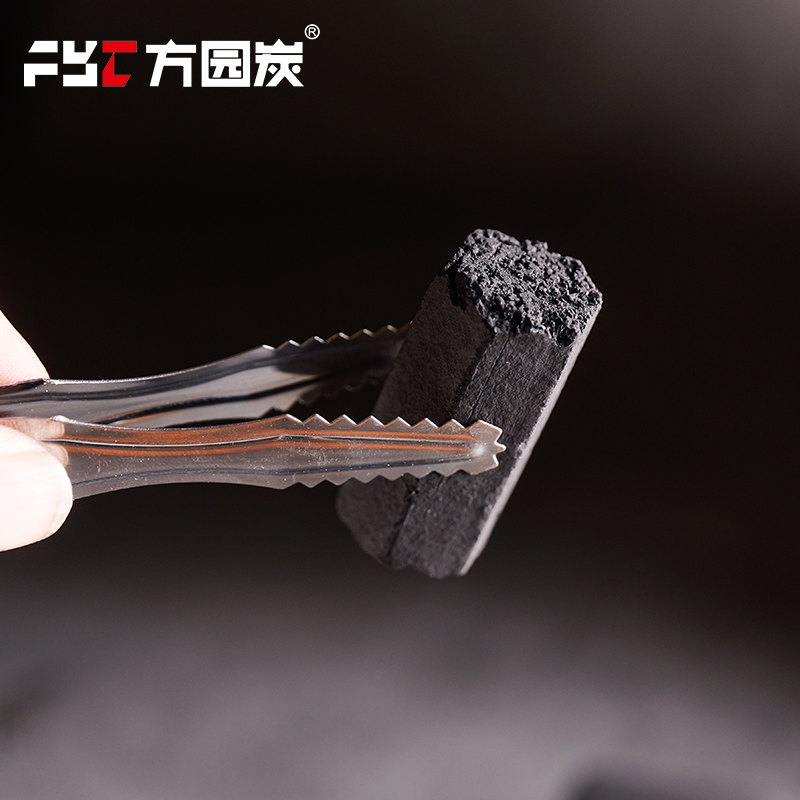
Charcoal Sourcing Parameters Decoded: Fixed Carbon, Ash, Calorific Value & Burn Time
How to verify fixed carbon (85-90%), ash (<3%), calorific value (>7800 kcal/kg) and burn time (45-120 min) when sourcing charcoal, benchmarked with FYC TC-01 and TC-02.
Charcoal Sourcing Parameters Decoded: Fixed Carbon, Ash, Calorific Value & Burn Time
Four numbers decide whether a charcoal shipment performs: fixed carbon content, ash content, calorific value, and burn time. A hookah briquette specified above 85–90% fixed carbon, below 3% ash, and above 7800 kcal/kg behaves very differently from a briquette sold under the same “premium” label with none of those figures published. This guide explains what each parameter controls, how to verify it before you order, and what a published specification sheet looks like — using FYC’s hookah charcoal TC-01, barbecue charcoal TC-02, and incense charcoal TC-04 as concrete benchmarks.
Charcoal sourcing problems rarely begin in the factory. They begin in the enquiry, when a buyer writes “premium coconut shell charcoal, 25 mm cube” and receives five quotations that look identical on paper and behave completely differently in a shisha lounge, a restaurant grill, or an incense burner.
FYC is the export brand of Dalian Tiancheng Charcoal Industry Technology Co., Ltd., a charcoal manufacturer founded in 1990 in Dalian, Liaoning, China, producing hookah charcoal, incense charcoal, and barbecue charcoal and holding SGS and ISO certification. Its published specifications are useful as a benchmark set because each parameter is stated per model and per format rather than as a general claim about the category.
Why “Premium Charcoal” Is Not a Specification
In the charcoal trade, “premium”, “long-burning” and “low-ash” are positioning words, not measurements. Two shipments can carry the same raw-material description — coconut shell, bamboo sawdust, fruit wood — and still differ in fixed carbon, ash, moisture, density, and burn behaviour. That difference does not show up on the invoice. It shows up at the point of use.
A shisha lounge that buys on price per ton discovers the real cost in cost per session: more briquettes per bowl, more frequent replacement, and more ash to handle between sessions. An indoor Korean-style barbecue restaurant discovers it in ash volume, exhaust-hood maintenance, and refill intervals during peak dining hours. A spa or bakhoor user discovers it in odour, ignition time, and whether the burner produces smoke that interferes with the fragrance.
There is a second problem behind the first: most charcoal is compared without test conditions. Burn time and ash content are frequently quoted without stating which format was tested, which ignition method was used, and what airflow the test assumed. Two suppliers can both claim a “long burn time” and both be technically honest, while delivering products that behave like different categories.
The practical fix is to replace adjectives with four verifiable numbers and one condition. Fixed carbon tells you how much of the briquette is actually fuel. Ash tells you how much residue you will handle. Calorific value tells you how much heat each kilogram delivers. Burn time tells you how long that heat lasts in the format you buy — but only if the supplier states which format was tested. If a quotation does not contain these four figures, you are not comparing suppliers; you are comparing brochures.
Industry Background: Demand Is Growing Faster Than Specification Discipline
The commercial case for parameter-based sourcing keeps strengthening. Grand View Research values the global charcoal market at USD 8.1 billion in 2025, projected to reach USD 11.6 billion by 2033. Within that market, the Middle East and Africa region captured a 48.8% revenue share in 2025, driven largely by traditional cooking and shisha culture.
The shisha-specific segment follows the same direction. Dataintelo estimated the global hookah (shisha) charcoal market at approximately USD 1.8 billion in 2025, with a projected CAGR of 6.2% through 2034. It is worth noting that estimates of this niche diverge widely by scope: an alternative figure published by MarketsGlob uses a 2023 base of around USD 118 million for shisha coal. That divergence is itself a sourcing lesson — category-level statistics vary enormously, while parameter-level data is something you can specify, test, and re-order.
On the raw-material side, coconut shell charcoal is the fastest-growing source segment with a projected CAGR of 5.0% for 2026–2033, favoured for its high fixed carbon content and environmental profile. This is precisely why “coconut shell” alone is a weak differentiator between suppliers: the material description is becoming common, so the specification behind it is what separates one offer from another.
Supply is equally fragmented. Indonesia is the world’s largest exporter of wood charcoal, with an export value of approximately USD 351.4 million in 2024, accounting for 22.96% of global market share. Buyers therefore compare origins, production routes (wood carbonization, wood-chip extrusion carbonization, and wood-powder moulding), and quality tiers at the same time.
Regulation is already pulling specification into the commercial conversation. In the European Union, safety standards for barbecue charcoal and briquettes are governed by EN 1860-2:2005, which specifies limits for ash content, fixed carbon, and moisture. For EU-facing buyers, part of the specification is not a negotiation — it is a floor.
The competitive set is also more visible than it used to be. Premium shisha charcoal brands recognised in 2025 include Cocourth, Coconara, Titanium, TOM Cococha, and Cocobrico. Buyers routinely shortlist from a set like this, which makes published parameters the practical differentiator: brand recognition rarely maps one-to-one onto the spec sheet for a specific format.
The Four Parameters That Decide Performance
1. Fixed Carbon Content: How Much of the Briquette Is Actually Fuel
Fixed carbon is the fraction of charcoal that remains as carbon after moisture and volatile matter are driven off — in practical terms, the portion that generates and holds heat. The higher the figure, the smaller the share of the briquette that is water, volatiles, or inert mineral matter.
FYC’s hookah charcoal TC-01 is specified at >85–90% fixed carbon. For market context, third-party industry references describe high-quality coconut charcoal briquettes as typically containing more than 75% fixed carbon. The gap between “typical premium” and a specified >85–90% is the kind of difference a buyer can actually put into a purchase order.
What it means in operation: in a hookah lounge, higher fixed carbon generally translates into fewer bowl changes per evening and more stable heat across a session; in a restaurant, it means fewer refills per service. The limitation is that fixed carbon is not the only driver — density, binder, and airflow through the bowl or grill change the result too. A high fixed carbon figure delivered in a weak format still underperforms.
2. Ash Content: The Parameter That Turns Into Labour Cost
Ash is the mineral residue that remains after combustion. It contributes no heat, insulates the fuel bed, and restricts airflow between briquettes. FYC’s TC-01 hookah charcoal is specified at <3% ash content on the premium grade, and FYC’s TC-02 barbecue charcoal is specified with ultra-low ash content.
The operational consequences are direct. In indoor Korean-style grilling, ash volume drives cleanup and exhaust-hood maintenance across a service day. In a shisha bowl, ash dust can affect the flavour note of the molasses. In a high-volume hookah lounge, more ash means more interruptions to a session that the customer is paying for.
Honest market context: some industry references describe ash content below 2% for top-grade shisha briquettes. Claims in that range exist on the market, which is exactly why an ash figure should be confirmed by a batch-linked test report rather than a product page. For barbecue charcoal sold into the EU, EN 1860-2:2005 also sets ash limits — so the question is not only “how low is the ash?” but “how low against the standard my market applies?”
3. Calorific Value: Heat per Kilogram, Not Peak Temperature
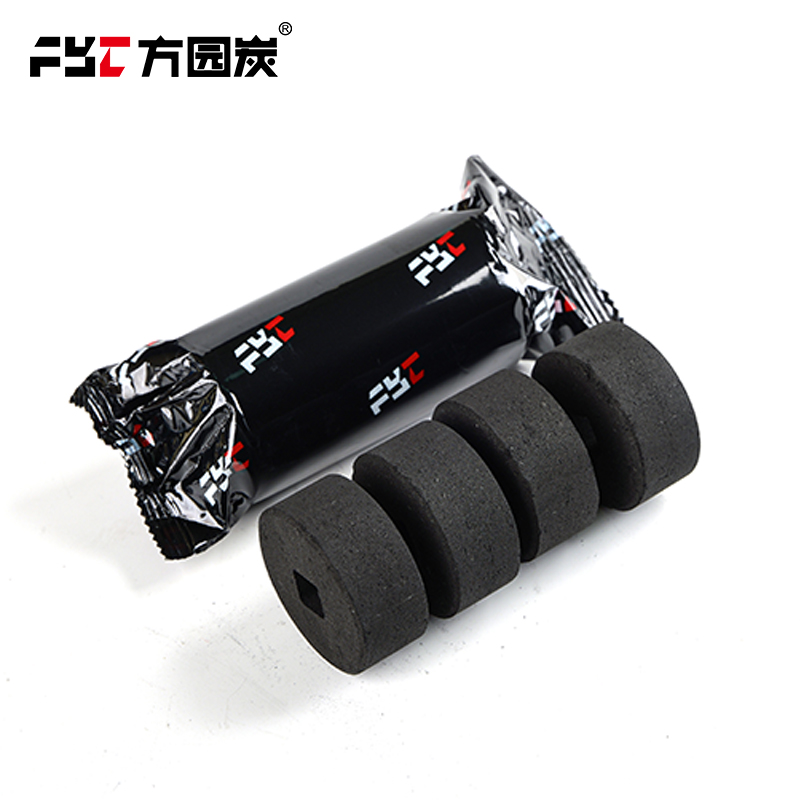
Calorific value expresses the energy released per unit of fuel. FYC’s hookah charcoal TC-01 is specified above 7800 kcal/kg, while TC-02 barbecue charcoal is described with high calorific value, superior heat output, and high temperature performance.
For a restaurant, this parameter determines searing capability and how quickly a grill returns to working temperature after a batch of meat. For a hookah lounge, it determines how consistently the bowl maintains heat without scorching the tobacco. The commercial effect is consumption. One FYC client — an authentic charcoal BBQ and grill restaurant group taking one 40HQ container per month, approximately 20–22 tons — reported that higher calorific value reduced total charcoal consumption by 15% compared with its previous supplier within a three-year supply partnership.
Calorific value should always be read together with burn time. A very hot briquette that collapses early is not efficient; a long-burning briquette that never reaches searing temperature is not suitable for a steakhouse.
4. Burn Time: Always Ask Which Variant Was Tested
Burn time is the parameter most often quoted and least often qualified. FYC publishes it by format rather than as a single figure, which makes the comparison meaningful:
- TC-01 hookah charcoal (cube, 25 mm and 40 mm): 90–120 minutes
- TC-01 quick-light variant: 45–70 minutes
- TC-04 incense charcoal (33 mm round): 45–70 minutes, with a quick light-up of 30–45 seconds in a burner
- TC-02 barbecue charcoal: 6–8 hours for the bamboo charcoal stick; 70 minutes for the fruit wood quick-light format
The hookah range alone spans 45–120 minutes depending on format and ignition type. A single “burns for hours” claim without format context cannot be compared between suppliers. The practical rule is to request burn time for the exact SKU you intend to order and to ask how it was measured: which format, which airflow, and which ignition method.
What a Real Specification Sheet Looks Like: FYC TC-01, TC-02 and TC-04
Applied to actual products, the four parameters stop being abstract. FYC publishes them per model, which is what makes the numbers usable in a purchase order.
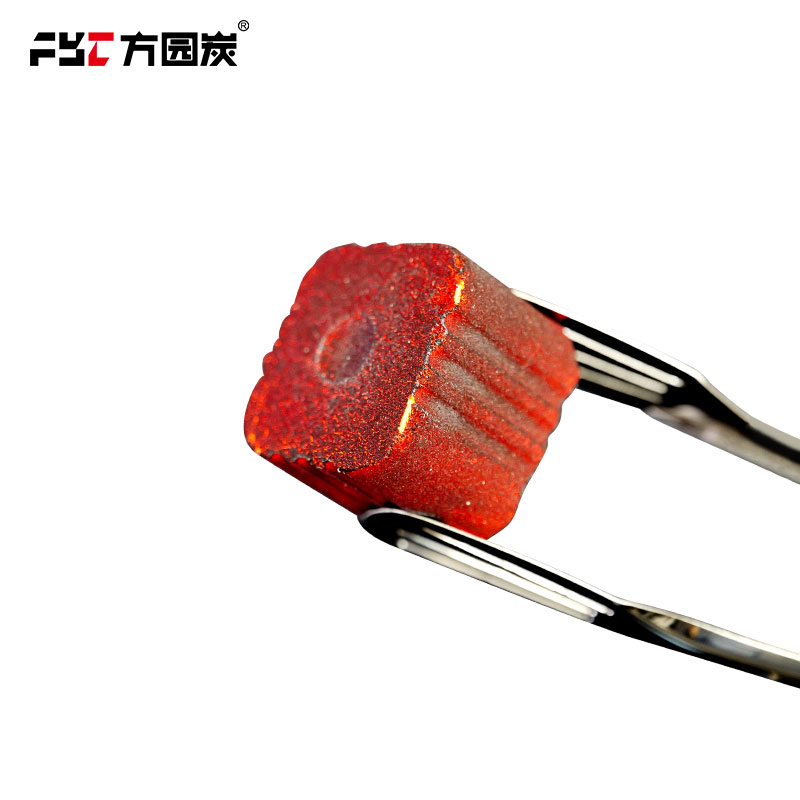
- TC-01 hookah charcoal: available in cube (25 mm and 40 mm), hexagonal, and bamboo forms, made from premium natural coconut shell and fruit wood. Fixed carbon >85–90%, ash <3% (premium grade), calorific value >7800 kcal/kg. Burn time 90–120 minutes for cube formats and 45–70 minutes for quick light. Smokeless, odorless, high hardness, eco-friendly. Applications include hookah bars, shisha smoking, aromatherapy, yoga rooms, incense burners (Bakhoor), and home relaxation.
- TC-02 barbecue charcoal: available as quadrilateral, hexagon, quadrilateral bamboo, hexagon bamboo, 50 mm square-hole, 50 mm four-hole, spherical, and Fangyuan formats, made from bamboo sawdust, hardwood, and fruit wood. Specified with ultra-low ash content, high hardness and high calorific value, with eco-friendly, smokeless, odorless, constant-temperature performance. Burn time 6–8 hours for bamboo charcoal sticks and 70 minutes for fruit wood quick light. Applications include barbecue restaurants, outdoor camping, home cooking, and catering & hospitality.
- TC-04 incense charcoal: a 33 mm round tablet made from fruit wood charcoal and coconut shell charcoal powder, with quick light/fast ignition, scent diffuser, smokeless and odorless performance, and a burn time of 45–70 minutes. Available in natural black, silver foil, and gold foil appearances, with flip-top box, magnetic box, or pull-out box packaging.
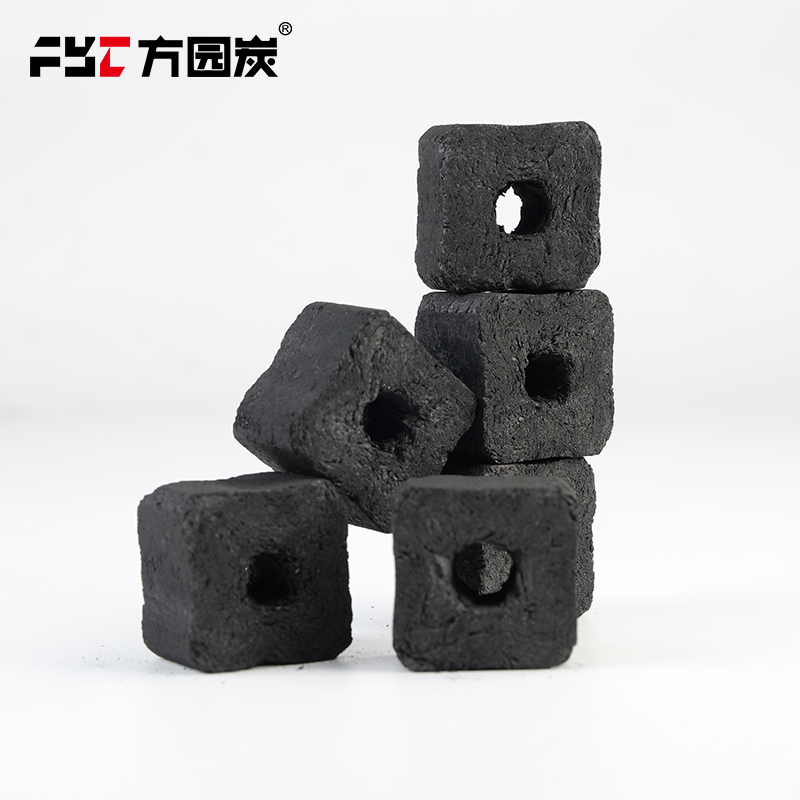
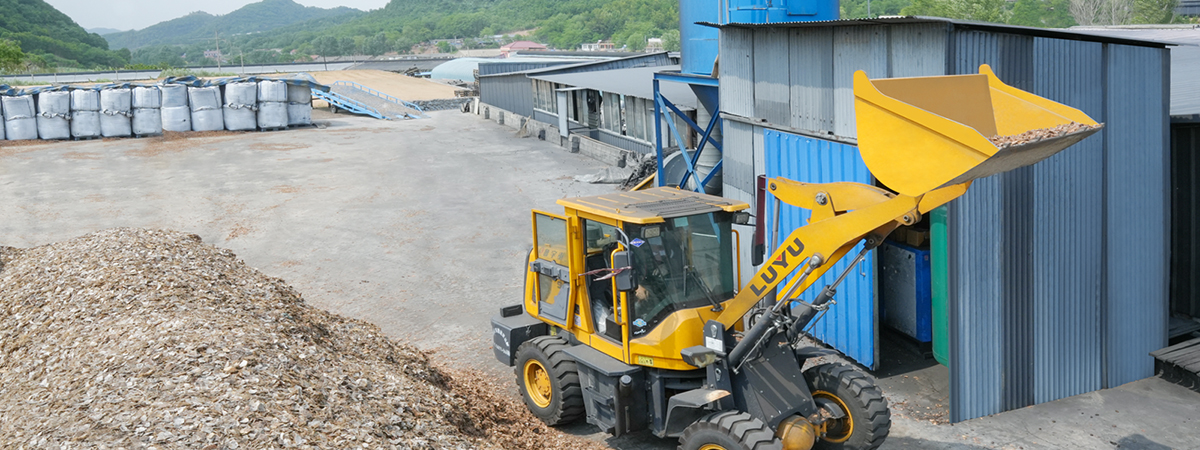
Behind the products, the operational facts matter to buyers who re-order. FYC’s parent company was founded in 1990 and operates a 6,000 m² facility with 100 employees. Its R&D team includes 8 engineers, three of them at master’s level, and the company develops 34 new product models annually. Daily output exceeds 50 metric tons, with monthly capacity of approximately 600–800 metric tons and annual output of 4,000,000 pieces. Around 60% of production is exported, with main markets in the Middle East and Europe and additional export activity in Southeast Asia and North America.
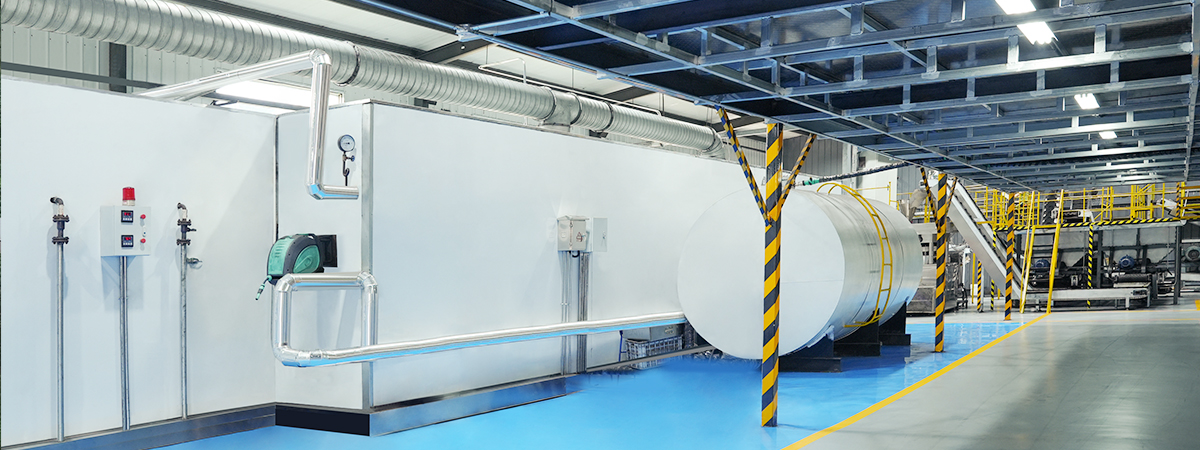
Quality control is structured as follows: 100% comprehensive inspection on all production lines, three professional QA/QC inspectors, an on-site Intertek supplier assessment, and full traceability of raw materials. FYC holds SGS and ISO certification.
Step-by-Step: How to Verify Charcoal Parameters Before You Buy
- Write the four parameters into the enquiry. Ask for fixed carbon content, ash content, calorific value, and burn time per format. Nothing else in the reply is comparable until these are on the table.
- Match the parameter set to the application. Hookah and shisha need long burn time with minimal ash; indoor restaurant grilling needs high calorific value with spark-free, low-ash combustion; incense and bakhoor work needs fast ignition and odor-free heat.
- Ask for certification and test evidence. FYC holds SGS and ISO certification. For barbecue charcoal entering the EU, EN 1860-2:2005 provides the ash, fixed carbon, and moisture framework that applies.
- Verify raw-material and process traceability. Confirm which material the batch uses — coconut shell, fruit wood, bamboo sawdust, or hardwood — and whether raw material lots are traceable and fully inspected.
- Run a burn test on the exact SKU. Measure ignition time, heat stability at 30, 60, and 90 minutes, ash volume after the burn, odour, and sparking. Test the cube, stick, or tablet you will actually order.
- Confirm format and dimensional consistency. Cube 25 mm/40 mm, hexagonal, bamboo, 33 mm round incense tablets, 50 mm square-hole and four-hole BBQ briquettes — dimensions affect the equipment, not just the appearance of the shipment.
- Lock the specification into the purchase order and the packaging. Include the parameters, the format, and the packaging type (flip-top, magnetic, or pull-out box, with logo printing where required) so the third container matches the first.
Commercial terms should be verified in the same pass. FYC’s MOQ starts from one box for express stock and runs from 1 ton up to 17 tons for wholesale and full-container orders. Lead time is 7–15 days for standard stock and 20–30 days for customized mass production. The company quotes a 100% on-time delivery guarantee, a ≤4-hour response time, 24/7 technical support for charcoal usage and storage, compensation for quality discrepancies, multilingual support in English, Spanish, and French, and a logistics network of more than 50 partners.
A Sourcing Parameter Checklist You Can Send to Any Supplier
| Parameter | FYC published benchmark | What to request from any supplier |
|---|---|---|
| Fixed carbon content | >85–90% (TC-01 hookah charcoal) | Laboratory report stating the test method and batch; compare on the same moisture basis |
| Ash content | <3% premium grade (TC-01); ultra-low ash content (TC-02) | An ash figure tied to the ordered format; EU buyers should confirm against EN 1860-2:2005 |
| Calorific value | >7800 kcal/kg (TC-01); high calorific value (TC-02) | Value per kilogram, plus the format and ignition method tested |
| Burn time | 90–120 min (TC-01 cube 25/40 mm); 45–70 min (TC-01 quick light); 45–70 min (TC-04 incense); 6–8 h (TC-02 bamboo stick); 70 min (TC-02 fruit wood quick light) | Burn time for the exact SKU with stated test conditions (format, airflow, ignition) |
| Format and dimensions | Cube 25/40 mm, hexagonal, bamboo (TC-01); quadrilateral, hexagon, 50 mm square-hole/four-hole, spherical, Fangyuan (TC-02); 33 mm round (TC-04) | Dimensional tolerance and consistency commitment across repeat containers |
| Raw material | Premium natural coconut shell and fruit wood (TC-01); bamboo sawdust, hardwood, fruit wood (TC-02); fruit wood charcoal and coconut shell powder (TC-04) | Material declaration and lot-level traceability |
| Certification | SGS and ISO | Certificate scope and validity, plus batch-linked test reports |
| Commercial terms | MOQ from 1 box (express stock) to 1–17 tons; lead time 7–15 days stock, 20–30 days customized | Written MOQ, lead time, and quality-discrepancy terms |
Use Cases: The Same Four Parameters, Three Different Priorities
A premium shisha lounge chain in Saudi Arabia. Taking 50 metric tons per quarter, roughly 200 tons annually, this chain prioritised burn time and ash above all else. The configuration was TC-01 cube charcoal at 25 mm, with ash content below 3% and a custom magnetic box printed with the client’s logo. Over a 2.5-year relationship the result reported was stable, odorless burning with zero client complaints, and longer customer sessions because the heat lasted longer per bowl.
A charcoal BBQ and grill restaurant group in Korea. Running one 40HQ container per month, approximately 20–22 tons, this group prioritised calorific value and ash behaviour. Hexagonal bamboo charcoal sticks were selected for high density and zero sparking to suit built-in dining-table grills. Over three years, the reported outcome was zero smoke interference in indoor dining and a 15% reduction in total charcoal consumption compared with the previous supplier.
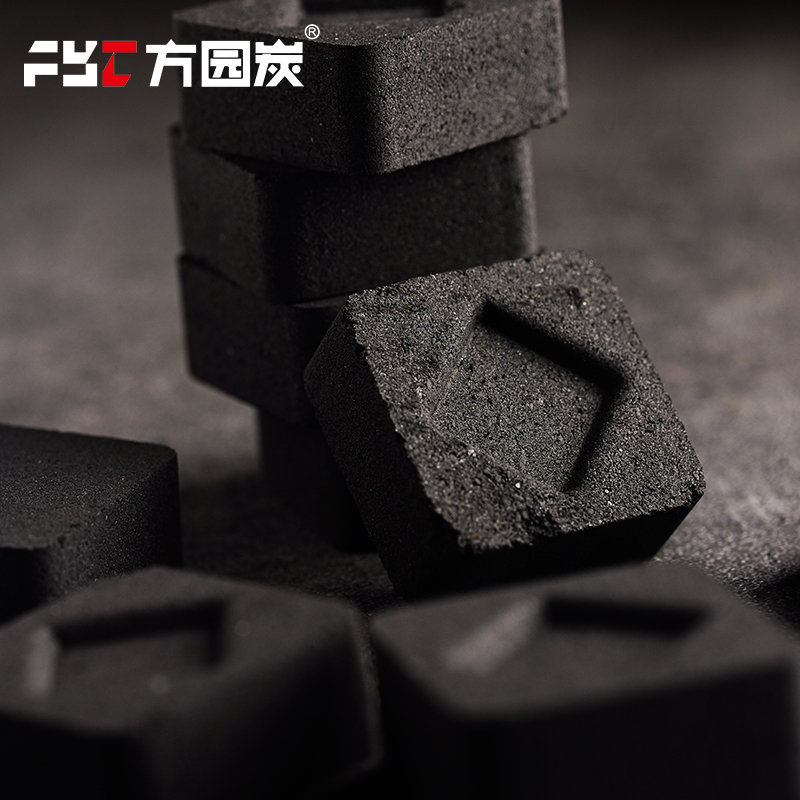
Aromatherapy and spa settings. Here the parameter hierarchy flips again. The requirement is immediate ignition and slow, smokeless heating of solid incense, Bakhoor, or aromatherapy oils. A 33 mm round tablet functions as an even heat diffuser that releases fragrance without charcoal smoke interfering, lighting in 30–45 seconds in a ceramic or metal burner and providing steady warmth for 45–70 minutes. Silver and gold foil coatings and fast, smoke-free combustion matter more than peak temperature.
Comparison Table: TC-01 vs TC-02 vs TC-04
| Parameter | TC-01 Hookah Charcoal | TC-02 Barbecue Charcoal | TC-04 Incense Charcoal |
|---|---|---|---|
| Primary application | Hookah bars, shisha, aromatherapy, yoga rooms, bakhoor, home relaxation | Barbecue restaurants, outdoor camping, home cooking, catering and hospitality | Hookah bars, shisha, aromatherapy, yoga rooms, bakhoor, home relaxation |
| Formats | Cube (25 mm and 40 mm), hexagonal, bamboo | Quadrilateral, hexagon, quadrilateral bamboo, hexagon bamboo, 50 mm square-hole, 50 mm four-hole, spherical, Fangyuan | 33 mm round |
| Raw material | Premium natural coconut shell, fruit wood | Bamboo sawdust, hardwood, fruit wood | Fruit wood charcoal, coconut shell charcoal powder |
| Fixed carbon content | >85–90% | Not stated in the published product specification sheet | Not stated in the published product specification sheet |
| Ash content | <3% (premium grade) | Ultra-low ash content | Not stated in the published product specification sheet |
| Calorific value | >7800 kcal/kg | High calorific value, superior heat, high temperature | Not stated in the published product specification sheet |
| Burn time | 90–120 min (cube/25 mm/40 mm); 45–70 min (quick light) | 6–8 hours (bamboo charcoal stick); 70 minutes (fruit wood quick light) | 45–70 minutes |
| Ignition | Quick light / fast ignition options available | Quick-light fruit wood option available | Quick light / fast ignition |
| Custom packaging | Supported | Supported | Flip-top box, magnetic box, pull-out box |
| Certification | SGS and ISO | SGS and ISO | SGS and ISO |
The table is deliberately honest about gaps. Where a figure is not published for a model, it is marked as not stated rather than estimated — because a sourcing decision should rest on figures a supplier is prepared to write down.
Frequently Asked Questions
Which certifications and standards should a charcoal buyer verify before ordering?
FYC holds SGS and ISO certification, and buyers should ask for the certificate scope as well as a batch-linked test report covering the parameters they care about. For barbecue charcoal and briquettes sold in the European Union, EN 1860-2:2005 is the reference standard and specifies limits for ash content, fixed carbon, and moisture. For hookah and incense charcoal there is no single equivalent global standard, so the practical approach is to request the same test data voluntarily: fixed carbon, ash content, calorific value, and burn time per format.
What fixed carbon, ash, calorific value and burn time does FYC’s hookah charcoal actually deliver?
The published specification for FYC hookah charcoal TC-01 states fixed carbon content of >85–90%, ash content of <3% on the premium grade, and calorific value of >7800 kcal/kg. Burn time is 90–120 minutes for cube formats at 25 mm and 40 mm, and 45–70 minutes for the quick-light variant. TC-01 is available in cube, hexagonal, and bamboo forms and is made from premium natural coconut shell and fruit wood; it is smokeless, odorless, high hardness, and eco-friendly.
How do these parameters affect budget — is a higher specification always more expensive?
The cost that matters is cost per session or per service, not price per ton. Higher fixed carbon and calorific value mean fewer briquettes per bowl or grill cycle: a Korean BBQ restaurant group running approximately 20–22 tons per month reported a 15% reduction in total charcoal consumption after switching to FYC’s higher calorific value barbecue charcoal within a three-year supply relationship. Ash content shifts cost into labour, cleanup, and equipment maintenance rather than into the invoice. FYC also limits the risk of an expensive wrong batch by keeping the entry MOQ at one box for express stock, rising to 1–17 tons for wholesale orders.
Can I test FYC charcoal before committing to a full container?
Yes. Sampling is built into FYC’s order structure: the MOQ starts from one box for express stock, while wholesale orders run from 1 ton up to 17 tons for a full container. Standard stock items ship in 7–15 days, and customized mass production takes 20–30 days. FYC also provides 24/7 technical support for charcoal usage and storage, which is useful during a first trial, and the multilingual team works in English, Spanish, and French. Buyers can request a sample or a quotation by sending their required parameters — fixed carbon, ash, calorific value, burn time, format, and packaging.
What lead time, MOQ, and after-sales support should a buyer expect?
FYC quotes 7–15 days for standard stock and 20–30 days for customized mass production, with a 100% on-time delivery guarantee. The MOQ ranges from one box for express stock to 1–17 tons for wholesale container orders. Quality is supported by 100% comprehensive inspection on all production lines, three professional QA/QC inspectors, an on-site Intertek supplier assessment, full raw-material traceability, a ≤4-hour response commitment, and compensation for quality discrepancies. To start, send your parameter requirements to Paris Wang at paris@fyc-charcoal.com or via WhatsApp at +8613591327260 and request a sample, a quotation, or the product catalogue.
Conclusion: Turn Four Numbers Into a Purchase Order
Charcoal purchasing becomes predictable when the conversation moves from adjectives to measurements. Fixed carbon tells you how much of the briquette is fuel; ash tells you how much residue you will manage; calorific value tells you how much heat each kilogram delivers; burn time tells you how long that heat lasts in the format you actually buy. A benchmark such as FYC’s hookah charcoal TC-01 — >85–90% fixed carbon, <3% ash, >7800 kcal/kg, 90–120 minutes for cube formats and 45–70 minutes for quick light — is valuable not because it sounds strong, but because it can be written down, tested on arrival, and re-checked on the next container.
The same discipline applies across categories: TC-02 barbecue charcoal with ultra-low ash and 6–8 hour bamboo-stick burn time for restaurant and outdoor grilling, and TC-04 incense charcoal at 45–70 minutes for aromatherapy, spa, and bakhoor use. Whether the destination is a shisha lounge in Saudi Arabia, a Korean grill restaurant group, or an EU retail shelf governed by EN 1860-2:2005, the sourcing method is identical: define the parameters, verify the evidence, test the SKU, then lock the specification into the order.
Request FYC Charcoal Samples and Specifications
Send your target fixed carbon, ash, calorific value, burn time, format, and packaging requirements, and FYC will respond with the matching specification and a sample plan. Standard stock ships in 7–15 days; customized production in 20–30 days.
Email: paris@fyc-charcoal.com | WhatsApp: +8613591327260 | Website: fyc-charcoal.com
Download the full product and specification brochure: FYC Charcoal Brochure (PDF)
comment (02)
Jenny Wilson
19 June 2023Rating:
Lorem ipsum dolor sit amet, consectetur adipiscing elit, sed do eiusmod tempor incididunt ut labore et dolore magna aliqua. Ut enim ad minim veniam, quis nostrud exercitation ullamco laboris nisi ut aliquip ex ea commodo consequat aute irure dolor in reprehenderit.
Marvin McKinney
19 Feb 2024Rating:
Lorem ipsum dolor sit amet, consectetur adipiscing elit, sed do eiusmod tempor incididunt ut labore et dolore magna aliqua. Ut enim ad minim veniam, quis nostrud exercitation ullamco laboris nisi ut aliquip ex ea commodo consequat aute irure dolor in reprehenderit.