


How to Choose Charcoal for Hookah Lounges, Camping, and Wellness: An Application Guide
A practical application guide to matching charcoal to hookah lounges, camping and wellness use — burn time, ash, smoke and ignition criteria from FYC charcoal.
How to Choose Charcoal for Hookah Lounges, Camping, and Wellness: An Application Guide
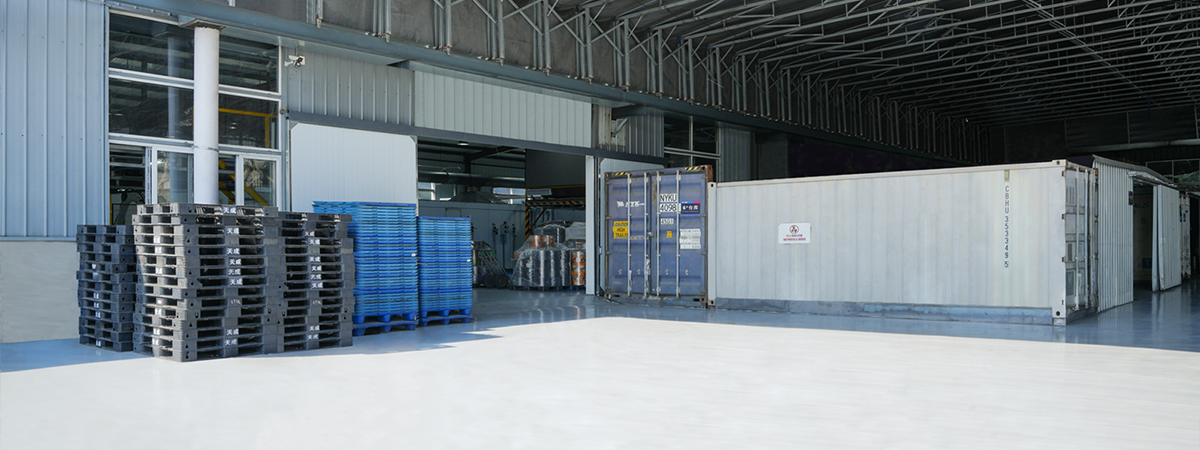
FYC charcoal manufacturing in Dalian, Liaoning, China — the production base behind the hookah, incense and BBQ charcoal lines.
Charcoal is an application decision before it is a price decision. A hookah lounge is buying burn duration and indoor air quality; a camping kit is buying ignition speed and low weight; a wellness or bakhoor setting is buying odor neutrality and clean ash. Very few charcoal specifications serve all three environments at once, and the carton that looks strongest on a specification sheet is not automatically the right carton for the room it will burn in.
Dalian Tiancheng Charcoal Industry Technology Co., Ltd., operating under the FYC charcoal brand, is a charcoal manufacturer founded in 1990 and based in Dalian, Liaoning, China. It runs three core lines — hookah charcoal, incense charcoal and BBQ charcoal — and exports roughly 60% of its output to the Middle East and Europe. More on the company is available at fyc-charcoal.com.
This guide is written for buyers at the decision stage: hookah lounge operators, camping and outdoor retailers, wellness and incense brands, and importers building a multi-application charcoal portfolio.
Problem Definition: Why Application Mismatch Costs More Than Material Quality
The most common sourcing error in this category is treating charcoal specifications as universal quality scores. Higher carbon purity and longer burn time get read as “better” across every use case, and the specification sheet ends up compared against price per kilogram rather than against the environment where the fuel will actually burn.
That logic breaks down in three predictable ways.
- In a hookah lounge, a short burn window forces mid-session replenishment. Each refill consumes staff time, interrupts the guest's session, and increases handling around hot trays.
- At a campsite or on a beach, fuel that performs beautifully indoors can fail outdoors if it needs a separate ignition source, extra equipment, or a long wait before it is ready to cook.
- In wellness, bakhoor and aromatherapy use, the fuel burns in the same room as the scent. Smoke, odor or sparking from the charcoal competes directly with the fragrance being sold, and heavy ash residue undermines the presentation of the burner itself.
The corrective is not to buy the strongest charcoal on the market but to define four variables before sourcing: the burn window the environment requires, the smoke and odor tolerance, the ignition method available, and the ash threshold the operator can live with. Material base, format, packaging and documentation all follow from those four.
Industry Background: Scale, Regulation and Regional Demand
Charcoal demand is large, growing, and unevenly distributed by application. Grand View Research values the global charcoal market at USD 8.1 billion in 2025 and projects USD 11.6 billion by 2033. That figure deserves care: research houses scope the market differently, and an alternative estimate of the total charcoal market is materially higher because it includes traditional household fuel alongside commercial and industrial use. For procurement planning, the useful reading is directional growth, not a single absolute number.
The hookah end of the market has its own economics. Dataintelo estimates the global hookah (shisha) charcoal segment at approximately USD 1.8 billion in 2025, with a projected CAGR of 6.2% through 2034. Niche valuations in this category vary widely by report scope, so buyers comparing suppliers on headline market size should expect the numbers to disagree and should focus on supply capability instead.
Two structural trends directly affect specification choices:
- Material mix. Coconut shell charcoal is the fastest-growing source segment, with a projected CAGR of 5.0% between 2026 and 2033, favored for its high fixed carbon content and environmental sustainability (Grand View Research). Bamboo and wood-based lines remain widely used alongside it.
- Regional concentration. The Middle East and Africa region captured 48.8% of global charcoal revenue in 2025, driven largely by traditional cooking and shisha culture (Grand View Research). Saudi Arabia sits inside that regional demand bloc, which is one reason lounge-grade performance expectations in this category are often defined by buyers from the region.
Europe adds a regulatory layer. Barbecue charcoal and briquettes sold into the European market are governed by EN 1860-2:2005, which specifies limits for ash content, fixed carbon and moisture. Suppliers serving EU barbecue buyers should be able to address that standard directly rather than in general quality language.
For Germany specifically, one third-party estimate places the shisha charcoal segment at roughly €85 million annually, with more than 2,500 shisha cafés operating nationwide as of 2024 (Intel Market Research). It is best treated as a directional planning figure rather than a certified statistic — but it explains why German lounge buyers tend to be unusually specification-driven.
North American demand is shaped differently. Rather than dense café culture, the United States market is driven mainly by outdoor recreation — camping, hiking, beach and backyard grilling — where portability, fast ignition and no-cleanup disposal outweigh extended burn duration. That difference in use pattern is exactly why an application-based selection method outperforms a single global specification.
At the premium end of the shisha segment, publicly recognized brands include Cocourth, Coconara, Titanium, TOM Cococha and Cocobrico — useful reference points when benchmarking the retail tier of the market, though brand recognition alone says nothing about factory-level supply capability.
Detailed Solution: Matching FYC Charcoal to Three End-Use Environments
1. Hookah Lounges: Burn Duration and Smokeless Operation
A hookah lounge is buying time and air quality, not weight. The decisive variable is how long one load holds usable heat, followed closely by what the fuel releases into the room while it burns.
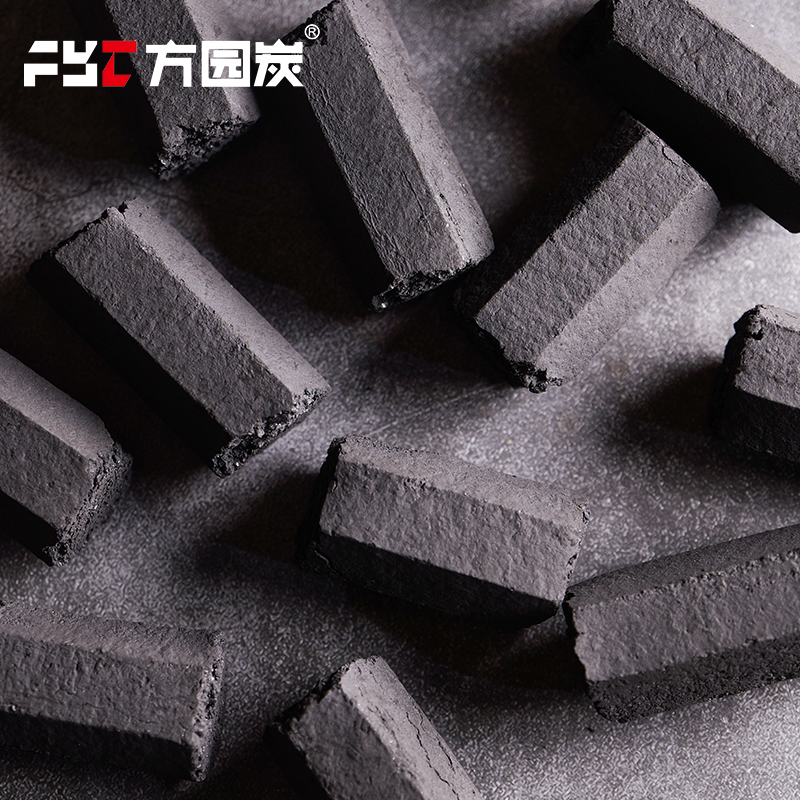
FYC's premium charcoal briquettes are documented with carbon purity above 85–90% and 100% natural materials — coconut shell or bamboo — with no chemical additives. Documented burning time reaches up to 120 minutes for shisha use, described as 2–3x longer than common alternatives, and 6–8 hours for BBQ use. Ash content is documented at less than 3%, against 6–10% for low-quality briquettes, which is roughly a 50% reduction. Calorific value is stated above 7,800 kcal/kg, supporting constant, stable heat output across a session.
The operational consequences matter more than the numbers. Zero smoke, zero odor and no sparks reduce the frequency of exhaust system cleaning, and fewer charcoal replenishments per session lower total usage cost even when the price per kilogram is higher. For context at the premium end, high-quality coconut charcoal briquettes are generally expected to exceed 75% fixed carbon and remain below 2% ash to meet premium shisha performance standards.
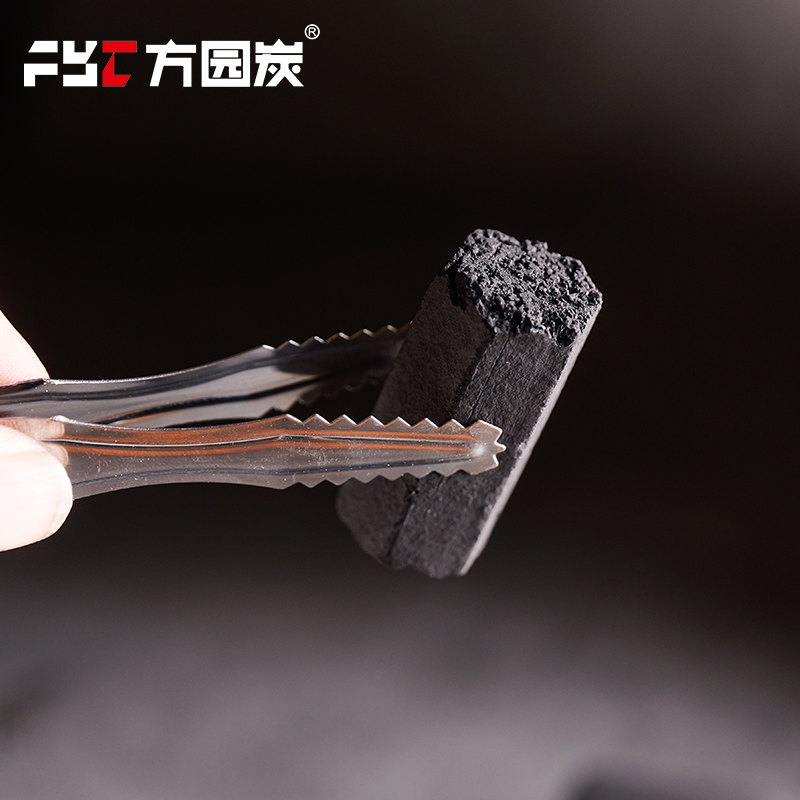
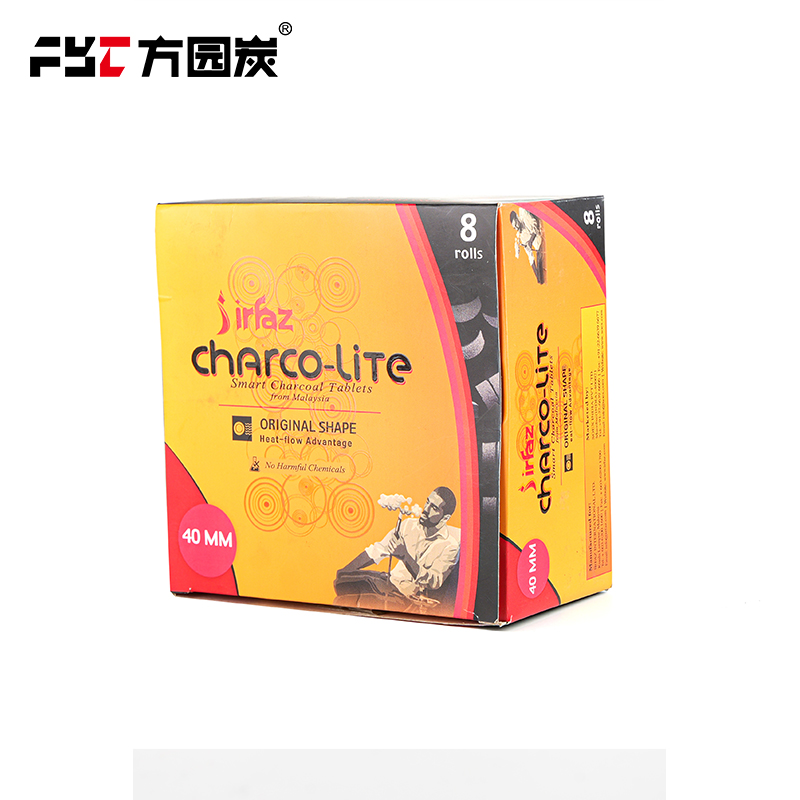
Formats carry operational risk. Hookah charcoal is commonly supplied in cube, hexagonal, square and pillow shapes. Format is not cosmetic: tray geometry, bowl dimensions and tongs all assume a specific size. Buyers should confirm the actual format and dimensions against their own burner before placing a volume order, rather than ordering from a category name alone.
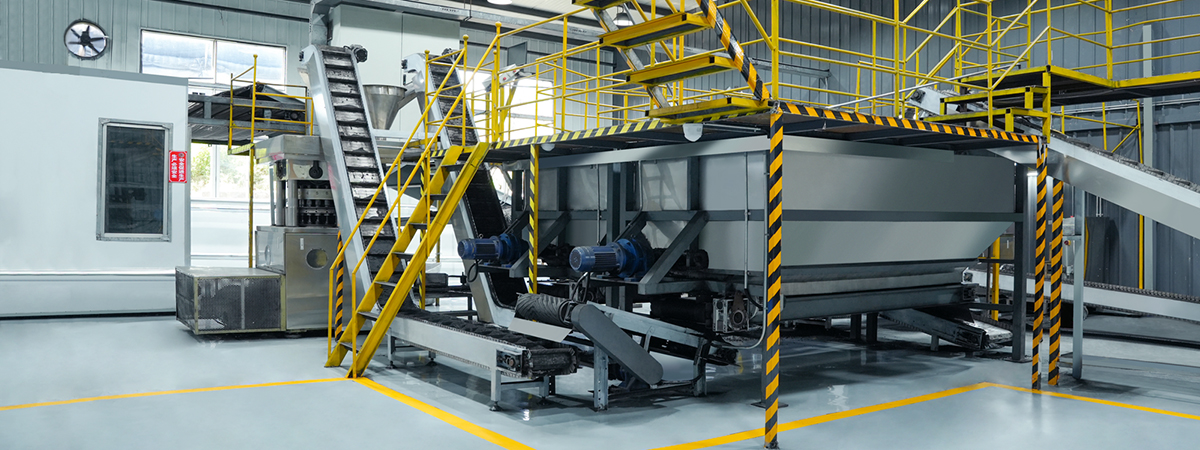
Production and quality inspection at the FYC facility, where batch-by-batch sample testing supports consistency between shipments.
2. Camping and Outdoor Use: Ignition Speed, Weight and Disposal
Outdoor buyers weight the decision differently. A camper, hiker or beachgoer cares about how quickly the fuel is ready, how much it weighs in the pack, and what has to be carried out afterwards.
FYC's disposable grill line is built around those three constraints. Compared with traditional steel bulky BBQ grills, the core difference is that it is ultra-lightweight, compact, and fully disposable after one-time use, with a documented weight reduction of over 90%. Integrated quick-light charcoal brings the grill to cooking readiness within minutes, and no messy cleaning or charcoal removal is required after the event; disposal is designed to be environmentally friendly.
The commercial profile is deliberately low-commitment: extremely low initial investment per use, no maintenance, and no storage space required. It suits spontaneous picnics, casual beach BBQs, hiking and small garden parties where a conventional grill would be impractical to transport and clean, and the comparison against traditional steel grills shows no setup time and no cleanup time.
For longer trips where a group cooks repeatedly, the correct product is not a disposable grill but a conventional BBQ charcoal load. FYC's premium BBQ briquettes are documented at 6–8 hours of burning time, which removes the need to re-fire mid-trip and reduces the fuel weight a group has to carry per cooking day.
Storage and transport risk. Charcoal sold into camping retail carries fire-safety obligations that hookah and incense buyers rarely face. The controls in this category are strict moisture control with temperature-monitored warehouse storage, moisture-proof packaging, standardized palletizing, round-the-clock warehouse smoke detection, and regular fire-safety training for staff. Retailers should ask suppliers to describe these controls, not only the fuel specification.
3. Wellness, Bakhoor and Aromatherapy: Odor Neutrality and Clean Ash
Wellness applications invert the priority order again. When charcoal is used to burn bakhoor, oud or incense resin in a room, the fuel sits directly beside the fragrance — so it must contribute nothing of its own.
Incense charcoal is one of FYC's three core product lines, alongside hookah and BBQ charcoal, and the same selection discipline applies: documented ash behavior, odor neutrality and consistent heat matter more than maximum intensity. FYC documents zero smoke, zero odor and no sparks for its premium charcoal briquettes, with ash content below 3% — properties that matter most precisely when fuel burns next to an aromatic resin in an enclosed space.
Because incense, bakhoor and charcoal-for-oud formats are frequently described by tablet size, buyers should confirm actual dimensions rather than ordering from a size label. Tablet terminology such as 33 mm and 50 mm is common market shorthand in this segment, and a labelled size does not guarantee the same fill weight, density or burn behavior between suppliers.
A practical rule: for wellness and aromatherapy, request documentation for the incense charcoal line specifically. Performance data documented for a hookah briquette does not automatically transfer to a smaller tablet format, even when both come from the same factory.
Step-by-Step: Seven Decisions That Define a Charcoal Specification
Working through these seven decisions in order converts a vague requirement into a purchase specification that suppliers can quote against.
- Define the burn window. How long must one load last without intervention? A lounge session, a 6–8 hour cooking day and a short aromatherapy burn imply different specifications. Work backwards from the session or shift length, not from the price list.
- Set smoke and odor tolerance. Indoor use tolerates almost none; outdoor use tolerates some. Zero smoke and zero odor are documented properties of premium briquettes, and they determine air-handling load in an enclosed venue.
- Choose the material base. Coconut shell, bamboo and wood-based charcoal differ in density, ash and heat profile. Coconut shell is the fastest-growing segment for its high fixed carbon content, while wood-based production covers wood carbonization charcoal, extruded wood-chip charcoal and molded wood-powder charcoal — which is where customization flexibility usually comes from.
- Choose the format and ignition method. Cube, hexagonal, square, pillow and tablet formats serve different equipment. Decide whether the user will light the fuel with a burner, a torch, or not at all — integrated quick-light charcoal removes the ignition step entirely, and that is what makes a disposable grill practical.
- Set the ash and cleaning threshold. Ash content drives cleaning frequency, exhaust maintenance and the visual quality of the experience. Compare suppliers against a defined ceiling — below 3% rather than a 6–10% range, for example.
- Verify documentation for the destination market. EU-bound barbecue charcoal and briquettes fall under EN 1860-2:2005 for ash content, fixed carbon and moisture. Ask for the certification scope, not just the certificate. FYC holds SGS and ISO certifications and undergoes third-party onsite assessment by Intertek, with batch-by-batch sample testing.
- Validate with a sample batch, then calculate cost per session. Run the fuel through a real session — a lounge evening, a cooking day, an aromatherapy burn — and compare refills rather than price per kilogram. A slightly higher unit price with fewer replenishments produces a lower total usage cost.
Two supply-side checks belong alongside those seven decisions. The first is raw-material continuity: full raw-material traceability and a strategic supplier network protect against quality variation and supply-chain disruption, supported by a safety stock of raw materials held for at least three months. The second is capacity: the company operates a 6,000 ㎡ facility with approximately 100 employees, an 8-engineer R&D team, a stated annual output of 4,000,000 pieces, and daily output exceeding 50 metric tons.
Application Scenarios in Practice
A city hookah lounge running continuous evening service. The binding constraint is uninterrupted session time. Cube or hexagonal hookah charcoal with a documented burn of up to 120 minutes reduces mid-session refills, while zero smoke, zero odor and no sparks keep indoor air handling predictable and reduce exhaust cleaning frequency. Ash below 3% also shortens tray-clearing interruptions between guests.
A camping and outdoor retailer building a seasonal range. Two products, not one. The disposable instant-light grill covers spontaneous demand — over 90% lighter than a traditional steel grill, ready within minutes, no cleanup, no storage burden. A conventional BBQ charcoal line covers planned trips with 6–8 hours of burn time per load.
A wellness or bakhoor brand supplying aromatherapy retail. Here the fuel has to disappear behind the fragrance. Select on odor neutrality, spark behavior and low ash, confirm the tablet format against the burners actually being sold, and request documentation for the incense charcoal line rather than assuming equivalence with hookah-grade product.
Comparison Table: Three Charcoal Approaches Side by Side
The table below compares documented performance attributes across the three approaches discussed in this guide. It is intended as a specification-comparison reference, not as a ranking of suppliers.
| Criterion | Premium natural charcoal briquettes (FYC hookah / BBQ lines) | Common market charcoal / low-quality briquettes | Single-use instant-light portable grill |
|---|---|---|---|
| Materials | 100% coconut shell or bamboo, no chemical additives | Mixed or unspecified input | Integrated quick-light charcoal in a disposable grill body |
| Carbon purity | Above 85–90% | Lower and more variable by batch | Not the defining metric — readiness time is |
| Ash content | Below 3% | 6–10% | No charcoal removal or ash cleanup required |
| Calorific value | Above 7,800 kcal/kg for constant, stable heat output | Lower and less stable heat output | Built for short cooking windows rather than heat retention |
| Burn time | Up to 120 minutes for shisha; 6–8 hours for BBQ | Shorter per load, more refills | Ready to cook within minutes; disposed after one use |
| Smoke, odor, sparks | Zero smoke, zero odor, no sparks | Higher smoke and odor load; exhaust cleaning needed more often | Used outdoors where smoke is not contained |
| Maintenance | Fewer replenishments; less frequent exhaust system cleaning | More frequent cleaning and refilling | No cleaning, no charcoal removal, no storage space required |
| Weight and handling | Standard carton handling | Standard carton handling | Over 90% weight reduction versus traditional steel grills |
| Best-fit applications | High-end shisha lounges, premium BBQ restaurants, long-duration outdoor camping | Not suited to premium service environments | Spontaneous picnics, casual beach BBQs, hiking, small garden parties |
| Cost structure | Slightly higher initial price; lower total usage cost through fewer replenishments | Lower unit price, higher replenishment and cleaning cost | Extremely low initial investment per use; no maintenance or storage cost |
FAQ: Charcoal Selection Questions Buyers Ask at the Decision Stage
What documentation should a buyer check before importing charcoal into a specific market?
For barbecue charcoal and briquettes entering the European market, the reference point is EN 1860-2:2005, which specifies limits for ash content, fixed carbon and moisture. Outside Europe, expectations vary by buyer, but the practical minimum is a named certification scope rather than a logo: FYC holds SGS and ISO certifications, undergoes third-party onsite assessment by Intertek, and applies batch-by-batch sample testing. Confirm which certificate covers which product line — coverage for one format does not automatically extend to another.
Can one charcoal product serve hookah, barbecue and incense at the same time?
In practice, no, because the three environments set different requirements. Documented burn time reaches up to 120 minutes for shisha applications, while BBQ briquettes are documented at 6–8 hours, and instant-light formats are designed for readiness within minutes rather than heat retention. Format and ash behavior differ as well: hookah charcoal is supplied in cube, hexagonal, square or pillow shapes, while incense and bakhoor products are commonly tablet formats. A buyer can consolidate with one manufacturer, but not behind one specification.
Is premium charcoal more expensive, and how should the cost comparison be made?
The initial price per kilogram may be slightly higher than common market charcoal or low-quality briquettes, but documented attributes shift the total cost: burning time 2–3x longer, ash content below 3% against 6–10%, and fewer charcoal replenishments per session. In fixed-service environments, fewer refills reduce labour time, while lower ash and zero smoke reduce exhaust cleaning frequency. Tthe comparison to make is cost per session or cost per service hour, not cost per kilogram. Single-use outdoor grills run the opposite way: extremely low initial investment per use, with no maintenance or storage cost at all.
How should a buyer validate charcoal before committing to a volume order?
Validate on the environment, not on the sample bag. Request samples of the specific line and format under consideration, then run a full session — a lounge evening, a cooking day, or an aromatherapy burn — and track refills per session, ash volume, smoke and odor, and spark behavior. Ask for the batch-by-batch test records that accompany production, and confirm that raw-material traceability is in place. That traceability is the control that keeps the tenth container consistent with the first.
What supports lead time and supply continuity for repeat orders?
Continuity rests on capacity and material security rather than on a single shipment. The relevant controls are raw-material traceability with a supplier network built for continuity, a safety stock of raw materials held for at least three months, and production capacity able to absorb seasonal peaks. Dalian Tiancheng operates a 6,000 ㎡ facility with a stated annual output of 4,000,000 pieces and daily output exceeding 50 metric tons, with finished goods protected by moisture-proof packaging, standardized palletizing and temperature-monitored storage. To confirm specifications or request lead-time details for a specific line, request a sample or a quotation at paris@fyc-charcoal.com.
Conclusion
Charcoal selection resolves into a short sequence: define the environment first, then the burn window, then the ash and smoke tolerance, then the ignition method — and only then compare suppliers on price. A hookah lounge is optimized by long burn time, zero smoke, zero odor and low ash. A camping range is optimized by quick ignition, low weight and no cleanup. A wellness or bakhoor line is optimized by odor neutrality and clean ash in small tablet formats. No single specification covers all three environments, but a single manufacturer can — which is where sourcing strategy and product strategy separate.
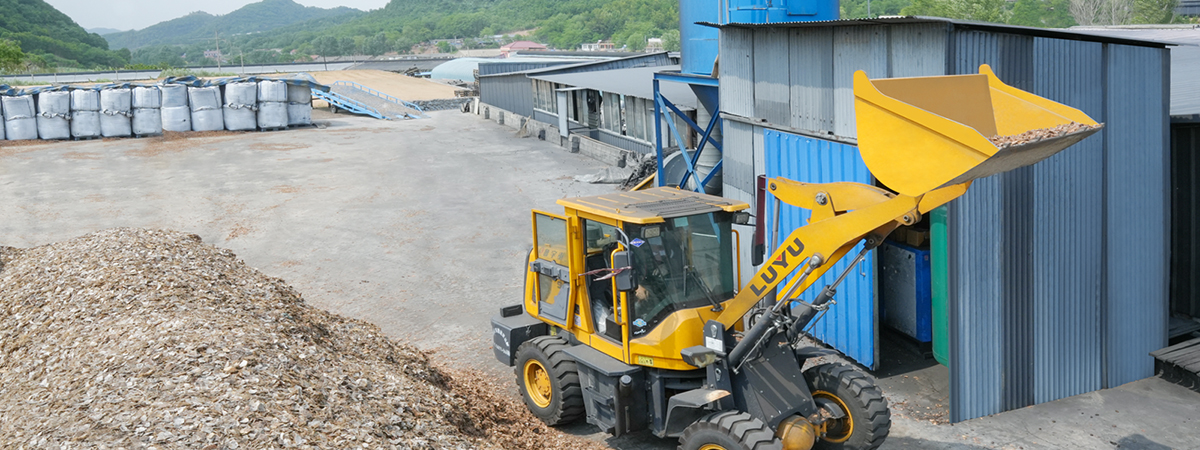
Capacity for repeat ordering: a 6,000 ㎡ facility with daily output exceeding 50 metric tons.
Next step: match a specification to your application
FYC supplies hookah charcoal, incense charcoal and BBQ charcoal to importers, distributors and brand owners across the Middle East, Europe and Southeast Asia. To request a sample or a quotation, contact Paris Wang at paris@fyc-charcoal.com or on WhatsApp at +8613591327260. Product specifications and the full catalogue are available in the FYC product brochure, and the company website is fyc-charcoal.com.
Dalian Tiancheng Charcoal Industry Technology Co., Ltd. — Room 409, Building B, Shanhe Zhigu Digital Economy E-commerce Industrial Park, Liaohe Middle Second Road, Jinzhou District, Dalian City, Liaoning Province, China.
comment (02)
Jenny Wilson
19 June 2023Rating:
Lorem ipsum dolor sit amet, consectetur adipiscing elit, sed do eiusmod tempor incididunt ut labore et dolore magna aliqua. Ut enim ad minim veniam, quis nostrud exercitation ullamco laboris nisi ut aliquip ex ea commodo consequat aute irure dolor in reprehenderit.
Marvin McKinney
19 Feb 2024Rating:
Lorem ipsum dolor sit amet, consectetur adipiscing elit, sed do eiusmod tempor incididunt ut labore et dolore magna aliqua. Ut enim ad minim veniam, quis nostrud exercitation ullamco laboris nisi ut aliquip ex ea commodo consequat aute irure dolor in reprehenderit.