


Disposable BBQ Grill vs. Barbecue Charcoal: Buyer's Guide
Compare FYC TC-03 disposable BBQ grill and TC-02 barbecue charcoal: session length, ignition, ash, cleanup, compliance and purchasing terms for buyers.
Disposable BBQ Grill vs. Barbecue Charcoal: Buyer's Guide
Buyers comparing FYC's TC-03 disposable barbecue grill with FYC's TC-02 barbecue charcoal are not comparing two fuels. TC-03 is a complete single-use cooking unit with integrated quick-light charcoal; TC-02 is a charcoal fuel that assumes a grill the buyer already owns. The short answer: choose TC-03 when portability, zero cleanup and a one-off session of roughly 60–90 minutes define the job; choose TC-02 when you need a 6–8 hour burn, repeat sessions, ultra-low ash and a lower total usage cost across the year.
Problem definition: what the buyer is actually deciding
A disposable grill and bagged barbecue charcoal appear in the same request for quotation because they serve the same occasion, not because they are the same product category. One bundles the cooking vessel and the fuel into a single-use unit. The other supplies fuel only. Treating them as like-for-like alternatives produces two predictable purchasing errors: ordering charcoal for an event where no grill and no cleanup capacity exists, or ordering disposable grills for a kitchen that needs heat for six to eight hours.
The correct comparison therefore starts with four variables, not with price per kilogram:
- Equipment status. Does the buyer already operate a grill, or does the purchase have to include the cooking surface?
- Guaranteed session length. Is the buyer promising a short spontaneous session, or a multi-hour service window that must not drop in temperature?
- Cleanup and disposal capacity at the point of use. Is there water, ash handling and storage at the location, or must the unit leave with the guest?
- Market compliance and acceptance criteria. Which standards and quality thresholds must the delivered lot meet in the destination market?
Industry background: why format now competes with fuel
Charcoal remains a large, formalised category. Grand View Research estimates the global charcoal market at USD 8.5 billion in 2026, covering lump charcoal and briquettes across consumer and commercial use. The category is also classified industrially: U.S. EPA background documentation places charcoal manufacturing under SIC 2861 (Gum and Wood Chemicals), with source classification code 3-01-006. That classification matters to buyers because it distinguishes an actual manufacturing operation from a trading listing when qualifying a supplier.
Trade structure is concentrated. World's Top Exports reported Indonesia as the leading charcoal exporter with roughly 23% of global export value in 2024. On the regulatory side, a 2026 European import guide identifies EN 1860-2 as the mandatory safety standard for BBQ charcoal sold in Europe. Quality expectations are also codified in some markets: a 2026 journal article citing Indonesian standard SNI 01-6235-2000 reports briquette thresholds of moisture content ≤8%, ash content ≤8% and calorific value ≥5,000 cal/g. Buyers should treat those figures as a reference point and obtain the original standard text for formal acceptance contracts.
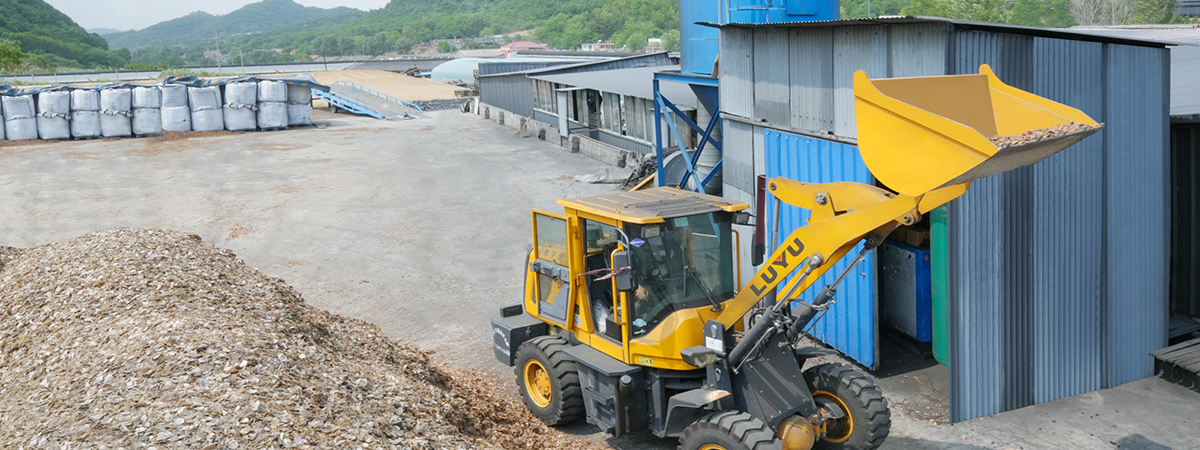
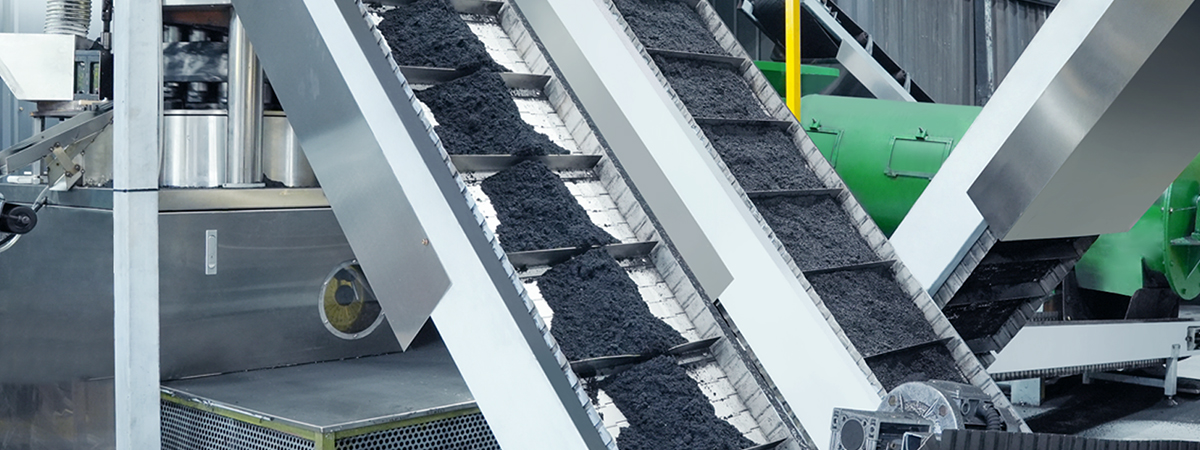
FYC — Dalian Tiancheng Charcoal Industry Technology Co., Ltd. — is a charcoal manufacturer founded in 1990 and based in Liaoning, China, with a 6,000 m² facility, 100 employees, an 8-engineer development team, annual output of 4,000,000 pieces and daily output above 50 metric tons. The company holds SGS and ISO certifications, exports around 60% of its output, and serves the Middle East and Europe alongside domestic customers. Its portfolio covers hookah charcoal, incense charcoal and barbecue charcoal — the context in which TC-02 and TC-03 are compared here.
The two formats, defined
TC-03 disposable barbecue grill: a complete single-use cooking unit
- Format: a single-use grill with integrated quick-light charcoal, fully disposable after one use.
- Weight and portability: ultra-lightweight and compact, with a weight reduction of over 90% compared with traditional steel grills.
- Setup and cleanup: 0 minutes setup and 0 minutes cleanup; no messy cleaning or charcoal removal after the event.
- Ignition: the integrated quick-light charcoal brings the unit to cooking readiness within minutes, with no lighter fluid required and low-smoke operation.
- Heat behaviour: uniform heat radiation across the cooking area rather than concentrated hot spots.
- Materials and disposal: built on 100% biodegradable materials and designed for environmentally friendly disposal.
- Session window: a usable grilling session of roughly 60–90 minutes, set by the integrated fuel charge.
- Cost and storage: extremely low initial investment per use, with no maintenance and no storage space required.
- Documented fit: spontaneous picnics, casual beach BBQs, hiking and small garden parties with no mess.
TC-02 barbecue charcoal: fuel for an existing grill
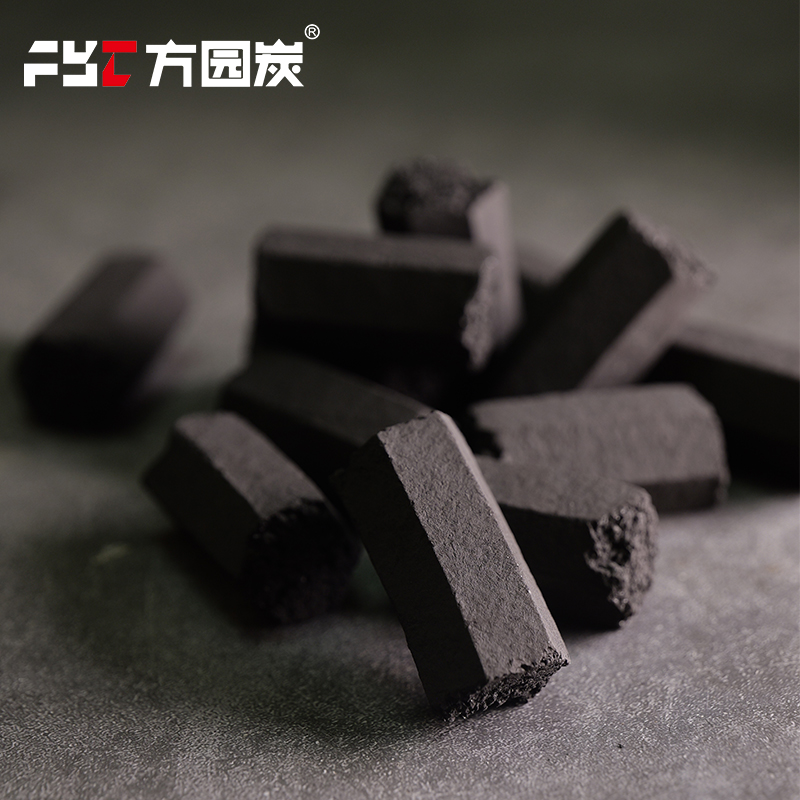
- Format: barbecue charcoal supplied as fuel in multiple forms, used in a grill or grill-compatible setup the buyer already owns.
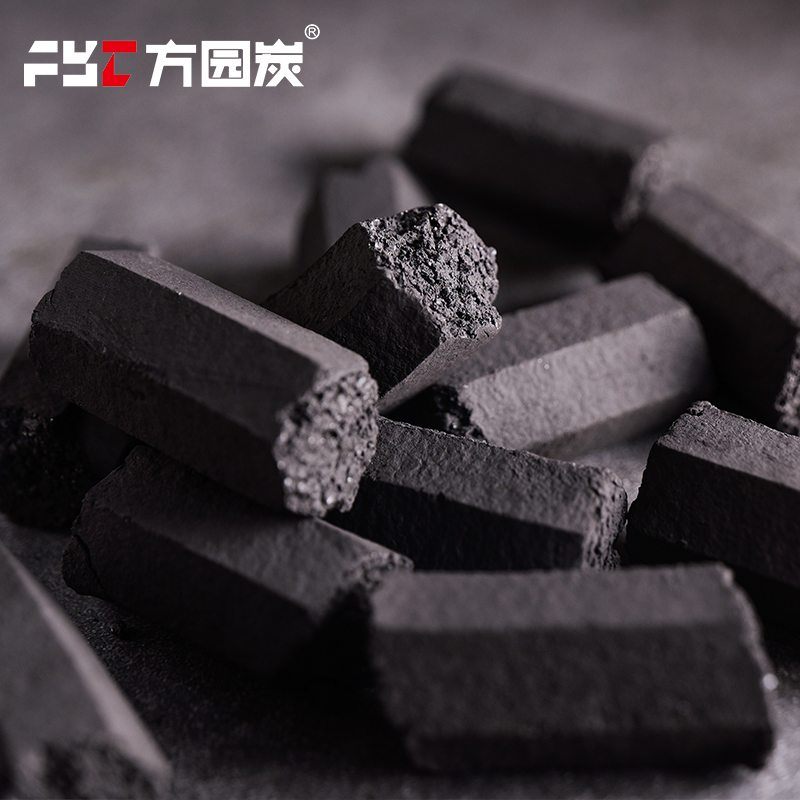
- Feedstock: natural bamboo, hardwood or fruit wood construction; 100% natural materials with no chemical additives.
- Carbon purity: above 85–90%, higher than common market charcoal and low-quality briquettes.
- Ash: under 3%, against 6–10% typical of low-quality briquettes — a reduction of about 50%.
- Energy: calorific value above 7,800 kcal/kg, delivering constant, stable heat output.
- Burn duration: 6–8 hours in barbecue use, 2–3 times longer than common alternatives; the quick-light form provides a shorter session of about 70 minutes.
- Emissions: specified as smokeless, odorless and spark-free in normal use, which reduces cleaning frequency for exhaust systems.
- Documented fit: premium BBQ restaurants, home cooking and long-duration outdoor camping.
What each format does not do
TC-03 is a single-use product. Its cooking window is defined by the factory-charged fuel, so it cannot be refuelled indefinitely for a long service period, and it is not a replacement for a durable grill in a commercial kitchen. TC-02 supplies fuel only: it requires a grill, a safe ignition routine and ash handling at the end of the session, and it requires dry, moisture-protected storage between uses. Neither limitation is a defect; each defines the buying channel.
Step-by-step breakdown: how to decide between TC-03 and TC-02
- Step 1 — Confirm whether a grill already exists. If the buyer owns no grill or cannot transport one, TC-03 removes the equipment question entirely. If a grill exists, TC-02 is the purchase and the charcoal becomes a repeat-order item.
- Step 2 — Write down the session length you must guarantee. TC-03 covers roughly 60–90 minutes of grilling. TC-02 covers 6–8 hours in barbecue use, with a quick-light form of about 70 minutes for shorter sessions. Match the format to the promised service window, not to average consumption.
- Step 3 — Check the ignition and handling routine at the point of use. TC-03 ignites through integrated quick-light charcoal with no lighter fluid and reaches cooking readiness within minutes. TC-02 requires a standard charcoal ignition routine on site, plus ash handling at the end.
- Step 4 — Confirm cleanup and disposal logistics. TC-03 requires no cleaning or charcoal removal and is built on 100% biodegradable materials for environmentally friendly disposal. TC-02 leaves ash to remove and a grill to clean, though its low ash content and smokeless, odorless burn reduce exhaust-system cleaning frequency.
- Step 5 — Verify compliance and specification. For Europe, EN 1860-2 is the mandatory safety standard for BBQ charcoal. Quality thresholds cited under SNI 01-6235-2000 for briquettes include moisture ≤8%, ash ≤8% and calorific value ≥5,000 cal/g. Confirm which requirement set applies to your destination market and product form before the order is placed.
- Step 6 — Set purchasing terms and acceptance criteria. Define per-lot test reporting, moisture protection in packaging, pallet configuration and the specific burn-duration claim you expect the supplier to stand behind. Acceptance criteria should be written against the application, not copied from a generic specification sheet.
Use cases matched to each format
Outdoor camping, hiking and beach events — TC-03
Where weight, transport and cleanup decide the purchase, TC-03 fits the brief: over 90% weight reduction compared with traditional steel grills, 0 minutes setup, 0 minutes cleanup and no charcoal removal. The 60–90 minute window matches a single meal for a small group, and the absence of a storage requirement removes the return-trip problem.
Small garden parties and spontaneous picnics — TC-03
The format is documented for spontaneous picnics, casual beach BBQs and small garden parties where the host has no grill, no storage and no appetite for post-event cleaning. Low-smoke operation without lighter fluid also matters where guests are close to the cooking surface.
Home cooking and repeat weekend grilling — TC-02
Households that already own a grill buy fuel, not equipment. TC-02's 6–8 hour burn, sub-3% ash and constant heat output support repeat sessions without frequent replenishment, and the lower ash load means less residue to clear between uses.
BBQ restaurants — TC-02
Commercial grilling is a duration and consistency problem. A 6–8 hour burn that holds temperature reduces mid-service reloads, and smokeless, odorless, spark-free operation reduces cleaning frequency in exhaust systems. Low ash also means less interference with the cooking surface during service.
Catering and mobile events — both, in different roles
Caterers running a multi-hour service window need TC-02 for the primary cooking line. TC-03 is the practical choice for satellite or overflow stations where no cleanup infrastructure exists and the unit must leave with the operator. Buying both formats is a legitimate assortment decision, not a compromise.
Distributors and retail assortment — both, segmented by occasion
TC-03 sells against the occasion (no grill, no cleanup, no storage). TC-02 sells against replenishment and performance (burn time, ash, heat stability). Distributors that carry only one format leave a defined customer need uncovered in their market.
Comparison table: TC-03 vs TC-02
| Decision factor | TC-03 disposable barbecue grill | TC-02 barbecue charcoal |
|---|---|---|
| Product type | Single-use grill with integrated quick-light charcoal | Charcoal fuel for an existing grill |
| Feedstock / materials | 100% biodegradable materials | Natural bamboo, hardwood or fruit wood; 100% natural, no chemical additives |
| Carbon purity | Not specified for this format | Above 85–90% |
| Ash content | Not specified for this format | Under 3%, against 6–10% for low-quality briquettes |
| Calorific value | Not specified for this format | Above 7,800 kcal/kg |
| Ignition | Integrated quick-light charcoal; ready within minutes; no lighter fluid | Standard charcoal ignition routine on site; quick-light form available |
| Cooking window | Roughly 60–90 minutes per unit | 6–8 hours in barbecue use; about 70 minutes for the quick-light form |
| Heat profile | Uniform heat radiation | Constant temperature, stable heat output |
| Smoke and odor | Low-smoke operation without lighter fluid | Specified as smokeless, odorless and spark-free in normal use |
| Cleanup | 0 minutes; no charcoal removal; fully disposable | Ash removal and grill cleaning required; reduced exhaust-system cleaning |
| Weight and portability | Over 90% weight reduction vs traditional steel grills; compact | Fuel weight only; a grill must be transported separately |
| Storage | No storage space required | Dry, moisture-protected storage between uses |
| Cost structure | Extremely low initial investment per use; no maintenance cost | Higher initial price possible, but lower total usage cost from fewer replenishments |
| Documented fit | Spontaneous picnics, beach BBQs, hiking, small garden parties | Premium BBQ restaurants, home cooking, long-duration outdoor camping |
Purchasing terms and acceptance criteria to attach to the order
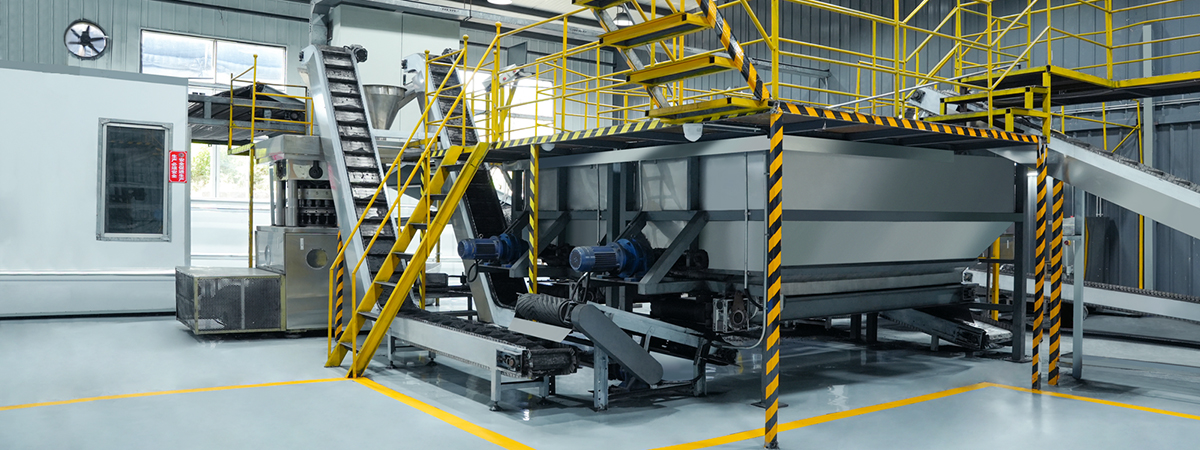
Whichever format a buyer selects, the delivered lot has to be verifiable. FYC's documented control measures give buyers concrete items to negotiate into the purchase order:
- Raw material traceability: full traceability supported by strategic partnerships with 50+ raw material suppliers.
- Third-party assessment: third-party onsite assessment by Intertek, alongside batch-by-batch sample testing.
- Supply continuity: safety stock of raw materials maintained for at least 3 months.
- Moisture and fire-risk control: strict moisture control, temperature-monitored warehouse storage, moisture-proof packaging, standardized palletizing, 24/7 warehouse smoke detection and regular fire-safety training for staff.
- Capacity context: daily output above 50 metric tons, annual output of 4,000,000 pieces and an 8-engineer development team support both repeat fuel orders and format-specific grill programmes.
For TC-02, acceptance criteria should reference ash content, calorific value and burn duration against the cited thresholds used in your market. For TC-03, criteria should reference session duration, weight reduction, ignition readiness and disposal specification. Both should specify packaging integrity, pallet configuration and the per-lot test documentation the supplier will provide.
Frequently asked questions
1. What compliance requirements apply to barbecue charcoal and to disposable grills?
For barbecue charcoal sold in Europe, EN 1860-2 is the mandatory safety standard. In other markets, briquette quality may be referenced against standards such as SNI 01-6235-2000, which is cited for moisture content ≤8%, ash content ≤8% and calorific value ≥5,000 cal/g. FYC holds SGS and ISO certifications and applies batch-by-batch sample testing plus third-party onsite assessment by Intertek. Requirements for the grill format itself are set by the destination market, so buyers should confirm the applicable requirement set for TC-03 before ordering rather than assuming the fuel standard covers the unit.
2. Which format gives the longer cooking session?
TC-02 barbecue charcoal provides the longer session. In barbecue use it delivers 6–8 hours of burn, which is 2–3 times longer than common alternatives, while the quick-light form provides about 70 minutes. TC-03 covers roughly 60–90 minutes of grilling, defined by its integrated fuel charge. If the service window exceeds about 90 minutes without interruption, TC-02 is the correct format.
3. Which format costs less per use?
The cost structures differ rather than simply ranking. TC-03 carries an extremely low initial investment per use and requires no maintenance or storage space, with no cleaning consumables after the event. TC-02 may have a slightly higher initial price than common market charcoal, but its total usage cost is lower because higher energy efficiency means fewer charcoal replenishments per session. A buyer running frequent long sessions usually reaches a lower cost per cooking hour with TC-02; a buyer running occasional short sessions with no equipment avoids the grill purchase entirely with TC-03.
4. Can a buyer evaluate both formats before committing to volume?
Yes — both TC-03 and TC-02 can be reviewed against the same application brief, and FYC's sales team handles product and specification questions directly. The published FYC product brochure covers the charcoal range, and sample quantities, freight terms and documentation are confirmed per inquiry so that evaluation matches the buyer's actual use case.
5. How should lead time and acceptance criteria be handled?
Lead time is set per order specification, so it should be negotiated against the format and volume rather than assumed. FYC supports scheduling with daily output above 50 metric tons, annual output of 4,000,000 pieces, and raw material safety stock of at least 3 months, with batch-by-batch sample testing and traceable raw material sourcing as the acceptance backbone. Buyers should write the burn-duration or session-duration claim, ash ceiling, packaging protection and per-lot test documentation into the order, then confirm current scheduling directly with FYC at paris@fyc-charcoal.com.
Conclusion
TC-03 and TC-02 do not compete on the same axis. TC-03 replaces the grill and the fuel at once, removes setup and cleanup, cuts weight by over 90% against traditional steel grills, and serves a defined 60–90 minute occasion with 100% biodegradable materials and low-smoke, lighter-fluid-free ignition. TC-02 supplies the fuel for buyers who already own a grill and need 6–8 hours of constant heat, carbon purity above 85–90%, ash under 3% and a lower total usage cost through fewer replenishments.
The decision rule is straightforward: if the constraint is transport, cleanup and a single short session, buy TC-03. If the constraint is duration, heat stability, ash load and cost per cooking hour, buy TC-02. Where a business serves both occasions — catering lines, distributors, hospitality groups — the correct answer is a segmented assortment, not a single format.
Match the format to your application
FYC (Dalian Tiancheng Charcoal Industry Technology Co., Ltd.) manufactures hookah charcoal, incense charcoal and barbecue charcoal, and supplies both the TC-02 barbecue charcoal range and the TC-03 disposable grill format. Request specifications, sample arrangements or current order terms for your market.
Email: paris@fyc-charcoal.com | WhatsApp: +86 135 9132 7260 | Website: fyc-charcoal.com
Download the FYC product brochure (PDF) for the full charcoal range.
comment (02)
Jenny Wilson
19 June 2023Rating:
Lorem ipsum dolor sit amet, consectetur adipiscing elit, sed do eiusmod tempor incididunt ut labore et dolore magna aliqua. Ut enim ad minim veniam, quis nostrud exercitation ullamco laboris nisi ut aliquip ex ea commodo consequat aute irure dolor in reprehenderit.
Marvin McKinney
19 Feb 2024Rating:
Lorem ipsum dolor sit amet, consectetur adipiscing elit, sed do eiusmod tempor incididunt ut labore et dolore magna aliqua. Ut enim ad minim veniam, quis nostrud exercitation ullamco laboris nisi ut aliquip ex ea commodo consequat aute irure dolor in reprehenderit.