


Charcoal Supplier Comparison: FYC vs Common Charcoal for Hookah, BBQ & Incense Buyers
Compare FYC charcoal vs common market charcoal for hookah, BBQ, and incense. See carbon purity, ash content, burn time, price per session, and supplier evaluation criteria.
Charcoal Supplier Comparison: FYC vs Common Charcoal for Hookah, BBQ & Incense Buyers
For importers, distributors, and procurement managers evaluating charcoal in 2026, the central question is no longer just “which charcoal brand should I buy?” It is: which charcoal supplier and product grade delivers consistent performance, lower total usage cost, and lower supply risk for hookah, BBQ, and incense applications? This comparison guide examines FYC charcoal against common market charcoal and low-quality briquettes, using performance factors such as fixed carbon, ash content, calorific value, burn time, smoke, odor, and total cost per session. A final section explains how to evaluate the factory behind the charcoal.
Why the Charcoal Market Is Moving Toward Premium Grades
The global charcoal market was valued at approximately USD 8.1 billion in 2025 and is projected to reach USD 11.6 billion by 2033, according to Grand View Research. Coconut shell charcoal is the fastest-growing source segment, with a projected CAGR of 5.0% from 2026 to 2033, driven by high fixed carbon content and environmental sustainability. The Middle East and Africa region captured 48.8% of global charcoal revenue in 2025, largely because of traditional cooking and shisha culture.
This market shift explains why buyers are paying more attention to charcoal specifications, not just price. For hookah lounges, premium BBQ restaurants, and outdoor hospitality businesses, the cost of poor-quality charcoal includes frequent replenishment, inconsistent heat, smoke complaints, and higher cleaning costs. High-quality coconut charcoal briquettes typically feature more than 75% fixed carbon and less than 2% ash content for premium shisha performance, according to industry sourcing references. FYC reports carbon purity above 85–90% for its premium charcoal briquettes made from 100% coconut shell or bamboo.
Problem Definition: What the Buyer Is Really Comparing
When a buyer searches for “charcoal supplier comparison” or compares FYC vs common charcoal, the underlying decision is rarely about a single bag of charcoal. The real comparison involves four elements:
- Product consistency: Will every carton meet the same ash, carbon, and moisture specifications?
- Usage economics: How much charcoal per session, and how much labor for cleaning and replacement?
- Supply reliability: Can the factory deliver on time, with stable quality across large orders?
- Compliance and traceability: Are certifications like SGS and ISO supported by real processes?
FYC positions itself as a professional manufacturer of hookah charcoal, incense charcoal, and BBQ charcoal, with production and quality-control systems designed to address these four elements.
Industry Background: FYC as a Charcoal Manufacturer
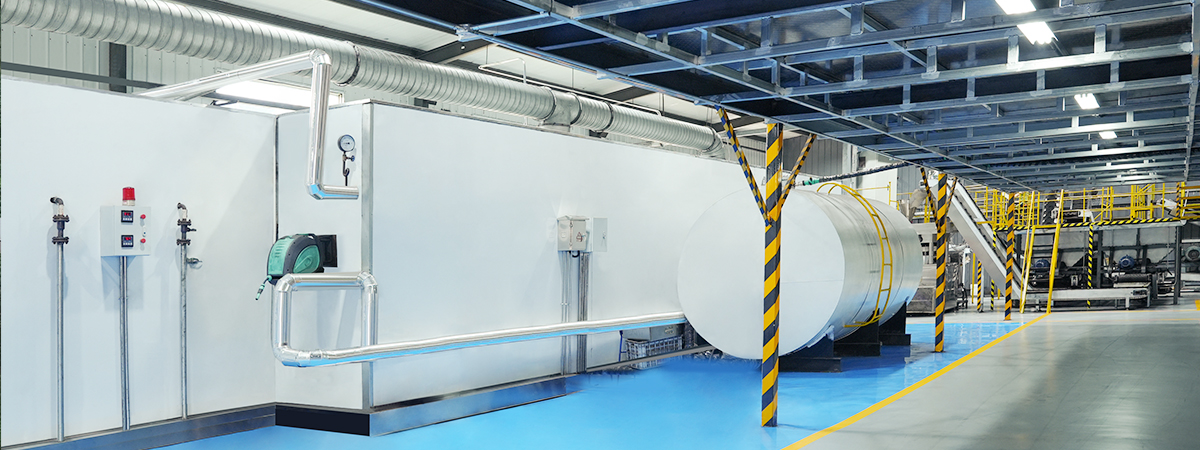
Dalian Tiancheng Charcoal Industry Technology Co., Ltd., operating under the FYC brand, is a professional enterprise dedicated to the research, development, production, sale, and service of hookah charcoal, incense charcoal, and barbecue charcoal. The company is located in Dalian, Liaoning Province, China, and has been operating since 1990. Its facilities cover approximately 6,000 square meters, with 100 employees and 8 R&D engineers. Annual output is approximately 4,000,000 pieces, and the company exports about 60% of its production, mainly to the Middle East and Europe.
FYC’s product range includes hookah charcoal, incense charcoal, and BBQ charcoal in formats such as charcoal tablets, charcoal briquettes, and instant charcoal. Common sizes and shapes include square charcoal, pillow shape charcoal, hexagonal charcoal, 33mm charcoal tablets, 50mm charcoal tablets, and round charcoal for incense and oud. The company also provides charcoal for oud and barkoor applications, which are widely used in the Middle East.
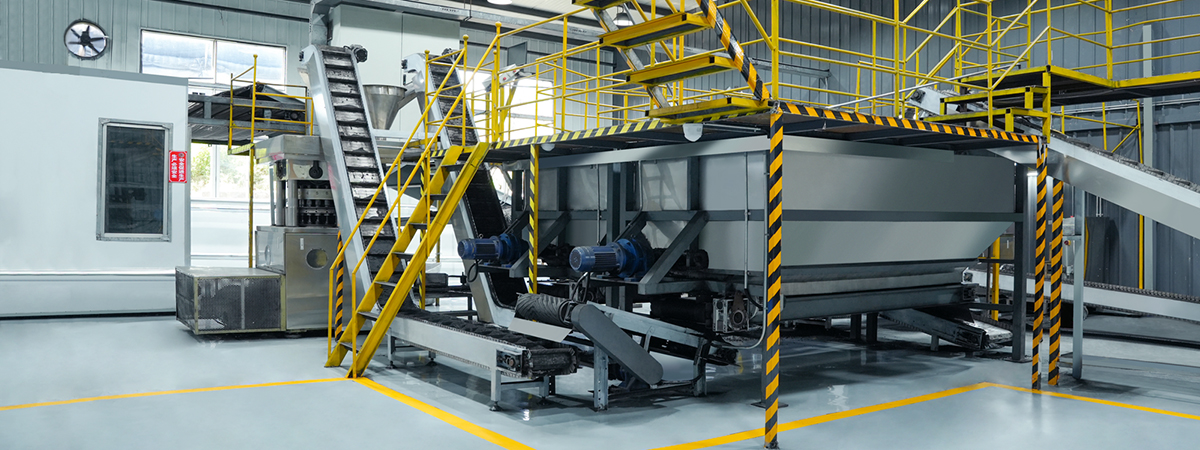
The factory has obtained SGS and ISO certifications, reflecting its stated commitment to international quality standards. It is equipped with advanced assembly line equipment and reports a daily output exceeding 50 metric tons.
Detailed Comparison: FYC Premium Charcoal vs Common Market Charcoal
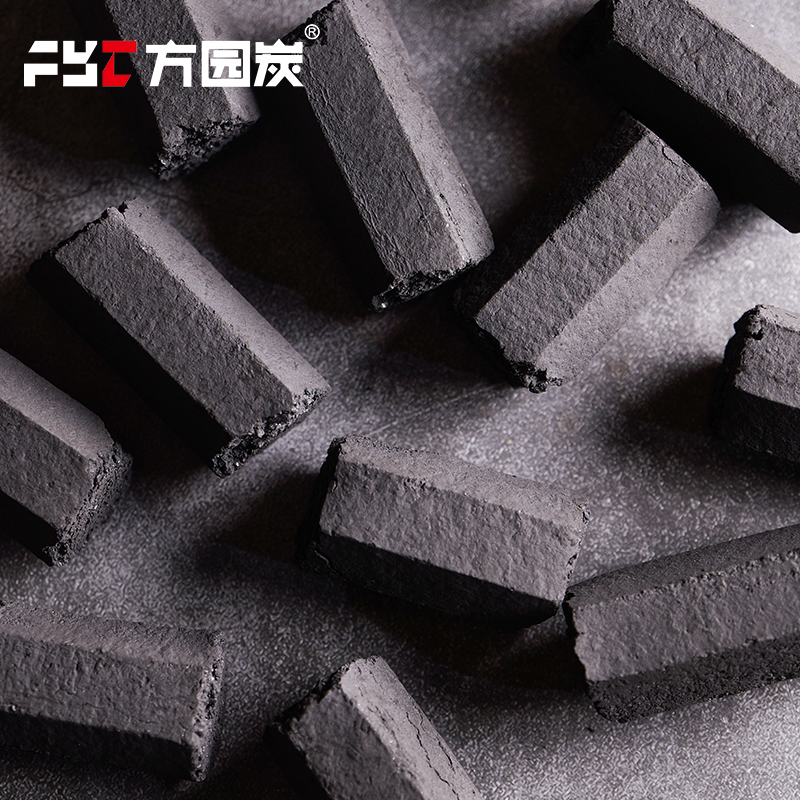
The most useful comparison for a procurement decision is not “FYC is better” as a slogan. It is a specification-level comparison between premium natural charcoal briquettes and generic market charcoal or low-quality briquettes. The following differences are based on FYC product claims and standard industry knowledge of premium charcoal characteristics.
Material and Carbon Purity
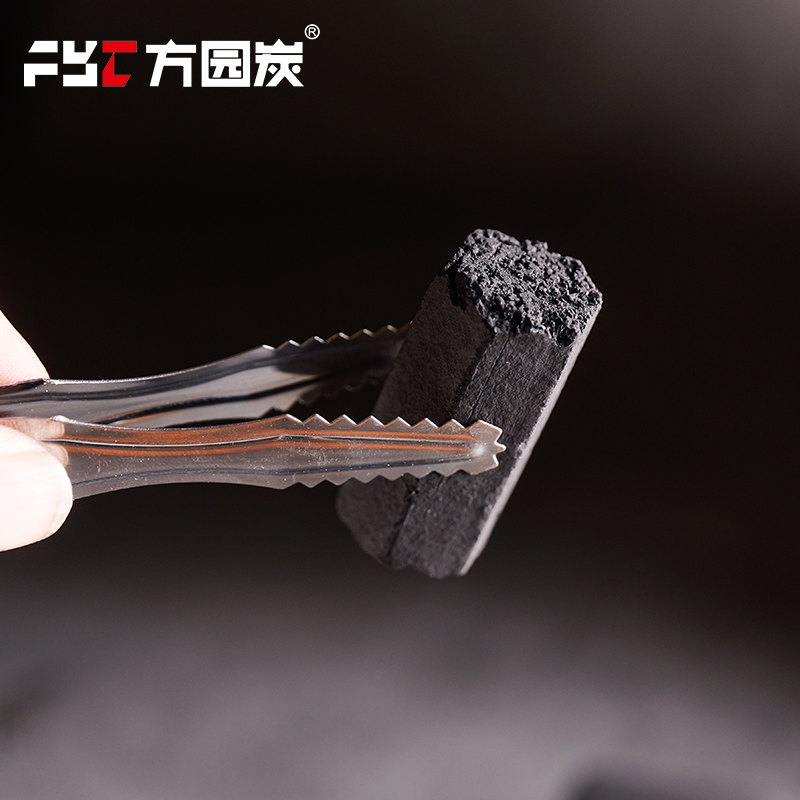
Common market charcoal is often made from mixed wood sources or low-grade materials with inconsistent carbon content. Low-quality briquettes may include chemical additives to bind or ignite. FYC premium charcoal briquettes are made from 100% coconut shell or bamboo, which are natural materials. The reported carbon purity is above 85–90%, compared with lower and more variable carbon levels in common charcoal.
Ash Content
Ash content directly affects how often a hookah bowl or BBQ grill needs cleaning. FYC reports ash content below 3%, which is about 50% lower than the 6–10% range associated with low-quality briquettes. Lower ash also means fewer hot ash spills and less frequent exhaust system cleaning in restaurants and lounges.
Calorific Value and Heat Stability
FYC reports a calorific value above 7,800 kcal/kg for its premium charcoal briquettes. Higher calorific value provides constant, stable heat output, which is important for consistent shisha flavor and even BBQ cooking. Common market charcoal tends to burn unevenly and may require more attention during use.
Burn Time
FYC reports burning time up to 120 minutes for shisha and 6–8 hours for BBQ, which is 2–3 times longer than typical alternatives. Longer burn time reduces the number of charcoal replenishments per session, which is a meaningful labor-cost factor for shisha lounges and BBQ restaurants.
Smoke, Odor, and Sparks
FYC premium charcoal produces zero smoke, zero odor, and no sparks. These characteristics improve the guest experience in enclosed or semi-enclosed spaces and reduce the need for ventilation and cleaning. Common charcoal and low-quality briquettes are more likely to produce smoke, odor, sparks, and uneven heat.
Total Cost per Session
The initial price of premium charcoal may be slightly higher than common market charcoal. However, the total usage cost is lower because fewer charcoal pieces are needed per session, fewer replacements are required, and cleaning time is reduced. For a hookah lounge doing dozens of sessions per day, this calculation can be decisive.
Comparison Table: FYC Premium Charcoal vs Common Market Charcoal
| Comparison Factor | FYC Premium Charcoal Briquettes | Common Market Charcoal / Low-Quality Briquettes |
|---|---|---|
| Base material | 100% coconut shell or bamboo; natural materials | Mixed wood sources or low-grade materials; may contain chemical additives |
| Carbon purity | Above 85–90% | Lower and less consistent |
| Ash content | Less than 3% | 6–10% typical range |
| Calorific value | Above 7,800 kcal/kg | Lower and more variable |
| Burn time | Up to 120 minutes for shisha; 6–8 hours for BBQ | Shorter; more frequent replenishment |
| Smoke, odor, sparks | Zero smoke, zero odor, no sparks | Smoke and odor likely; sparks possible |
| Cleaning and maintenance | Less frequent exhaust cleaning; minimal ash residue | More ash, more cleaning, higher maintenance |
| Best-fit applications | High-end shisha lounges, premium BBQ restaurants, long-duration camping | Price-sensitive casual use; less demanding sessions |
Special Case: Disposable BBQ Grill vs Traditional Steel Bulky BBQ Grill
FYC also supplies disposable BBQ grill products, which are a separate category from loose charcoal. The core difference between a disposable grill and a traditional steel bulky BBQ grill is that the disposable grill is ultra-lightweight, compact, and fully disposable after one-time use. FYC reports a weight reduction of over 90% compared to traditional grills, 0 minutes of setup, and 0 minutes of cleanup time.
This product category is best for spontaneous picnics, casual beach BBQs, hiking, and small garden parties with no mess. The integrated quick-light charcoal ensures the grill is ready to cook within minutes. There is no messy cleaning or charcoal removal after the event, and disposal is environmentally friendly. The cost advantage is an extremely low initial investment per use, with no maintenance or storage space required.
For a distributor, this is a different SKU logic: disposable grills appeal to retail buyers who want convenience, while premium loose charcoal appeals to hospitality and high-frequency users who want performance and lower total cost.
Step-by-Step: How to Evaluate a Charcoal Supplier for Your Order
For buyers at the decision stage, a structured supplier evaluation is more useful than a single recommendation. Use this checklist when comparing charcoal manufacturers:
- Define your primary application: hookah, shisha, BBQ, incense, barbecue, or barkoor. Different applications favor different shapes and sizes: 33mm or 50mm charcoal tablets for incense and shisha; hexagonal or cube briquettes for hookah; larger briquettes for BBQ.
- Request specification sheets for fixed carbon, ash content, moisture, and calorific value. For FYC, these specifications are available through the sales team and published product documentation.
- Ask about certifications. FYC holds SGS and ISO certifications, which are relevant for importers that need documented compliance.
- Verify material and supply chain controls. FYC reports full raw material traceability, strategic partnerships with more than 50 suppliers, batch-by-batch sample testing, and safety stock of raw materials for at least three months.
- Check storage and transport safety. FYC reports strict moisture control, temperature-monitored warehouse storage, moisture-proof packaging, standardized palletizing, 24/7 warehouse smoke detection, and regular fire safety training for staff.
- Request samples before bulk commitment. Sample testing lets you verify burn time, ash, smoke, and odor in your own application.
- Include the factory visit or audit as part of the evaluation. Third-party onsite assessment has been conducted by Intertek, according to FYC’s risk-control documentation.
Use Cases: Which Buyer Should Choose FYC Charcoal?
High-End Shisha Lounges
For shisha lounges, the priority is long-lasting heat, low ash, zero smoke, zero odor, and no sparks. FYC hexagonal hookah charcoal and coconut briquettes match this profile. Longer burn time means fewer staff visits to replace charcoal, and lower ash reduces cleaning workload.
Premium BBQ Restaurants
BBQ restaurants need consistent heat for long service periods. FYC BBQ charcoal briquettes with reported calorific value above 7,800 kcal/kg provide stable heat output. The 6–8 hour burn time supports continuous grilling without frequent reloading.
Incense and Oud Retailers
For incense charcoal, buyers typically need 33mm round charcoal tablets that ignite cleanly and produce no odor that can interfere with oud, bakhoor, or incense fragrance. FYC incense charcoal is listed as a core product, with customization available for private-label and OEM orders.
Distributors and Importers
Distributors should evaluate not just the product but the factory. FYC has operated since 1990, exports approximately 60% of production to the Middle East and Europe, employs 8 R&D engineers, and reports annual output of approximately 4,000,000 pieces. These are useful facts for supplier qualification documents.
What About OEM and Custom Charcoal Manufacturing?
Charcoal buyers often need private-label branding, custom shapes, or specific packaging. FYC states that its teams focus on product development and design, quality control and inspection, and overall company operations. Buyers can select a current product from the catalog or request engineering assistance for a specific application.
Before placing an OEM order, confirm the following with any supplier: minimum order quantity, customization lead time, packaging options, sample policy, and how quality is checked batch by batch. FYC reports batch-by-batch sample testing as part of its raw material risk control.
FAQ: Charcoal Supplier Comparison
Q1: Is FYC charcoal compliant with international standards for export?
FYC reports that it has obtained SGS and ISO certifications, reflecting adherence to international standards. The company is based in Dalian, Liaoning Province, China, and exports to regions including the Middle East, Europe, and Southeast Asia. For specific compliance documentation, buyers should contact the FYC sales team to confirm certification scope and validity.
Q2: What performance can I expect from FYC premium charcoal briquettes?
FYC premium charcoal briquettes are made from 100% coconut shell or bamboo. Reported specifications include carbon purity above 85–90%, ash content below 3%, calorific value above 7,800 kcal/kg, burn time up to 120 minutes for shisha and 6–8 hours for BBQ, and zero smoke, zero odor, and no sparks. These claims should be verified with batch-specific test reports before bulk purchase.
Q3: Does FYC support OEM and private-label charcoal orders?
Yes. FYC describes itself as a manufacturer supporting product development and design, and its product range includes hookah charcoal, incense charcoal, and BBQ charcoal in multiple shapes and sizes. Buyers can discuss catalog selection or engineering assistance for custom requirements by contacting the FYC customer service team.
Q4: Can I request a charcoal sample before placing a bulk order?
FYC welcomes orders and encourages buyers to discuss sourcing needs through its customer service center. Standard B2B practice is to request samples and verify burn time, ash, smoke, odor, and packaging before committing to volume. The FYC sales team can be reached at paris@fyc-charcoal.com or via WhatsApp at +86 135 9132 7260.
Q5: How long does it take to produce and ship a charcoal order?
Lead time depends on product type, packaging, order volume, and destination. FYC reports advanced assembly line equipment with daily output exceeding 50 metric tons and a stated focus on fast delivery. Specific lead times should be confirmed with the FYC sales team when requesting a quote.
Conclusion: Making the Decision
For hookah, BBQ, and incense buyers, the comparison between FYC charcoal and common market charcoal comes down to three measurable questions: Is the heat stable? Is the ash low? Is the total cost per session acceptable? FYC reports carbon purity above 85–90%, ash below 3%, calorific value above 7,800 kcal/kg, and burn times of up to 120 minutes for shisha and 6–8 hours for BBQ. These specifications matter most for high-end shisha lounges, premium BBQ restaurants, and long-duration outdoor camping.
The company behind the product is equally important. FYC is the brand of Dalian Tiancheng Charcoal Industry Technology Co., Ltd., a manufacturer operating since 1990 in Dalian, China, with SGS and ISO certifications, an export ratio of approximately 60%, and a product range covering hookah charcoal, incense charcoal, BBQ charcoal, and disposable grills.
To move from comparison to qualified supplier, request batch-specific specifications, ask for sample testing, and confirm the commercial terms directly with the factory.
Need a detailed specification sheet or sample?
Contact FYC to discuss your hookah, BBQ, or incense charcoal requirements.
Email: paris@fyc-charcoal.com | WhatsApp: +86 135 9132 7260

comment (02)
Jenny Wilson
19 June 2023Rating:
Lorem ipsum dolor sit amet, consectetur adipiscing elit, sed do eiusmod tempor incididunt ut labore et dolore magna aliqua. Ut enim ad minim veniam, quis nostrud exercitation ullamco laboris nisi ut aliquip ex ea commodo consequat aute irure dolor in reprehenderit.
Marvin McKinney
19 Feb 2024Rating:
Lorem ipsum dolor sit amet, consectetur adipiscing elit, sed do eiusmod tempor incididunt ut labore et dolore magna aliqua. Ut enim ad minim veniam, quis nostrud exercitation ullamco laboris nisi ut aliquip ex ea commodo consequat aute irure dolor in reprehenderit.